






What Are Cross-Functional Teams? (Updated 2026)
Cross-functional teams are a creative approach when it comes to solving problems in the modern workplace. These teams are usually made up of the best people fro...
On this page (22)
Cross-functional teams are a creative approach when it comes to solving problems in the modern workplace. These teams are usually made up of the best people from different departments who are brought together to share their expertise for more creative solutions.
Are cross-functional teams right for your business? Find out more below!
TL;DR: Cross-functional teams combine experts from different departments to solve problems faster and reduce handoff delays. Companies like Spotify and Amazon use them as their default unit. Tools like Taskade with 8 project views and AI agents keep cross-functional teams aligned in one workspace. Try Taskade free →
What Are Cross-Functional Teams?
Cross-functional teams contain groups of people each specializing in different disciplines, but all working together in unison towards a common business goal. These representatives from various business functions are grouped together to help move things forward quicker in a business.
Cross-functional teams can work together on a project basis, or they can help satisfy an ongoing business requirement.
An example of a cross-functional team is in a marketing agency, where typically a designer, social media executive, and a copywriter would work together to help service client requests.
Similarly, the crew inside a passenger aircraft could be regarded as a cross-functional team. In this instance, the pilots are responsible for flying the plane while the cabin crew takes care of the passengers. Despite having different roles, their goals are familiar; to transport passengers safely and as comfortably as possible.
If you think about it, a school project team can also consist of a cross-functional team. When working on a report, it isn’t uncommon for you to break up the workload based on the strengths of your group members.
For example, a few of you can be in charge of research, while others will work the writing process. The most vocal member will then take charge and present the work in front of the class.
Using cross-functional teams allows individual members to contribute based on their strengths. This gets work done quicker and in a more agile manner.

What is the Difference Between a Functional Team and a Cross-Functional Team?
People who work within the same department make up functional teams. An organization would typically have several departments, and functional teams usually spell out a traditional, waterfall top-down approach to doing things.
This means that the work process is not fluid. The project flows from one department to another, only changing hands once the department is done working on its part.
An example of a functional team would be the marketing department of an organization. In a small business, this department would typically consist of a marketing manager in charge of around 2-3 marketing executives.
This department specializes in marketing, and all other matters would fall to other departments within the organization.
Even though there is an argument to be made about it being higher in quality, this approach also leads to a lot of backlog and production lag especially when there is a hiccup down the chain.
Cross-functional teams are made up of several subject matter experts, which means that various parts of the project can be simultaneously worked on by different people working cooperatively together.
By trading a little bit of specialization and structure, cross-functional teams gain the advantage of being fluid and agile. They are able to collaborate across departments to deliver a high-quality product at twice the speed.
However, there can also be circumstances where the organizational structure is that which consists of functional teams, but with a few cross-functional teams to help meet special needs and projects within the organization.
In this instance, members of the said cross-functional team will take on their cross-functional tasks as an added responsibility to their day-to-day workload.
How to Create Cross-Functional Teams
Creating cross-functional teams has several benefits. But in order to reap them, you must first ensure that you set your new cross-functional team up for success.
Here are some common yet crucial tips that you should take note of when creating your team.
Choose a Leader

One of the main reasons why the Avengers were doomed to fail was because they didn't have a real leader within them. Sure, they were a group of individuals with various superpowers and abilities, but without someone to point them in the right direction, what’s the point?
The same concept applies for your cross-functional team. Gathering the brightest minds won’t work if your team is unable to have productive discussions, keep themselves accountable, and delegate tasks to each other.
You can easily do all these by nominating a member of your team to be a leader who has the ability to manage people and projects effectively.
Encourage Collaboration
When it comes to project and group work, communication is key. Depending on the size of your cross-functional team, you must make sure that you set them up for success. This also means making sure that they know how to communicate with each other effectively.
If your organization is made up of functional teams, your new cross-functional team may have to get used to communicating with each other. That said, what can you do to ensure that you set them up for success?
- Have an ice-breaker session for your new team members
- Prepare communication tools for your new team to communicate with each other
- Eg: Creating a new project on Taskade and inviting everyone
- Encourage an open channel of communication
- Communicate instructions clearly to your team members
Set Clear Expectations
After creating your new cross-functional team, you must ensure that you manage everyone’s expectations. Set clear goals, and lay out a roadmap with task dependencies and milestones to ensure that everyone is aligned.
As a project manager, your main priority is to make sure that everyone in your team knows their function and the common objective. To help you achieve this, here’s a list of the best project management tools to help set you and your team up for success.
Get Ready to Resolve Conflicts
Conflict can happen anywhere in the workplace. But with cross-functional teams, you may experience conflict just a little bit more. This is a byproduct of gathering a diverse group of people and getting them to work together.
It's best to have your group leader professionally trained in conflict resolution strategies so that they can resolve conflict in several ways. Better yet, reduce friction altogether by improving your team spirit via team-bonding activities.
Conflicts are inevitable. What’s important is how your team deals with it.
Create a Single Source of Truth
While this may sound unorthodox, especially for a small team, creating a team wiki might do you more benefit than harm. A single source of truth is a knowledge management system that allows your team to access all the information needed for your project.
Taskade is an outliner that allows you to do just this. Think of it as creating a team wiki that contains all of the information your cross-functional team needs to succeed.
What’s more, Taskade has free unlimited chat and video calls built-in to every project so that you can work on the same project while chatting to collaborate efficiently.
Use our cross-functional team template to help you get started in creating your first cross-functional team!
Advantages of Cross-Functional Teams
Here are some of the advantages that come with cross-functional teams.
Better Problem Solving Capabilities
Cross-functional teams include members from different departments and this means that they will be viewing each problem via their own lens. What this does is that it opens up the opportunity for new and unique points of view to help provide you with a more holistic solution.
The availability of different members also means that they can combine their expertise to help find better solutions to problems.
Increased Productivity Levels
Cross-functional teams can have the desired effect on team productivity because they are made up of skilled individuals from various departments.
In agile, people work on multiple facets of projects and tasks simultaneously instead of flowing through departments such as in waterfall. This means that cross-functional teams can complete tasks more efficiently.
Furthermore, once your team members are familiar with each other, they can delegate tasks to other members according to their skills. This lowers the opportunity cost, making the team as a whole become more productive and efficient.
Promotes Innovation
.
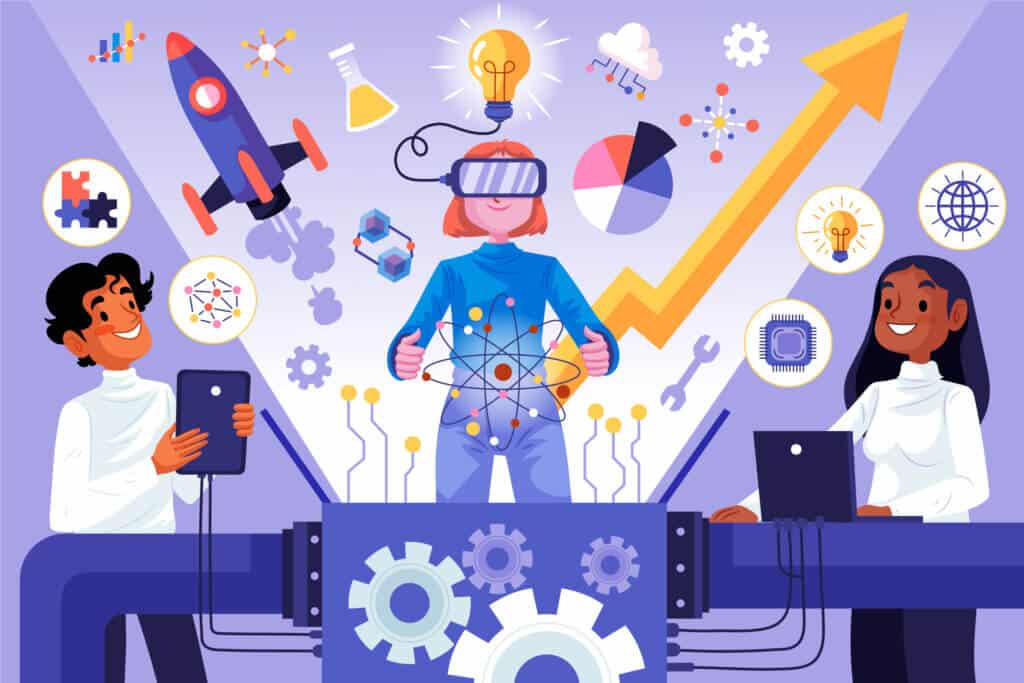
Cross-functional teams are vehicles of collaboration.
Cross-functional teams have more opportunities to come up with innovative solutions when they collaborate with each other because they can combine their unique skill sets and points of view.
Looking to innovate the next great product? Try working in a cross-functional team.
Promotes Business Goals
When you're too focused on your department's objectives and targets, you lose sight of the larger organizational goal.
For example, the finance team might be hesitant to free up some budget to hire a new customer service staff in view of keeping costs low. But in doing so, they’re forgoing the organization’s goal of providing quality customer service.
By putting people from various departments together, organizational goals can be the common objective that the team works toward.
Functional vs. Cross-Functional Teams: Key Differences
| Factor | Functional Team | Cross-Functional Team | AI-Assisted (Taskade) |
|---|---|---|---|
| Composition | Same department | Multiple departments | Any — AI agents bridge gaps |
| Communication | Within department | Across departments | Unified workspace + AI chat |
| Speed | Sequential handoffs | Parallel work | AI automates coordination |
| Innovation | Limited perspectives | Diverse viewpoints | AI suggests cross-domain solutions |
| Accountability | Department manager | Team lead + RACI | 7-tier RBAC (Owner to Viewer) |
| Best Tool | Email, department tools | Shared workspace | Taskade — 8 views, real-time collab |
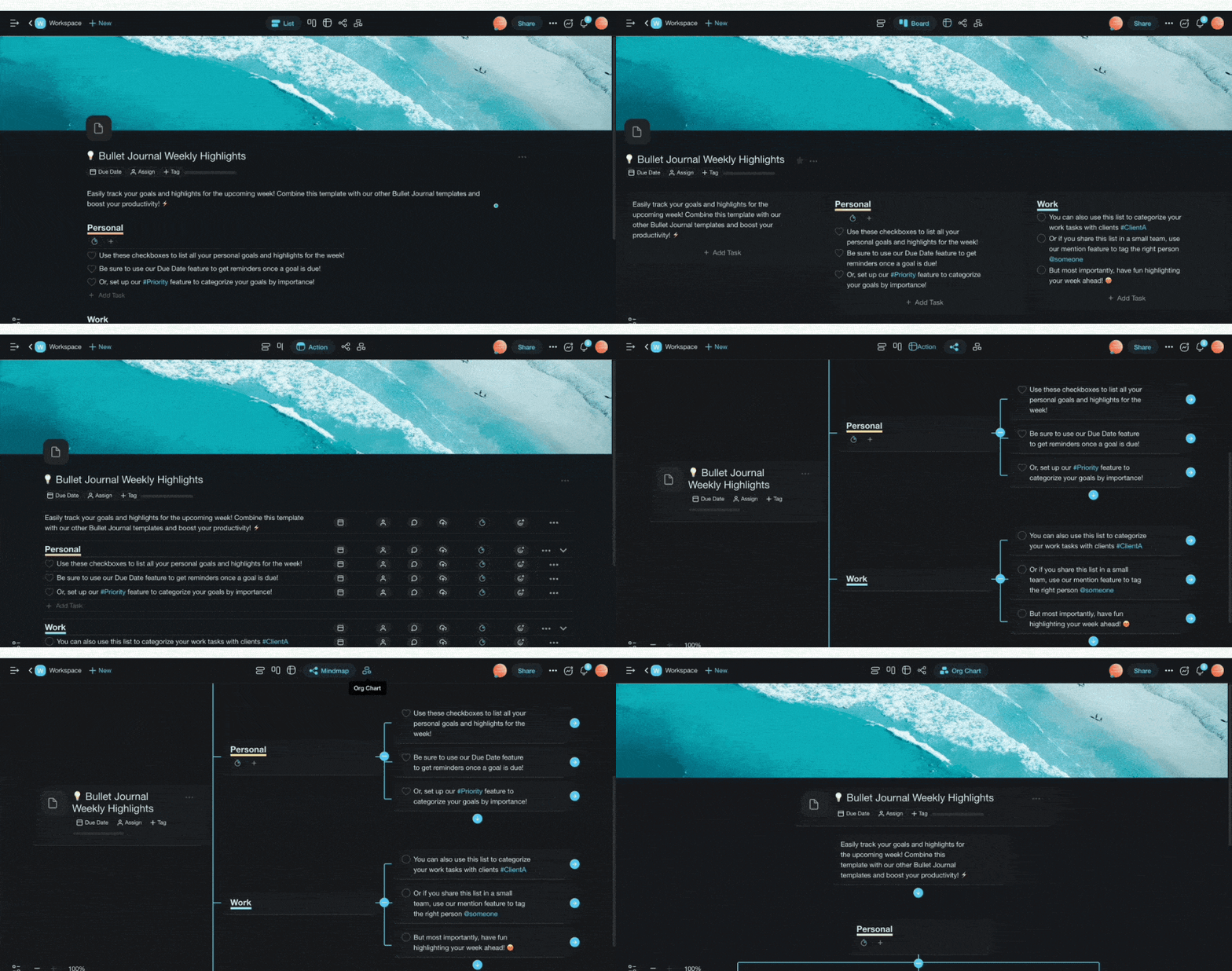
With Taskade, cross-functional teams collaborate in one workspace with 8 project views (List, Board, Calendar, Table, Mind Map, Gantt, Org Chart, Timeline), built-in video chat, and AI agents that automate standup summaries, task routing, and status reports. Explore 500+ templates or build custom workflows with Taskade Genesis.
Workspace DNA: Breaking Down Silos With Memory + Intelligence + Execution
The biggest challenge for cross-functional teams is information fragmentation — every department uses different tools, different terminology, and different processes. Workspace DNA solves this with a self-reinforcing loop. Memory (Projects) creates a single source of truth where marketing briefs, engineering specs, and design files coexist in one workspace. Intelligence (AI agents) translates between department contexts, summarizes cross-team dependencies, and identifies bottlenecks before they escalate. Execution (Automations) routes deliverables between teams, triggers handoff notifications, and syncs updates across 100+ integrations. The result: cross-functional teams operate with the speed of a single department while retaining the diverse expertise that makes them effective. Learn more about how Workspace DNA powers living software.
Agentic AI: The Always-On Cross-Functional Coordinator
Agentic AI transforms how cross-functional teams coordinate. Instead of relying on a single project manager to bridge every department gap, autonomous AI agents operate continuously — generating standup summaries, routing blockers to the right department lead, and maintaining shared documentation. Taskade agents come with 22+ built-in tools, MCP connectors for external systems, and persistent memory that retains full cross-department context. Deploy a Team Coordinator agent that prepares meeting agendas, a Knowledge Bridge agent that translates technical jargon for stakeholders, or a Handoff Manager agent that ensures smooth transitions between departments. Build custom cross-functional systems with Taskade Genesis — it's vibe coding for team collaboration. Explore the Community Gallery for ready-made solutions, or browse 500+ templates.
Cross-Functional Team Communication: AI vs. Manual Approaches
| Communication Need | Manual Approach | AI-Automated (Taskade) |
|---|---|---|
| Status updates | Weekly email rounds | AI agents generate real-time summaries |
| Meeting coordination | Calendar juggling | AI finds optimal slots across departments |
| Knowledge sharing | Scattered wikis | Unified workspace with AI-powered search |
| Conflict resolution | Ad-hoc escalation | AI flags friction points early |
| Handoffs | Email chains | Automations trigger structured handoffs |
| Terminology alignment | Glossary documents | AI translates jargon in real time |
Disadvantages of Cross-Functional Teams
Not all cross-functional teams are successful. If you can pull it off, you’ll be guaranteed stellar results. However, there are several things that can go wrong as well.
High-Pressure Environment
Cross-functional teams add on more work on top of the usual day-to-day roles of their members. This means that your team members will experience more stress and feel the added pressure to deliver results.
Make sure you communicate with your team and ensure that they’re coping well with the added responsibility.
Poor Communication Guarantees Failure
In a cross-functional team, poor communication is unforgiving. You must ensure that you set your team members up well to communicate with each other efficiently. Not doing so risks your project being delayed or even worse, canceled.
With multiple parts moving simultaneously, proper communication is a must to ensure success.
High Friction Between Team Members
In a team made up of people from different departments and backgrounds, cross-functional teams are a breeding ground for conflict ready to happen. Conflicts can break a team apart and put the entire project at risk.
Ensure that your team is equipped to take the proper steps required to help deal with conflicts.
Frequently Asked Questions
What is a cross-functional team?
A cross-functional team brings together people from different departments — engineering, marketing, design, sales, operations — to work toward a shared goal. Unlike traditional siloed teams where each department works independently, cross-functional teams combine diverse expertise to solve problems faster, reduce handoff delays, and produce more holistic solutions. Companies like Spotify, Amazon, and Google use cross-functional 'squads' as their default organizational unit.
What are the benefits of cross-functional teams?
Key benefits include: faster decision-making (no waiting for inter-department approvals), more creative solutions (diverse perspectives prevent groupthink), better communication across the organization, reduced knowledge silos, stronger employee development (team members learn from other disciplines), and faster time-to-market for products. Research shows cross-functional teams can reduce project delivery times by 30-50% compared to sequential departmental handoffs.
What challenges do cross-functional teams face?
Common challenges include: conflicting priorities (team members may still report to their department managers), communication friction between specialists who use different terminology, unclear decision-making authority, difficulty scheduling when members have competing commitments, and accountability gaps when no single department 'owns' the outcome. Success requires a strong team lead, clear RACI assignments, shared goals, and tools that keep everyone aligned.
What tools help cross-functional teams collaborate effectively?
Cross-functional teams need tools that combine communication, task management, and documentation in one place to prevent tool fragmentation. Taskade is designed for this — offering real-time collaborative editing, 8 project views (Board, List, Gantt, Mind Map, etc.), built-in video chat, AI agents for automating routine work, and shared workspaces where all team members can track progress regardless of their department. This eliminates the need to switch between Slack, Jira, and Google Docs.
How does Taskade Genesis help cross-functional teams?
Taskade Genesis lets cross-functional teams build custom collaboration apps from a single prompt. With 150,000+ apps already created, teams generate shared dashboards, cross-department project trackers, and communication hubs that deploy instantly with custom domains. Visit taskade.com/ai/apps to explore ready-made cross-functional team tools or build your own.
What is vibe coding and how does it apply to team collaboration?
Vibe coding means building software by describing what you want in natural language rather than writing code. For cross-functional teams, a project lead can describe their ideal collaboration workflow — combining task tracking, meeting notes, and department handoffs — and Taskade Genesis builds it as a live app. This eliminates the weeks of tool evaluation and configuration that typically precede cross-functional initiatives.
How do AI agents improve cross-functional team coordination?
Taskade AI agents with 22+ built-in tools and MCP connectors bridge communication gaps between departments. Agents translate technical jargon for non-technical stakeholders, auto-generate meeting summaries, route decisions to the right department leads, and maintain a shared knowledge base with persistent memory. This reduces the communication friction that typically derails cross-functional projects.
What is Workspace DNA and how does it help cross-functional teams?
Workspace DNA is Taskade's self-reinforcing loop of Memory, Intelligence, and Execution. Memory (Projects) stores shared documentation and cross-department context. Intelligence (AI agents) identifies communication gaps and suggests process improvements. Execution (Automations) routes tasks between departments and triggers handoff notifications. This loop ensures institutional knowledge compounds rather than fragmenting across department silos.