






A Review of Zapier
Zapier has contributed to the creation of a new way of software development that has been gaining popularity in recent years. It's called No-Code, and it is cur...
On this page (62)
Zapier has contributed to the creation of a new way of software development that has been gaining popularity in recent years. It’s called No-Code, and it is currently taking over software development. Here’s the history of Zapier and its role in shaping this new world.
TL;DR: Zapier was founded in 2011 at a Startup Weekend, joined Y Combinator, and grew to a $5B valuation with 7,000+ app integrations. Only $2.68M raised — profitable since 2023. Now expanding into AI with Zapier Agents. For built-in automation without a separate subscription, try Taskade.
Zapier Timeline: Key Milestones
| Year | Milestone |
|---|---|
| 2011 | Wade Foster, Bryan Helmig, and Mike Knoop found Zapier at Columbia Startup Weekend |
| 2012 | Accepted into Y Combinator; raised $1.3M seed round |
| 2015 | Surpasses 1 million users |
| 2021 | Valued at $5B in secondary share sale (Sequoia, Steadfast Financial) |
| 2023 | Zapier Tables reaches general availability at ZapConnect |
| 2024 | Zapier Agents launches; major pricing reform (unlimited Zaps, free Tables/Interfaces) |
| 2025 | Revenue surpasses $400M+ ARR; 81B+ tasks automated |
It is predicted that by 2025, 70% of new applications will use no-code or low-code technologies.(1) And while No-Code is not new and has been around since the 1980s, it’s has experienced a significant boom in the last few years(2)
In this article, we take an in-depth look at the history of Zapier and the team that brought it to life. You'll also learn how its powerful integration infrastructure made No-Code the norm, how Zapier Agents and MCP are reshaping AI orchestration, and how it compares to competitors like n8n and Make.(3)
👩💻 Productivity made easy… Zapier has changed the way we get work done at home or in the office. Here are a few other tools that attempted to do the same.
🌊 Google Wave: A History Lesson for Modern Real-Time Collaboration Tools
💬 HipChat History: The Rise and Fall of The Collaborative Instant Messaging Platform
✅ The History of Wunderlist: A Tribute to No-Nonsense To-Do List Reviewed
🤔 “Ok, but What Does ‘Zapier’ Even Mean?”
Before we dig into the history of Zapier, we need to do some explaining.
The first iteration of Zapier came to life in October 2011, in Columbia, Missouri as a brainchild of Wade Foster (its current CEO), Bryan Helmig, and Mike Knoop.

Zapier co-founders (from left to right) Mike Knoop, Bryan Helmig, and Wade Foster(4)
But why the strange name in the first place?
It’s simple. The trio wanted to fit the term “API” in the name.(5) In a nutshell, API stands for “application programming interface” and is a set of definitions and protocols for building and integrating application software. It “tells” software A to do X, when software B does Y.
APIs let apps and services communicate without having to know how they’re implemented. You can think of an API as the middleman between two unrelated pieces of software.
As for the “ZAP” part of Zapier… Well, Foster, Helmig, and Knoop settled on the prefix to indicate the act of connecting two different things, like zapping data from one app to another.
To further understand how the idea of Zapier came to be, we need to take a look at Wade’s background and how he and his two co-founders met.
Before Zapier (2009)
In May 2009, Foster started working at a software company Idea Works. He enjoyed the atmosphere (and lax dress code), but more importantly, he discovered his passion for software.
“It was so cool to me that six or seven people could be in a house together making software and that people thousands of miles away could buy it. I knew immediately I wanted that as a career,”
Wade Foster, Jefferson City Magazine(5)
While Wade wanted to start his own company at 24, he wasn’t sure he had the skills to make that dream into reality. It was his next job that helped him out.
Foster found a marketing intern opening in Veterans United Homes Loans, a small, local tech company. Thanks to a Seth Godin book, he managed to talk his way into the job. Within a year, Foster became well-versed in marketing which set him on the path to entrepreneurship.
Co-founders United (2011)
When Wade was Email Marketing Manager for Veterans United Home Loans, he reunited with his future co-founder Bryan Helmig he had met back in college.

Veterans United Home Loans website in 2011(6)
The two worked full-time at the tech company, but they also did freelance web work in their spare time. It was during that time that Helmig planted the seed for Zapier.
“[...] one day Bryan texted me and said, hey, you know, one idea that I think could be really useful is to make it really simple for a business user to be able to connect the tools that they're using. You could integrate MailChimp and Wufoo or Zendesk and Salesforce with a quick little like, drag and drop click UI [...]”
Wade Foster, Station F(7)
Foster liked the idea and felt that it’d make his own life a lot easier. On top of that, their freelance clients were also starting to ask them to build integrations between apps.(8)
At the time, people were beginning to truly appreciate the convenience of SaaS products, but app integration wasn’t easy. It required technical help and know-how so the idea to create a seamless way to integrate individual tools had immense potential.
The First Iteration of Zapier and Zapier Beta (2011–2012)
Foster and Helmig got in touch with another friend and developer Mike Knoop. The goal? Build the first prototype of Zapier in just two days. They succeeded and the prototype ended up winning the first annual Columbia Startup Weekend.(9)
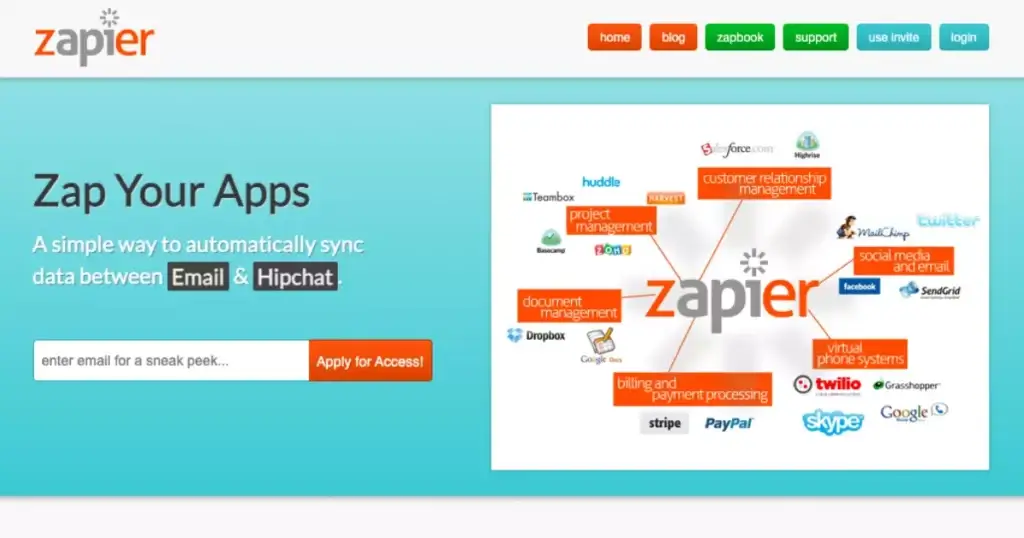
Zapier in 2011(10)
Encouraged by the success, the trio set out to develop an initial beta product for their customers. They applied to Y Combinator almost immediately — but were rejected.(11) As Foster later explained: "Nothing in our background looked particularly impressive." The three founders were in Central Missouri, far from Silicon Valley, with no track record in tech entrepreneurship.
But rather than dwell on the rejection, they doubled down on building. Helmig and Knoop kept coding while Foster looked for customers to try their product. The trio kept their day jobs and worked on Zapier nights and weekends — a side project born from a hackathon, fueled by the conviction that the problem was real even if YC didn't see it yet.
But with a prototype that wasn't perfect, it was hard getting new customers to sign up. Foster's plan was to scout around online forums and look for users interested in integrations. The strategy was systematic: find community forums for popular SaaS products and look for a specific, recurring pattern — users desperately asking "when will you integrate with X?"
“And so those forum links, while they wouldn’t send a ton of traffic, we’d get 10, 15, 20 visitors from each one, but of those visitors, around 50% would convert and say “yes, I really want this [...]”
Wade Foster(12)
"You would go to the community forums for say Salesforce or Evernote or Zendesk — any of them — and there was always a common request: 'when will you integrate with X?' Some user would be on their knees begging, saying 'this is the most important thing, I can't believe you don't support this.' The thread would get kind of long, and then eventually a product manager from the company would chime in and say, 'Hey, really appreciate you sharing this feedback, we're going to take a look at this.' If you've worked at any of these companies, you know that's code for: yeah, probably not going to happen. And some of these threads are pretty old — a year old, two years old, four years old."
Wade Foster on discovering Zapier's first users
Foster's approach to these forums was deliberate. Rather than just dropping a link, he crafted comments that offered genuine value:
"I'd come in and say: 'Hey folks, if you want to build something yourself you can go check out the APIs and write some Python. If you don't know how to code though, I'm working on a project that might help you — here's how you get in contact with me.' Those comments didn't get very much traffic — maybe four or five people would reach out and two of them would sign up. But we didn't need millions of people. We just needed one customer."
Wade Foster on the early forum strategy
The First Customer: Andrew Warner
Zapier's very first customer was Andrew Warner, the podcaster behind Mixergy. Foster found him on a community forum asking for a PayPal–Highrise integration. But what happened next revealed something crucial about early-stage product development:
"I found his email, shot him a note and said, 'Hey, you still looking for this?' He emails back: 'I don't need a PayPal–Highrise thing, but I am curious — did you build one?' That felt like permission to pitch him. So I did a little research — went to his site, found out he's using Wufoo for forms and AWeber for his email list. I emailed back: 'Yeah, we support PayPal and Highrise, and it does other stuff too, like Wufoo and AWeber.' He emailed back pretty quickly: 'I actually really do need something to integrate Wufoo and AWeber.'"
Wade Foster on the first sale
There was one problem: Zapier didn't have Wufoo or AWeber integrations yet. Foster went to his co-founders and said, "Can you build Wufoo and AWeber tonight?" They did. By the next morning, the integrations existed.
Then came the onboarding — and the brutal reality of an unfinished product. Foster jumped on Skype with Warner and watched him try to set up his first Zap:
"The product wasn't very good yet. I jumped on Skype and watched him stumble through every single step. It was painful. At one point, he had to select which Wufoo form to trigger off of, and instead of showing form names, the dropdown showed the form ID. No normal person memorizes form IDs. So he's like, 'Which one do I pick?' And I'm like, 'Okay, let's go to Wufoo and look in the URL...'"
Wade Foster on the worst onboarding experience imaginable
But then something remarkable happened. Despite the terrible experience, at the very end — when Warner submitted a test form and the email appeared in AWeber — he said: "Oh my God, this is so great. How much do I owe you?"
Foster hadn't thought about pricing yet. He blurted out: "It's going to be $100." Warner asked where to send the money. "Just send it to my personal PayPal account." And that was Zapier's first revenue — $100, via PayPal, from a customer who'd endured the worst onboarding process imaginable but still wanted to pay.
"We just put him through the worst experience possible and the guy still wants to pay us. I was like, okay — if we can pull this off, it's gonna work."
Wade Foster on the moment he knew Zapier had something
The Bespoke Onboarding Machine
That Skype call with Andrew Warner wasn't a one-time thing. It became Zapier's secret weapon. Foster personally onboarded hundreds of early users one by one, watching them struggle, taking notes, and feeding every friction point back to the engineering team:
"I was doing this bespoke onboarding for — I don't know how many people, I lost count. Probably hundreds. Rinse, wash, repeat. I'd watch them set up a Zap, take all those notes back to Bryan and Mike and say: 'Here's everything that's not good enough — how do we make it simpler?' A common mistake founders make is they think PLG means 'I never talk to people.' That was the exact opposite — I was talking to people all the time."
Wade Foster on the PLG paradox
This obsessive attention to onboarding created a feedback loop that would define Zapier's product quality for years to come. Every confused user was a design problem waiting to be solved. Every Skype call was a product spec written in real-time frustration.
Zapier didn't give away their product for free, though. Even for the beta, Foster insisted on charging — not to make money, but to filter signal from noise:
"We charged $5 for access to the beta. It's comically cheap, and it wasn't even recurring — just $5 and you have access for the life of the beta. But we knew that if you paid five bucks, you cared enough. Everyone says 'oh we should make it free so we get more usage,' but that's a really tough place to be — you get a lot of noisy feedback from people who don't actually have this problem. People who actually have the problem will pay some amount."
Wade Foster on charging for beta access
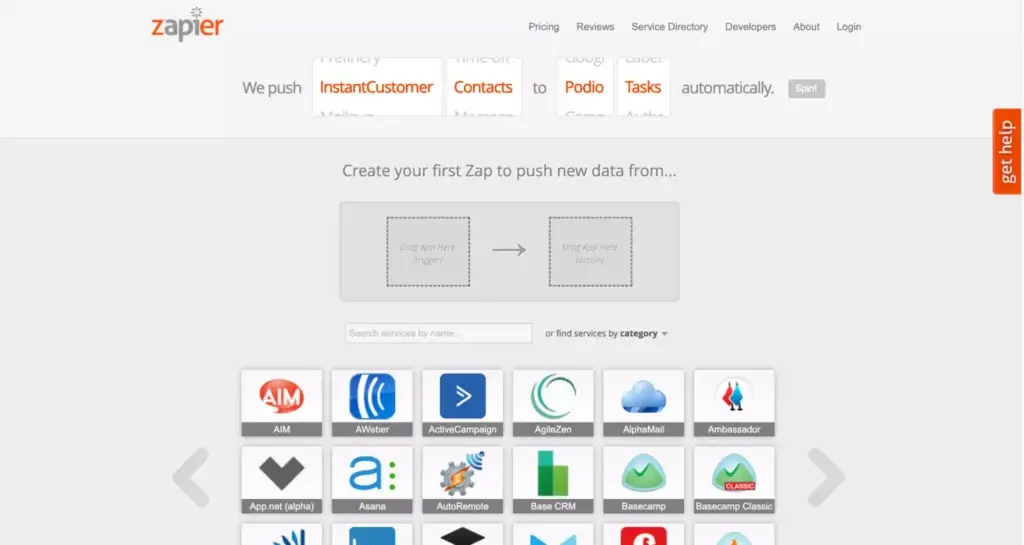
Zapier in 2012(13)
While people knew that the software still had plenty of bugs to be worked out, they also appreciated that Wade was the one personally overseeing all the problems. Eventually, Foster managed to kick off brand partnerships for Zapier which would help them out later.
Zapier on the Rise (2012–2016)
Six months after the initial rejection, the team reapplied to Y Combinator. This time, they had something to show: 1,000 people had paid for access to the beta, 10,000 more were on the waitlist, and a few YC-backed companies were already using Zapier. They got accepted.(14)
YC was the catalyst that moved all three founders from Columbia, Missouri to California. Foster explained the logic: "Our goal is to connect all these different companies, all these different vendors, and we're in the middle of Missouri. Most of those companies are in California. If we were closer, it'd make it a lot easier to build relationships with our partners."
They didn't stop there. The team set up landing pages for every combination of apps that you could connect, making sure that Zapier always popped up in search results. This was a pivotal insight: every new integration wasn't just a product feature — it was a new landing page, a new search result, a new partnership opportunity.
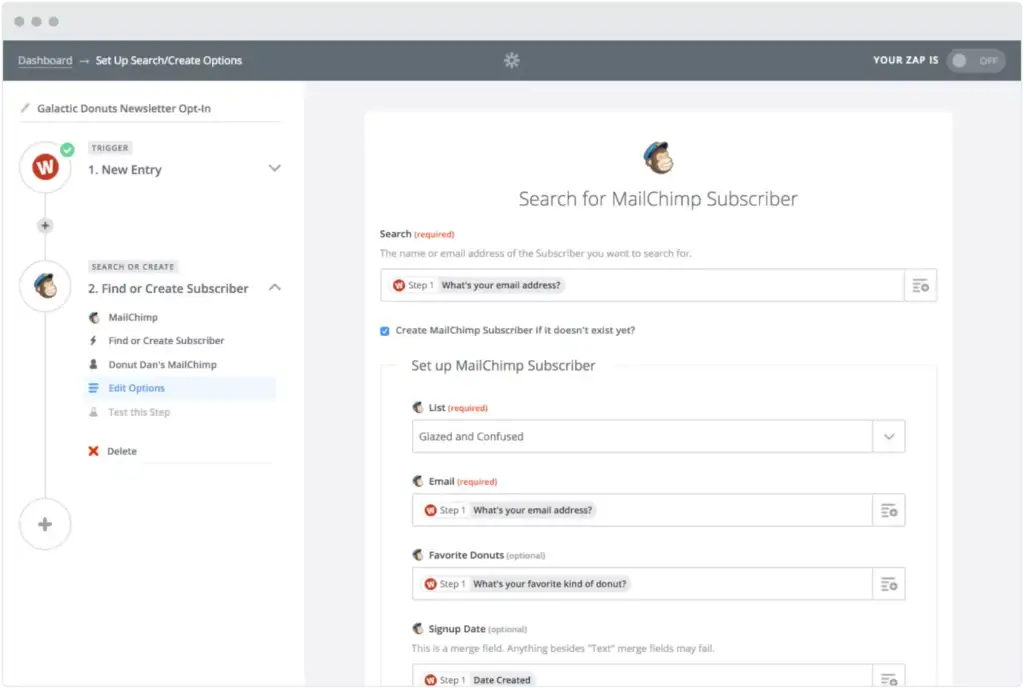
Zapier in 2016(15)
And remember the brand partnerships they made? They became Zapier's biggest sources of traffic after they shared their own Zapier integrations. Zapier also invested in a blog, using a mix of SEO and content marketing, making sure to attract more people to their blog and website.
The Developer Platform: Born from a 2 AM Tweet
The insight that would transform Zapier's growth trajectory came from an unexpected moment. The three founders had built the first 50 integrations themselves, one by one. Then came a turning point:
"We'd built out the first 50 apps ourselves, and then on a Saturday morning at 2 AM we got an email from Aaron at Box saying, 'Why isn't Box on Zapier?' And it's still just three of us — we just hadn't gotten to it yet. Through that we thought: well, if Aaron cares enough to tweet at 2 in the morning, maybe he would devote an engineer or two to help build this out."
Wade Foster on the origin of the developer platform
That single anecdote — combined with some intuition — led Zapier to build a developer platform that allowed SaaS vendors to build their own integrations. The first prototype took just a couple of weeks. The result was transformative: 99% of the 1,500+ apps on Zapier would eventually be built by the partner ecosystem, not Zapier's own engineering team.
This created a compounding growth engine: each new integration meant new landing pages, which meant more search traffic, which attracted more users, which incentivized more vendors to build integrations. Growth became fundamentally an engineering problem — and the developer platform solved it at scale.
Foster realized early that growth at Zapier followed a specific formula: more integrations = more landing pages = more partnerships = more customers. The first non-founder hire wasn't an engineer or marketer — it was a customer support person, because the three founders were spending until 3 PM every day clearing through support tickets before they could write any code.
Zapier Meets Success (2016–Present)
On May 5, 2016, Zapier announced over 1 million users were using the service.(16) By the time April 14, 2020, rolled around, the company had 3 million subscribers and managed to quadruple its revenue, with monthly customer churn at less than 5%.(17)
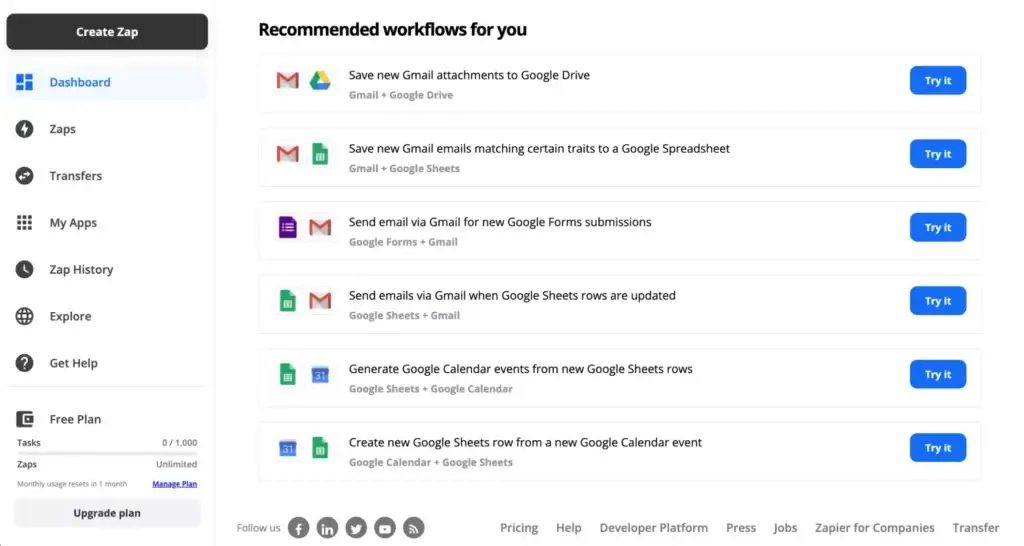
Zapier in 2022
Zapier has gone a long way from the $1.3 million they raised back in 2012. The company is now valued at over $5 billion(18) and serves over 3 million businesses(19) using the tool. Today, Zapier has expanded well beyond simple Zaps into AI agents, Tables and Interfaces, and a full enterprise platform. But Zapier's success would not have been possible without the convenience of No-Code.
❬Ø❭ No-Code Is the New Norm
Chances are you’ve used at least one no-code tool and didn’t even notice. Don’t worry, that’s the whole point of no-code! Many online services that help you build websites, develop apps, or get stuff done (like Taskade!) without writing a single line of code, belong to that ilk.
Here are a few examples:
Pipefy
Mailchimp
WordPress
Wix
Webflow
Retool
Hubspot CMS
Google Analytics
Thanks to all those services, things that used to require programming skills to build can now be built by a person with no coding experience through block-based visual editors.
Zapier and No-Code
Before Zapier, no one else had thought of turning complicated APIs into simple visual blocks. Now, you can simply build software from ready-made elements, just like LEGOs.
Zapier transformed and simplified the process. Instead of writing code yourself, you only need to customize “Zaps,” sets of triggers and actions for the apps you want to integrate.
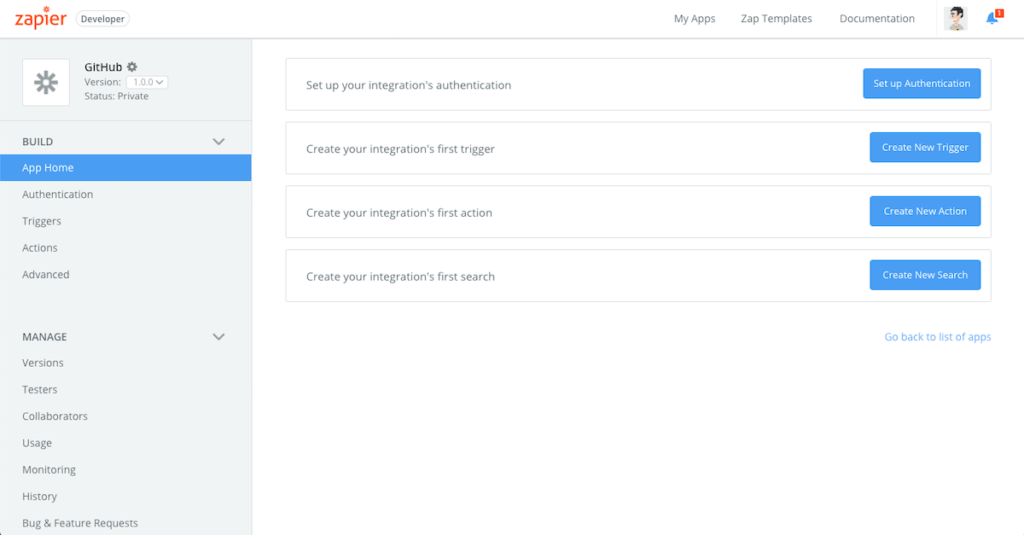
Zapier dashboard(20)
But while Zapier is best known for integrations and automation, people have been using the platform for other interesting and unusual projects from day one.
“[...] that to me, was the first time where I realized, wow, the possibilities of what you can build with Zapier far exceed the simple little integrations. We're actually talking about folks, you can build full-on applications, you can automate full-on different things. It's not just about simple integration anymore. It's about empowering people to build stuff that they didn't think they could do for it.”
Wade Foster, Station F(7)
One example was Kanye Text a Zapier-built site where you could put your friend’s number and anonymously send them a Kanye West quote or lyric for a fee.(21)
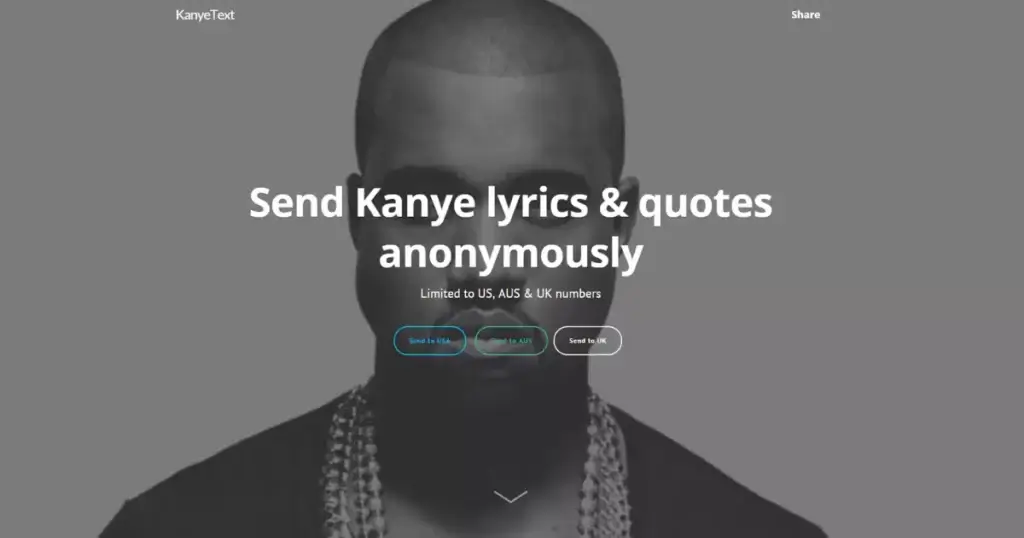
KanyeText was built on Zapier(21)
Of course, joke apps weren’t the only thing that came about thanks to Zapier and No-Code. Here are a few more projects that make the most of no-code flexibility:
Lloyd. A website made for improved career navigation by Nikki Gusz and her brother Dan. Both of them know nothing about coding whatsoever. It’s currently their MVP.(22)
Lambda School. An online coding school that uses Zapier to power its student admissions process and track progress across multiple departments.(23)
TinySuperheroes. A company that makes capes for kids with illnesses or disabilities. The website uses Zapier to enhance and manage the delivery process.(24)
The bottom line? No-code is hot. With scores of apps and services, more users can create wonderful projects with zero coding experience. There’s even a whole movement behind it!
The No-Code Movement
Why is the no-code movement on the rise? No-Code democratizes software,(25) if you will. That’s why No-Code tools have been popping up in the last few years.
Have an idea for a world-changing app? You can create one from scratch without having to learn a programming language or shell out for a developer.
“You no longer need to become a programmer to build things on the internet, empowering a new wave of makers from different backgrounds and perspectives.”
Ryan Hoover, Founder of Product Hunt in "The Rise of No Code"(26)
But that’s not all.
No-Code is also critical for companies that can’t afford or simply don’t need large IT departments. Professionals with no-coding experience but with top-notch industry knowledge can empower their businesses with the right tools with no programming needed.(27)
That’s the power of the No-Code movement.
For instance, you can use sites like Wix, a No-Code website builder, to build a professional and powerful business website. Granted, you may need some help with getting aesthetics right, but all website builders come with built-in templates that make the process much easier.
And the best part?
If you need more features, there are plenty of plugins and extensions you can easily integrate. If you’re stumped, there are online resources you can consult, such as I heart #NoCode.(28)
No-Code is also cost-effective. Making websites or apps from scratch manually usually requires plenty of manpower, especially if the idea is complex. No-Code lets even just one person do it.
🧬 2025 and Beyond: The AI-Native Evolution
Zapier defined the no-code automation era. But in 2025, a new paradigm emerged: AI-native automation.
The difference? Traditional no-code tools like Zapier connect apps with triggers and actions. AI-native platforms create automations that think and adapt.
From No-Code to AI-Native
| Era | Tools | How It Works |
|---|---|---|
| Pre-2011 | Custom APIs | Developers write integrations |
| 2011-2024 | Zapier, Make | Visual triggers + actions |
| 2025+ | Taskade Genesis | AI agents understand intent |
Taskade Genesis represents this next evolution. Instead of building step-by-step workflows, you describe what you want in natural language, and AI agents handle the execution intelligently.
What Makes AI-Native Different
| Feature | Traditional No-Code | AI-Native (Genesis) |
|---|---|---|
| Setup | Build triggers/actions | Describe in words |
| Intelligence | Rule-based | AI understands context |
| Adaptation | Static workflows | Learns and improves |
| Complexity | Multiple zaps needed | One prompt |
| Error handling | Manual configuration | AI adapts |
Example: "Summarize new customer feedback and alert the team if sentiment is negative."
With Zapier, you'd need multiple zaps, external AI APIs, and careful configuration. With Genesis, one prompt creates an intelligent workflow with built-in AI analysis.
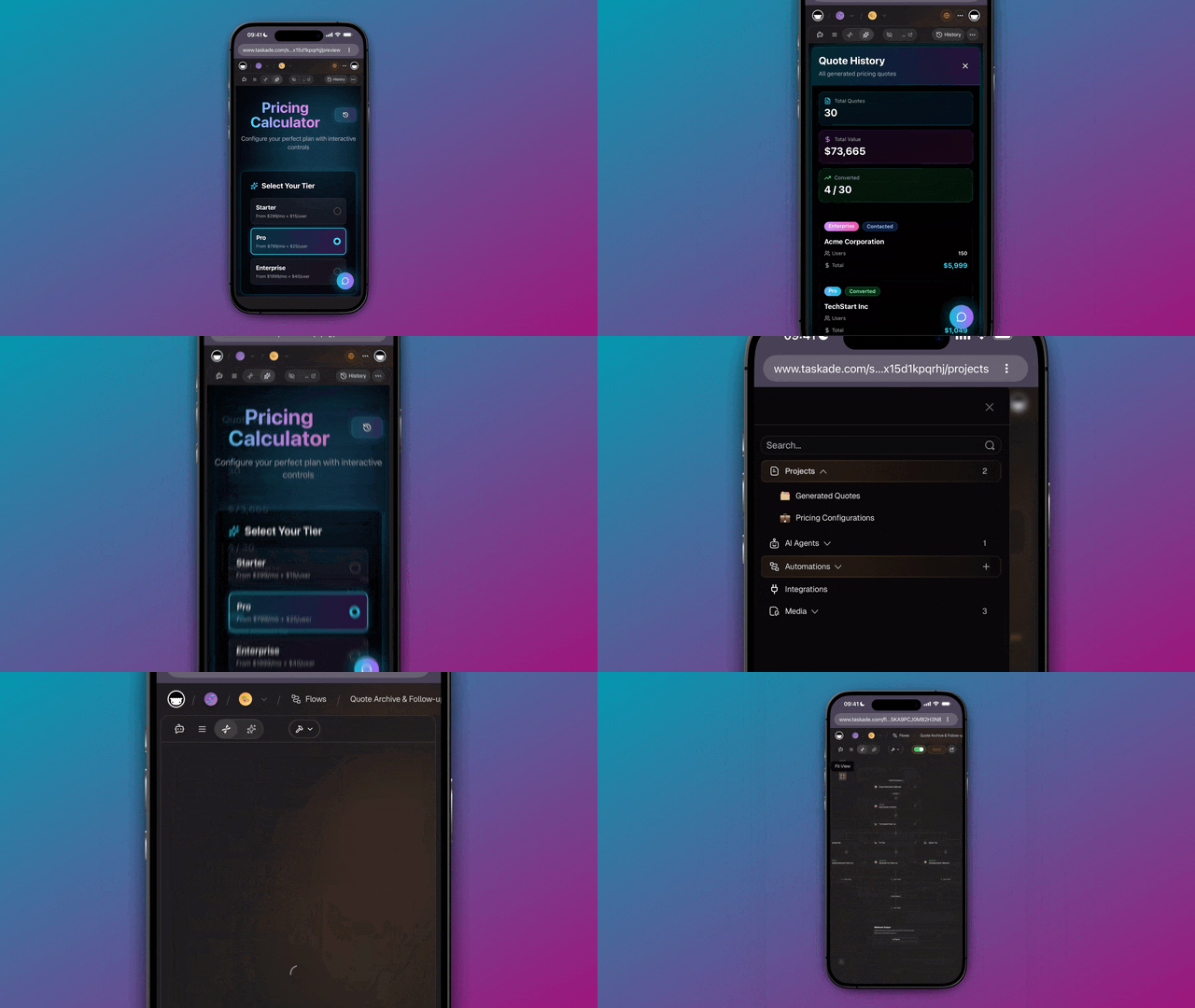
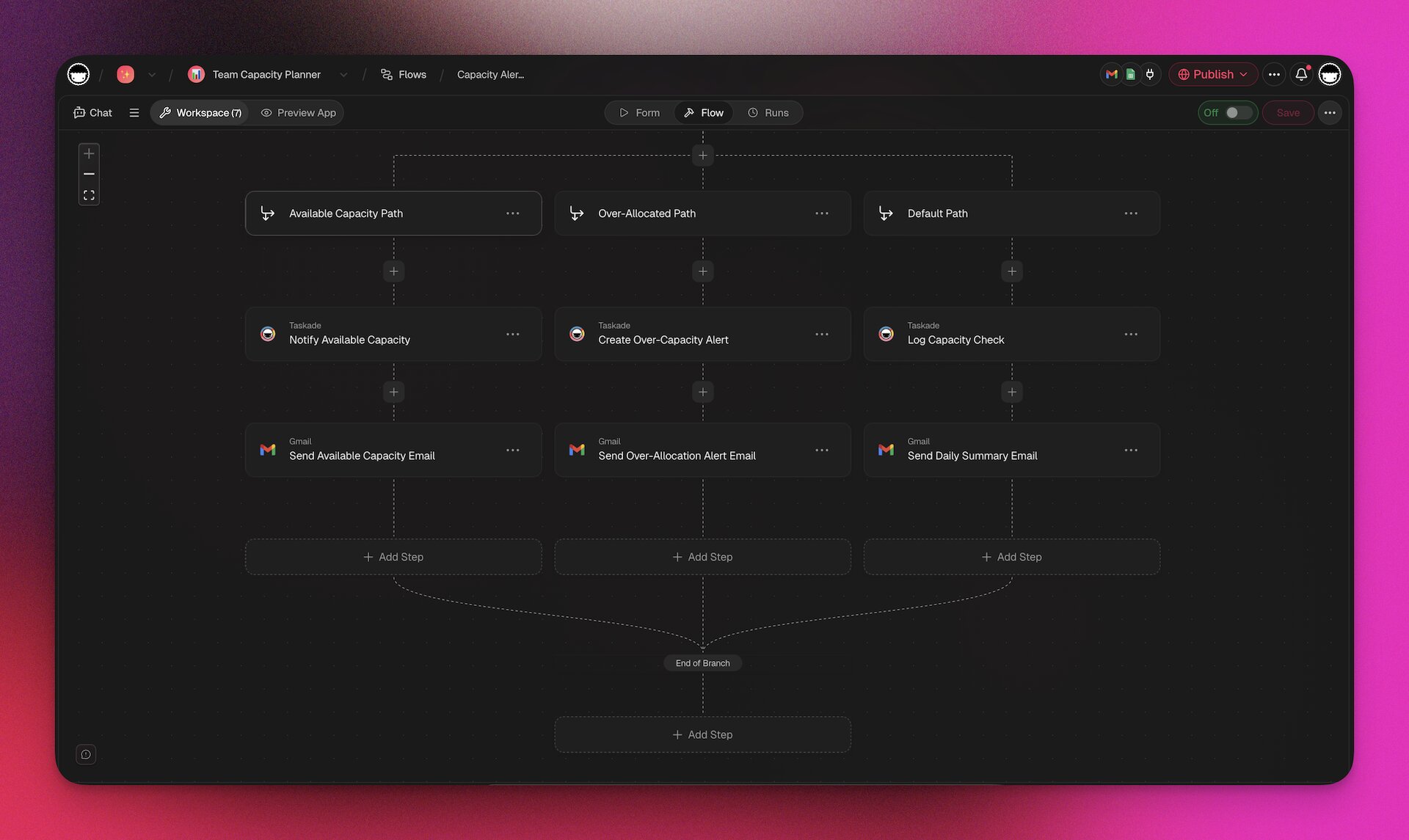
The Convergence
Interestingly, Zapier itself has begun adding AI features (like Zapier Agents and Copilot in 2024-2025). This validates the direction: the future of automation is intelligent, not just connected.
But the question is whether AI should be an add-on (like Zapier's approach) or built from the ground up (like Genesis). History suggests that platforms designed for the new paradigm typically win.
The no-code movement Zapier helped create taught us that anyone can automate. The AI-native movement is teaching us that automation can think for itself.
👉 Explore AI-native automation with Taskade Genesis
💰 Zapier's Financial Story: Bootstrap to $5 Billion
Zapier's financial trajectory is one of the most remarkable in SaaS history. While competitors raised hundreds of millions, Zapier built a multi-billion dollar company on a shoestring budget.
The Bootstrap Legend
Zapier has only raised $2.68 million in venture capital across four seed rounds. The company never took a Series A, Series B, or any subsequent institutional round. Here is the fundraising breakdown:
- 2012: $1.3M seed (Y Combinator batch)
- 2013-2014: Additional seed rounds totaling ~$1.38M
- Total raised: $2.68M across the company's entire history
To put this in perspective, Zapier reached $100M ARR while having raised just $1.4M — a roughly 100x ARR-to-funding ratio. That is virtually unheard of in Silicon Valley.
Why Zapier Never Raised a Series A
The decision not to raise wasn't accidental — it was philosophical. Foster has been remarkably consistent in explaining why Zapier resisted the venture treadmill, even as investors beat down the door:
"We've always felt like the success of our business was about making our customers successful — it wasn't about dollars raised. As long as we were shipping product, customers were growing, revenue was coming in, we were pretty happy. We didn't feel like adding more money to the equation was our bottleneck."
Wade Foster on why customer success trumped fundraising
The dilution math reinforced the conviction:
"If your business is growing at a healthy clip and you're meeting your goals, why take on the dilution? In Series A and Series B rounds these days, you're often diluting 20-25% in one round, then 15-20% in the next. That's a lot of capital and dilution that you don't need."
Wade Foster on the cost of venture capital
Foster observed a pattern he called "fake growth" — companies spending VC dollars on perks and customer acquisition subsidies that masked whether the underlying business actually worked:
"There's this site called 'VC Fund My Life' where you get all these promotions from companies where VC dollars are basically giving you free stuff, trying to pursue growth which is not real. We saw companies offering five flavors of coconut water at the office before they even had product-market fit. We just never chased after that."
Wade Foster on the venture-funded growth trap
Instead of hiring a CFO early, Foster managed Zapier's finances with remarkable simplicity:
"Before we hired a CFO, it was basically me paying attention to: here's what went out the door this month, here's how much we made. In a software company, payroll is your biggest expense. So it was just: we made this much, we spent this much, that means we have the budget to hire one, two, three more people next month."
Wade Foster on bootstrap-era financial management
Even after hiring a CFO, Zapier kept its forecasting deliberately simple — a baseline forecast (what happens if they invest nothing) plus an incremental model (what additional growth targeted investments could deliver). The surplus from beating the baseline went straight to the balance sheet to fund the next year's operations.
Revenue Growth
Zapier's revenue growth has been consistent and impressive:
| Year | Estimated ARR | Key Milestone |
|---|---|---|
| 2016 | ~$25M | 1 million users |
| 2020 | ~$100M | 3 million users, revenue quadrupled |
| 2021 | ~$150M | $5B valuation (secondary sale) |
| 2023 | ~$250M | Profitable and cash-flow positive |
| 2024 | ~$310M | Pricing reform, AI pivot |
| 2025 | ~$400M+ | 81B+ tasks automated |
Valuation and Ownership
In 2021, Zapier facilitated a secondary share sale that valued the company at $5 billion. Investors included Sequoia Capital and Steadfast Financial. Because the founders never diluted through large funding rounds, Wade Foster, Bryan Helmig, and Mike Knoop retain significant ownership of the company.
Key Financial Metrics
- 3+ million businesses use Zapier
- 100,000+ paying customers
- 81+ billion tasks automated since launch
- ~736 employees, fully remote across 40+ countries
- Profitable and cash-flow positive since at least 2023
- Monthly customer churn under 5%
Zapier's bootstrap story proves that in SaaS, product-market fit and capital efficiency can outperform venture-backed hypergrowth. The question now is whether the company can maintain this trajectory as AI reshapes the automation landscape.
🤖 Zapier Agents: From Central to AI Orchestration
The most significant product shift in Zapier's history began in 2024, when the company pivoted from being purely a workflow automation platform to an AI orchestration layer.
Zapier Central (March 2024)
On March 6, 2024, Zapier launched Zapier Central — an experimental AI workspace that let users create automated bots using natural language. The launch coincided with Zapier's acquisition of Vowel, a video conferencing and meeting intelligence startup.
Central was designed as an AI-first companion: users could describe what they wanted in plain English, and Central would create and execute automations across Zapier's 7,000+ (at the time) connected apps.
Evolution to Zapier Agents (Mid-2024)
By mid-2024, Central evolved into the more mature Zapier Agents product. Agents are autonomous AI bots that can:
- Reason through multi-step problems
- Plan sequences of actions across apps
- Execute tasks across 8,000+ connected services
- Learn from feedback and iterate on results
Key features of the Agents platform include:
- Agent Pods: Organized containers for grouping related agent behaviors
- Activity Dashboard: Real-time monitoring of agent actions and decisions
- Version control: Track changes and roll back agent configurations
- Human-in-the-loop oversight: Approval gates for high-stakes actions
ZapConnect 2025 and Beyond
At ZapConnect 2025 (September 25, 2025), Zapier announced major AI expansions:
- Copilot: AI assistant embedded directly in the Zap editor
- MCP (Model Context Protocol) support: Connects Claude, ChatGPT, Cursor, and other AI tools to 8,000+ apps via mcp.zapier.com
- 32 new AI integrations in a single release
- 450+ AI-specific integrations total across the platform
AI tasks on Zapier grew 760%+ year over year, making AI the fastest-growing category in Zapier's history.
Wade Foster on the AI Future
"Stop asking, 'Can AI help us work faster?' and start asking, 'What could we never do — until now?'"
Wade Foster, CEO of Zapier
"We're not going to get one super-model. What we're getting is specialization: Agents that are really good at a particular task."
Wade Foster on AI agent strategy
The Agents pivot represents Zapier's bet that the future of automation is not just connecting apps, but orchestrating AI across apps. Whether Zapier can compete with purpose-built AI agent platforms like Taskade — which also offers Genesis app building and a community gallery of shared workflows — remains an open question.
🗄️ Zapier Tables, Interfaces & Canvas
Beyond Zaps and Agents, Zapier has expanded into an entire product suite designed to replace internal tools and lightweight databases.
Zapier Tables
Zapier Tables reached general availability on September 28, 2023 at ZapConnect. It is an automation-first database with features that go beyond a traditional spreadsheet:
- AI-powered field types: Auto-categorize, summarize, or enrich data using AI
- Buttons that trigger Zaps: Click a button in a table row to kick off an automation
- Formula support: Computed fields similar to Airtable or Excel
- Linked records: Reference data across multiple tables
- Built-in automation: Tables can both trigger and be updated by Zaps
Tables positions Zapier as a competitor to Airtable and Google Sheets for lightweight data workflows.
Zapier Interfaces
Zapier Interfaces launched in mid-2023 as a no-code app builder. It lets users create:
- Forms: Custom input forms connected to Zaps and Tables
- Web pages: Simple landing pages and dashboards
- Chatbots: AI-powered chat interfaces for customer support
- Kanban boards: Visual task management views
Interfaces turn Zapier from a background automation tool into a front-end application builder, enabling teams to create internal tools without code.
Zapier Canvas
Zapier Canvas is an AI-powered flowchart tool introduced to help users visualize and plan their automations before building them. The key innovation: users can diagram a workflow on Canvas and convert it directly into a working Zap. This bridges the gap between planning and execution.
Free on All Plans
In a major strategic move during the 2024 pricing reform, Zapier made Tables and Interfaces free on all plans, including the free tier. This aggressive pricing strategy aims to lock users into the Zapier ecosystem beyond just automation.
💸 Pricing Evolution and Controversy
Zapier's pricing model has been one of its most debated aspects, especially as competitors have offered alternative billing structures.
The Fibonacci Origin Story
Zapier's pricing journey began with one of the most entertaining origin stories in SaaS history. After the $100 PayPal payment from Andrew Warner and the $5 beta, the team needed real pricing. None of them were pricing experts, but all three had read blog posts about it:
"I specifically remember one evening where we finally had to decide. One of us was like, 'We should have three plans because I read this blog post that said this.' The other was like, 'No, it should be four because I read this blog post that said that.' Then it'd be, 'Oh, it should end in a nine because that converts more.' 'No, it should end in a zero because that's more premium.' Just a bunch of amateurs debating random talking points from other internet people."
Wade Foster on the great pricing debate
The debate went on for hours. Then one of them cracked:
"I forget which one of us blinked first, but one of us just started laughing. It was like, 'This is stupid — none of us know what we're talking about. We should just have fun with this thing.' And so we decided our first pricing model would be based off the Fibonacci sequence."
Wade Foster on the moment they gave up on "optimal" pricing
The result: $11/month, $23/month, and $58/month. And because the product was called Zapier, the plan names had to be electrical: Amps, Volts, and Ohms.
"Clearly not optimized. Clearly not built by pricing expertise. But it was fun and it stood out. People were like, 'This is weird, this is different — what's going on with that Zapier thing?' Obviously later on we changed it, but we had fun with it and used it as a way to get a little more attention."
Wade Foster on Fibonacci pricing in hindsight
The Fibonacci pricing lasted several months and actually worked. Some customers from those original plans may still be on them. The episode illustrates a broader truth about early-stage startups: perfect pricing doesn't exist, and shipping something imperfect beats debating forever.
Current Pricing Tiers (2026)
| Plan | Price | Tasks/Month | Key Features |
|---|---|---|---|
| Free | $0 | 100 | Single-step Zaps, Tables, Interfaces |
| Professional | $19.99/mo | 750 | Multi-step Zaps, webhooks, filters |
| Team | $69/mo | 2,000 | Shared workspace, premier support |
| Enterprise | Custom | Custom | SSO, SCIM, audit logs, SLA |
The 2024 Pricing Reform
In 2024, Zapier enacted sweeping pricing changes after CEO Wade Foster acknowledged fundamental issues:
"If our support team can't figure out what's happening, what chance do our customers have?"
Wade Foster on the old pricing model
Key changes included:
- Unlimited Zaps on all plans (previously capped)
- Free Tables and Interfaces on all tiers
- Filters and conditionals no longer count as tasks
- Internal automation tools made free
- Simplified task counting across the board
The Task-Based Pricing Controversy
Zapier's fundamental pricing unit is the task — each step in a Zap that processes data counts as one task. This creates a multiplication effect:
Example: A 10-step workflow processing 1,000 records = 10,000 tasks consumed.
Compare this to competitors:
- n8n: Charges per execution (the same 10-step workflow = 1,000 executions)
- Make: Charges per operation (similar to tasks, but typically cheaper per unit)
This pricing structure means Zapier can become significantly more expensive at scale, which has driven many power users to alternatives like n8n and Make.
Impact of the Reform
After the 2024 pricing reform, Zapier reported that usage surged after two years of decline. The simplification removed friction that had been causing customer churn and confusion.
⚔️ Zapier vs n8n vs Make: The Automation Wars
The automation market in 2025-2026 is a three-horse race between Zapier, n8n, and Make. Each platform serves different users with different philosophies.
Comparison Table
| Feature | Zapier | n8n | Make |
|---|---|---|---|
| Integrations | 8,000+ | 400+ official + 5,800 community | 2,500+ |
| Self-hosting | No | Yes (open-source) | No |
| Pricing model | Per task | Per execution | Per operation |
| AI capabilities | Agents, Copilot, MCP | LangChain, RAG, vector stores | AI Agent nodes |
| Target user | Non-technical | Technical teams | Power users |
| Open source | No | Yes (fair-code) | No |
| Revenue | ~$400M ARR | ~$40M ARR | N/A |
| Valuation | $5B | $2.5B | N/A (Celonis-owned) |
| Founded | 2011 | 2019 | 2012 (as Integromat) |
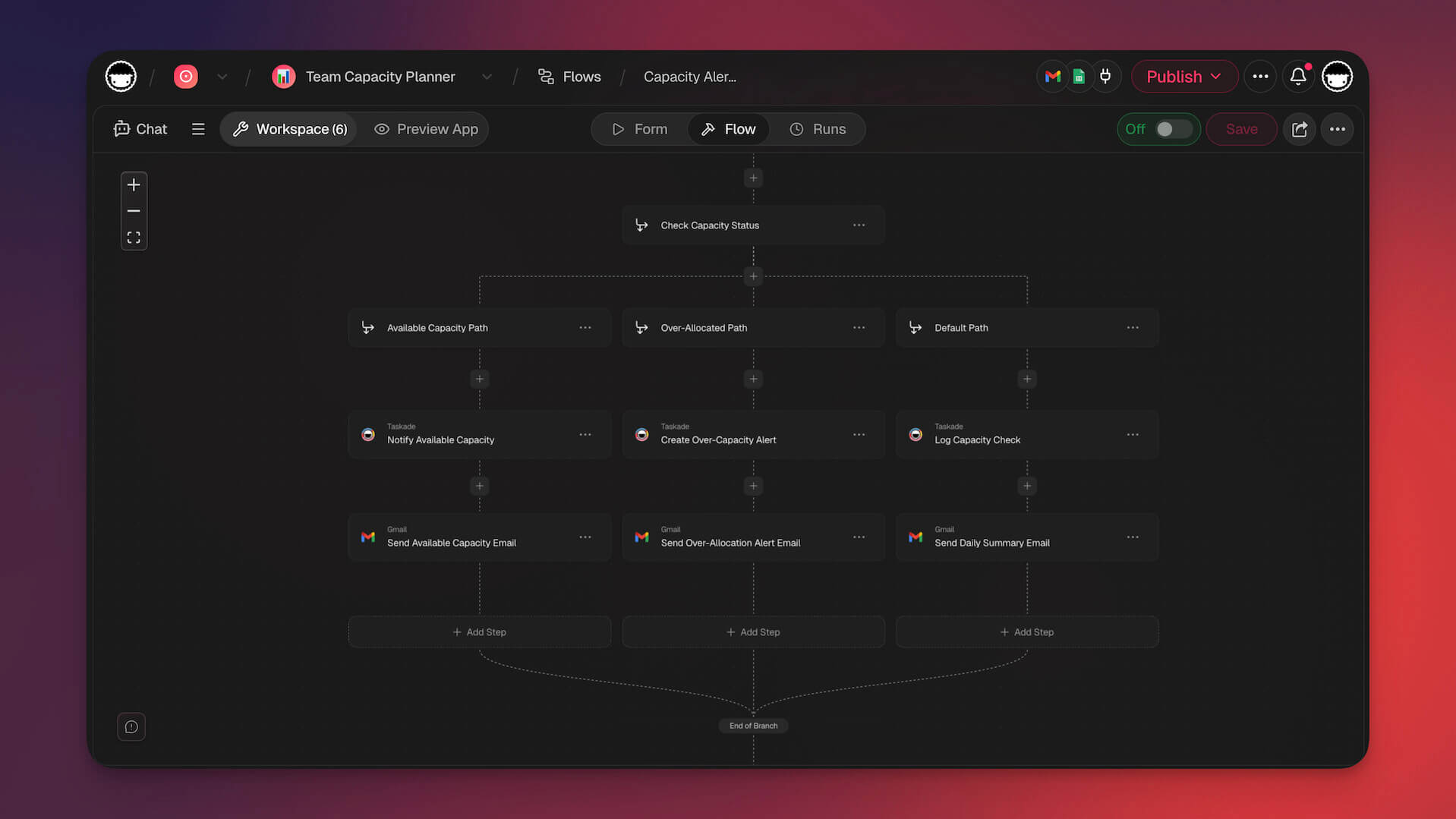
Zapier Alternatives Comparison (2026)
| Feature | Taskade | Make | n8n | Power Automate |
|---|---|---|---|---|
| AI Features | AI agents with 11+ frontier models, persistent memory, custom tools | AI Agent nodes, basic AI steps | LangChain, RAG, vector stores | AI Builder, Copilot Studio |
| Integrations | 100+ native integrations | 2,500+ | 400+ official + 5,800 community | 1,000+ (Microsoft ecosystem) |
| Pricing Model | Starter $6/mo, Pro $16/mo (10 users), Business $40/mo | Per operation (from $9/mo) | Per execution (from $20/mo) | Per user/flow ($15/mo) |
| Self-Host | No | No | Yes (open-source) | No (Azure only) |
| Best For | AI-native automation + project management + app building | Visual workflow power users | Technical teams wanting full control | Microsoft 365 enterprises |
Zapier's Strengths
- Sheer breadth: 8,000+ integrations is unmatched
- Ease of use: Designed for non-technical users
- AI-first features: Agents, Copilot, and MCP support
- Brand recognition: The default name in automation
n8n's Strengths
- Open source: Self-host for free, no vendor lock-in
- Developer-friendly: Native code execution, LangChain integration
- Cost-effective at scale: Execution-based pricing avoids the task multiplication problem
- AI-native architecture: Built-in support for vector stores, RAG pipelines, and AI agent workflows
For a deeper dive, see our history of n8n and best n8n alternatives.
Make's Strengths
- Visual builder: Arguably the most intuitive workflow designer
- Price-to-value ratio: Typically cheaper than Zapier for equivalent workflows
- Complex logic: Strong support for branching, looping, and error handling
- Celonis backing: Acquired by process mining giant Celonis, adding enterprise credibility
The AI Wildcard
What none of these platforms fully address is AI-native automation — workflows that do not just connect apps but think, adapt, and execute intelligently. This is where platforms like Taskade and its AI agents are carving out a new category entirely — combining automation, app building, and a community gallery of ready-made templates.
Looking for a Zapier alternative? See our full comparison of free Zapier alternatives.
🔒 Security Incidents
As Zapier has grown into critical infrastructure for millions of businesses, security has become an increasingly important concern. In 2025, two notable incidents tested the company's incident response.
February 2025: Data Breach via 2FA Misconfiguration
In February 2025, Zapier disclosed a data breach caused by a two-factor authentication misconfiguration on an employee account. Unauthorized access was gained to internal systems, potentially exposing customer data. Zapier notified affected users and published a detailed post-mortem.
November 2025: Shai Hulud 2.0 Supply Chain Attack
In November 2025, Zapier was caught in the Shai Hulud 2.0 supply chain attack, where a compromised NPM account led to 425 Zapier-related packages being infected with malicious code. The attack targeted the NPM ecosystem broadly, and Zapier was one of several companies affected.
Response and Transparency
Both incidents were handled with notable transparency — Zapier published detailed incident reports, notified affected customers promptly, and outlined remediation steps. The company's response reinforced the importance of supply chain security and authentication best practices for all SaaS platforms.
🌍 Remote-First Culture: The Distributed Advantage
Zapier was remote-first before remote work was fashionable — and the company's distributed DNA has been one of its most underappreciated competitive advantages.
From Missouri to Everywhere
The shift to remote happened almost accidentally. When Zapier started hiring beyond the three founders, the first recruits were former colleagues — who happened to be in the Midwest while the founders were in California:
"We noticed: customers continue to grow, we continue to ship product, we're hitting our goals. So we realized location isn't the thing that's slowing us down. Why not open up to a strategic advantage — hiring great talent anywhere in the world?"
Wade Foster on the remote-first revelation
By the time of the first interview, Zapier had 250+ employees across 30 U.S. states and 20 countries. Today the team has grown to approximately 736 employees spanning 40+ countries — and there is still no headquarters.
Retention as Competitive Moat
Foster identified a specific advantage that most companies overlook — retention. In Silicon Valley, the average tenure at a tech company is roughly two years. Zapier's remote model, by aligning work with employees' personal lives, dramatically reduced turnover:
"Our retention rates are so much better because we have a way of working that aligns with people's personal and work lives. We get continuity and knowledge that is really hard to build in companies when you're constantly turning over your workforce every two years."
Wade Foster on why remote reduces churn
That institutional knowledge compounds over time. Engineers who've been at Zapier for five or six years understand the codebase, the customer patterns, and the integration ecosystem in ways that no new hire — however talented — can replicate quickly.
The Timezone Evolution
Zapier's approach to distributed time zones has evolved. Early on, the team was enthusiastic about follow-the-sun coverage — 24/7 support without anyone pulling a 3 AM pager duty shift. But as the company grew, they discovered nuance:
"On certain teams — your product teams, your pizza teams in the Amazon model — there are benefits for timezone overlap. We are a little more intentional about trying to shape that. It is difficult when you have a product team with an individual in Americas, Europe, and Asia — the cycle times are just a little bit slower."
Wade Foster on the timezone tradeoff
The result is a hybrid approach: global hiring for functions like support and operations (where follow-the-sun coverage is genuinely valuable) and timezone-clustered hiring for product teams (where synchronous collaboration matters more).
The De-Location Package
One of Zapier's most innovative (and widely copied) HR experiments was the de-location package — paying employees to move away from expensive tech hubs. The logic was simple: if an engineer moves from San Francisco to, say, Boise or Lisbon, their cost of living drops dramatically while their quality of life often improves. Zapier offered to help fund the move.
The program became a case study in remote-first culture and helped establish Zapier as one of the most desirable remote employers in tech — long before the COVID-19 pandemic forced every company to figure out distributed work.
🏢 Enterprise Features
As Zapier has moved upmarket, the company has invested heavily in enterprise-grade features.
Compliance and Certifications
- SOC 2 Type II certified
- GDPR compliant
- CCPA compliant
- Regular third-party security audits
Identity and Access Management
- SAML SSO: Single sign-on integration with Okta, Azure AD, and other identity providers
- SCIM provisioning: Automated user provisioning and deprovisioning
- Domain capture: Automatically consolidate all company accounts under a single organization
- Audit logs: Detailed logging of all user actions and automation executions
AI Transformation Culture
In October 2025, Zapier appointed its first Chief People & AI Transformation Officer, signaling how seriously the company takes AI adoption internally. Key statistics from Zapier's internal AI transformation:
- 97% of employees use AI tools daily
- 100% of new hires are evaluated for AI fluency during the interview process
- AI-powered internal tools handle onboarding, IT support, and knowledge management
This internal AI-first culture mirrors Zapier's external product strategy and positions the company as a case study in enterprise AI adoption.
🎙️ Inside the Founder's Mind: Wade Foster Interviews
To understand Zapier's culture and strategy, listen to its founder. These two interviews — one from the early growth era and one reflecting on the $5B journey — reveal the thinking behind Zapier's bootstrap philosophy, PLG obsession, and remote-first culture.
From Side Project to $50M Revenue & 3 Million Users
In this talk, Foster walks through the founding story, the forum-hustling customer acquisition strategy, the Fibonacci pricing origin, and why Zapier never took venture capital beyond a $2.68M seed:
How Zapier Became Profitable in 3 Years and Scaled to $5B
In this deeper conversation, Foster reveals the Andrew Warner first-customer story, the bespoke onboarding machine that shaped Zapier's product quality, and the growth formula that turned integrations into a compounding customer acquisition engine:
On the one thing he'd do differently:
"The number one thing is we spent a lot of time on Zapier as a side project. Knowing what I know now, I would have just dived right in and gotten right onto it — because of how successful it has continued being, how big the opportunity is for us to help a lot of people grow their businesses. I wish we would have just gone full throttle right out of the gate."
Wade Foster on his biggest regret
On seeking advice as a CEO:
Foster's approach to mentorship is deliberately tactical — seeking out founders who are one stage ahead, not industry legends:
"I try to reach out to CEOs and founders who are at companies just beyond where we're at. If we're at $20 million, we're looking at people at $40 million. If we're at $50 million, we're looking at people at $100 million. They have very real, visceral opinions because they just lived it."
Wade Foster on just-in-time learning
At around $25 million ARR, Foster took the advice of multiple CEOs who suggested he get an executive coach — a practice he'd been skeptical about:
"A bunch of CEO friends started asking: do you have a CEO coach? I'd been pretty skeptical of the coaching industry. But a whole bunch of smart people were suggesting it, so I thought — maybe I should look into it. Turns out it's pretty valuable to have an objective third party that doesn't have a vested interest in the business, just looking out for you."
Wade Foster on the CEO coach revelation
Taskade: The AI-Native Zapier Alternative
Looking for an automation platform that goes beyond connecting apps? Taskade combines AI-native automation with project management, AI agents, and app building in a single workspace.
Why teams choose Taskade over Zapier:
- AI Agents powered by 11+ frontier models from OpenAI, Anthropic, and Google — with persistent memory, custom tools, and multi-agent collaboration
- Built-in Automation with 100+ integrations, branching/looping logic, and Temporal durable execution
- 8 Project Views — List, Board, Calendar, Table, Mind Map, Gantt, Org Chart, Timeline
- Genesis App Builder — create live apps, dashboards, and portals from natural language prompts and publish to the Community Gallery
- Real-time collaboration with integrated chat, video conferencing, and commenting
- Pricing that scales — Free plan available, Starter at $6/mo, Pro at $16/mo (10 users included), Business at $40/mo
Get started with Taskade for free and experience the next generation of automation.
Frequently Asked Questions About Zapier and No-Code
How did Zapier start?
Zapier started in 2011 when co-founders Wade Foster, Bryan Helmig, and Mike Knoop identified a need for an easy way to connect various web applications. They developed a prototype during a startup weekend in Columbia, Missouri, which gained immediate interest and validation. This project evolved into Zapier, a tool designed to automate repetitive tasks by integrating different apps. The company's mission was to make automation accessible to everyone.
How old is Zapier?
Zapier is over 14 years old. The company was founded in October 2011 and has since grown into a widely used automation platform valued at $5 billion, helping millions of users streamline their workflows by connecting over 8,000 web applications.
What is better than Zapier?
The best alternative to Zapier depends on your specific needs. Taskade Genesis represents the AI-native evolution of automation, allowing you to create intelligent workflows with natural language instead of building triggers manually. Make (formerly Integromat) provides advanced automation with complex conditional logic. Microsoft Power Automate is strong for users in the Microsoft ecosystem. See our full comparison of Zapier alternatives.
Is Zapier a no-code?
Yes, Zapier is a no-code platform. It allows users to create automated workflows, known as "Zaps," without needing to write any code. Users can connect various apps and set up triggers and actions through a simple, user-friendly interface. This makes it accessible for people with no coding experience to automate repetitive tasks and integrate their favorite web applications.
What is AI-native automation?
AI-native automation represents the next evolution beyond no-code. Instead of building triggers and actions manually, you describe what you want in natural language and AI agents handle the execution intelligently. Platforms like Taskade Genesis are leading this shift, offering automations that understand context, make decisions, and adapt, not just connect apps. Learn more about AI agents.
What is Zapier Agents?
Zapier Agents are autonomous AI bots that can reason, plan, and execute actions across 8,000+ connected apps. Launched in mid-2024 (evolving from the earlier Zapier Central experiment), Agents use large language models to interpret natural language instructions and orchestrate multi-step workflows. Features include Agent Pods, an Activity Dashboard, version control, and human-in-the-loop approval gates. AI tasks on Zapier have grown 760%+ since launch.
How much does Zapier cost?
Zapier offers four pricing tiers: Free ($0/month, 100 tasks), Professional ($19.99/month, 750 tasks), Team ($69/month, 2,000 tasks), and Enterprise (custom pricing). In 2024, Zapier simplified pricing by making Zaps unlimited, Tables and Interfaces free, and removing filters from the task count. Task-based pricing means costs can scale quickly for complex workflows — a 10-step Zap processing 1,000 records uses 10,000 tasks.
Is Zapier profitable?
Yes. Zapier has been profitable and cash-flow positive since at least 2023. The company raised only $2.68 million in venture capital total — never taking a Series A or beyond. Zapier reached $100M ARR on just $1.4M in funding (a ~100x ratio), grew to an estimated $400M+ ARR by 2025, and was valued at $5 billion in a 2021 secondary sale. The company serves 3+ million businesses and over 100,000 paying customers.
What are Zapier Tables?
Zapier Tables is an automation-first database that reached general availability in September 2023. It offers AI-powered field types, buttons that trigger Zaps, formula support, and linked records. Tables bridges the gap between spreadsheets and databases, letting users store, manage, and automate data without leaving the Zapier ecosystem. It was made free on all plans in 2024.
How many integrations does Zapier have?
Zapier supports over 8,000 app integrations, making it the largest integration marketplace in the automation space. This includes 450+ AI-specific integrations. By comparison, n8n offers 400+ official integrations (plus 5,800 community-built), and Make offers 2,500+. Zapier's breadth of integrations remains its primary competitive moat.
Has Zapier had security breaches?
In 2025, Zapier experienced two notable security incidents. In February, a data breach occurred due to a 2FA misconfiguration on an employee account. In November, the company was affected by the Shai Hulud 2.0 supply chain attack, which compromised 425 Zapier-related NPM packages. Both incidents were handled transparently with detailed public post-mortems and customer notifications.
What is Zapier MCP?
Zapier MCP (Model Context Protocol) support lets AI tools like Claude, ChatGPT, and Cursor connect to 8,000+ apps through Zapier's integration layer. Available at mcp.zapier.com, it enables AI models to trigger automations, read data, and take actions across connected services. MCP was announced at ZapConnect 2025 and represents Zapier's strategy to become the default integration layer for AI applications.
How does Zapier compare to n8n?
Zapier and n8n serve different audiences. Zapier offers 8,000+ integrations with a no-code interface designed for non-technical users, plus AI features like Agents and Copilot. n8n is open-source and self-hostable, ideal for technical teams who want full control. The biggest difference is pricing: Zapier charges per task (each step counts), while n8n charges per execution (the whole workflow counts as one). See our best n8n alternatives guide for more.
Is Zapier going public?
As of early 2026, Zapier has not announced any plans for an IPO. CEO Wade Foster has indicated the company is focused on building a durable, long-term business rather than pursuing a public listing. With only $2.68M in total venture funding, minimal dilution, and consistent profitability, Zapier is under far less pressure to go public than most companies at its scale. The founders retain significant ownership and have the flexibility to choose their own timeline.
🔗 Resources

Taskade AI banner