






Top 12 Open-Source Autonomous Agents & Agent Frameworks: The Future of Self-Running AI (2026)
Newton once said, “If I have seen further, it is by standing on the shoulders of giants.” Well, if the giants had a modern twist, it’d be autonomous, open-sourc...
On this page (18)
Newton once said, “If I have seen further, it is by standing on the shoulders of giants.” Well, if the giants had a modern twist, it’d be autonomous, open-source AI agents doing the heavy lifting.
In today’s article, we take a look at some of the best open-source AI agents and multi-agent frameworks you can use in your personal and business. We also take a deep dive into some of the opportunities, challenges, and unknowns of agent architecture. You will learn:
🔶 How open-source AI agents create opportunities for innovation and efficiency.
🔶 Which multi-agent frameworks offer the best features for your projects.
🔶 When to best implement AI agents in solving practical, real-world issues
🔶 What impact autonomous agents will on AI-powered task management.
And much more...
💡 Psst... New to agents? Be sure to check our article on autonomous task management.
🤖 What Are Autonomous Agents?
Tools like ChatGPT, DALL-E 3, or Midjourney use prompt-based interfaces for human-AI interactions. That means you need to write a set of instructions in natural language — usually followed by a ton of breakneck reprompting attempts — to get a meaningful response.
It’s slow, counterintuitive, given what AI models are capable of. Since Neuralink is still some time away, we need better, more efficient ways to interface with artificial intelligence.
Autonomous agents (or AI agents for short), take the role of taskmasters for AI. They are simple apps that work in self-directed loops, setting, prioritizing, and reprioritizing tasks for AI until the overarching objective is complete. The result? A (relatively ) hands-free AI experience.

💡 AI Agent Trivia: The concept of autonomous AI agents came to life with a paper titled “Task-Driven Autonomous Agent” published in early 2023 by Yohei Nakajima, general partner at Untapped Capital.
The agent architecture came to life in March 2023, but it wasn’t until a few months later that it took a grip in the open-source community. The agent landscape may still seem like a “mad scientist” kind of experiment, but there are already a few insanely powerful models you can try.
Since then, the field has learned a critical lesson: the model powering an agent matters less than the harness around it. The EPICS Agent benchmark found that frontier models completing real professional tasks succeed only 24% of the time — not because the models lack intelligence, but because agents get lost after too many steps, loop on failed approaches, and lose track of objectives. The three most successful agent systems in 2026 (OpenAI Codex, Claude Code, and Manus) all converged on the same insight: simpler infrastructure with better context management beats elaborate tooling. Claude Code runs on just four core tools. Manus rebuilt their framework five times, and every iteration got simpler and better.
🏆 Top Open Source Autonomous Agents and Agent Frameworks
AutoGPT
Developed by Toran Bruce Richards, founder of the Significant Gravitas Ltd. video game company, AutoGPT is one of the early agents that launched back in March 2023 following Nakajima’s paper. It’s also the most popular agent repo available on GitHub today.
The idea behind AutoGPT is simple — it’s a complete toolkit for building and running custom AI agents for all kinds of projects. The tool uses OpenAI's GPT-4 and GPT-3.5 large language models (LLM) and allows you to build agents for all kinds of personal and business applications.
Visit the repo page to learn more: https://github.com/Significant-Gravitas/AutoGPT
BabyAGI
BabyAGI is a pared-down version of Nakajima’s Task-Driven Autonomous Agent. The Python script is only 140 words of code and, according to the official GitHub repo, “uses OpenAI and vector databases such as Chroma or Weaviate to create, prioritize, and execute tasks.”
Since its launch, BabyAGI has branched into several interesting projects. Some like twitter-agent🐣 or BabyAGI on Slack bring the power of agents to existing platforms. Others add plugins and additional features or port BabyAGI to other languages (e.g. babyagi-perl).
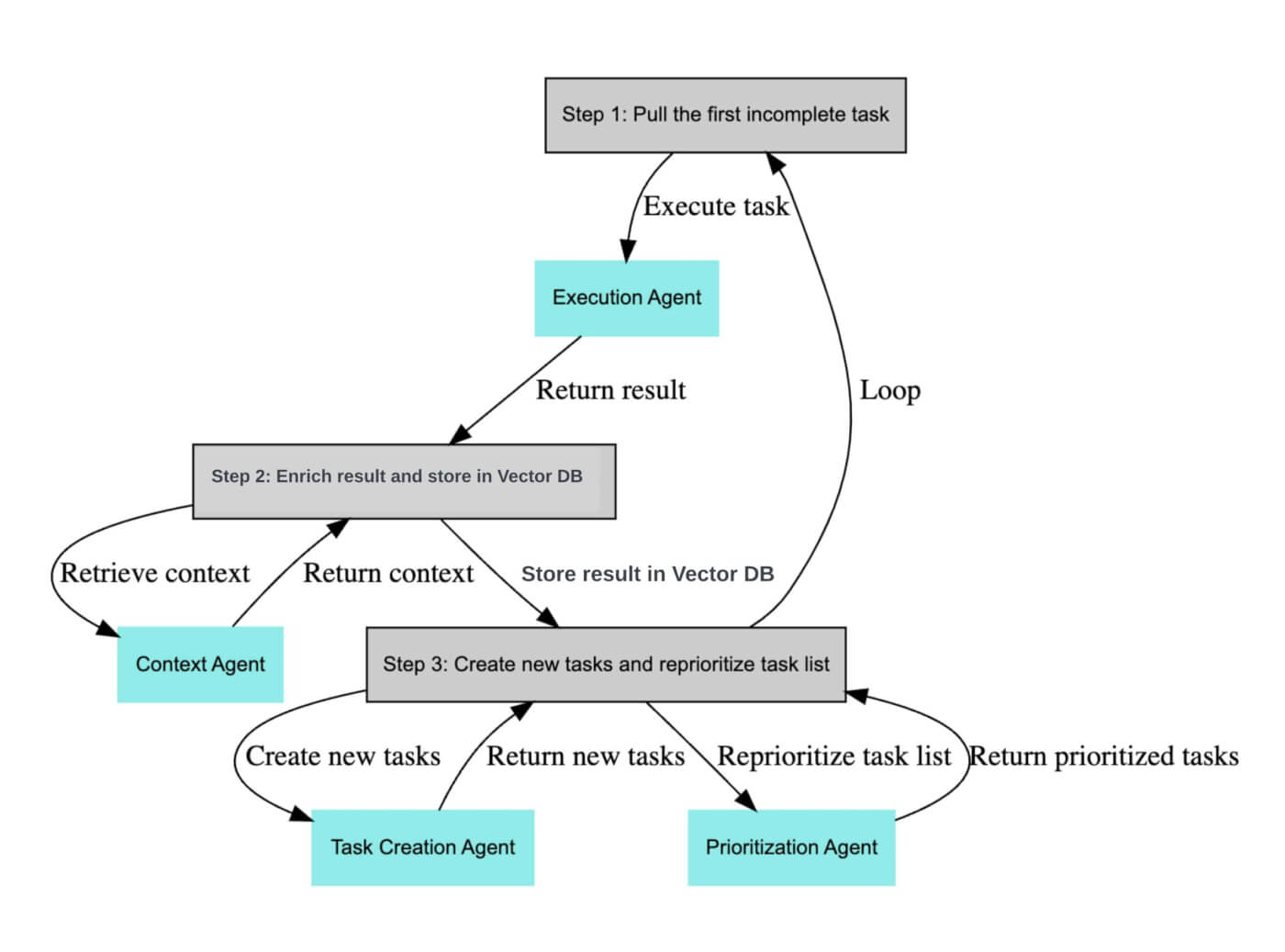
A BabyAGI agent loop. Source: github.com/yoheinakajima/babyagi
Visit the repo page to learn more: https://github.com/yoheinakajima/babyagi
SuperAGI
SuperAGI is a more flexible and user-friendly alternative to AutoGPT. Think of it as a launchpad for open-source AI agents that comes with everything you need to build, maintain, and run your own agents. That also includes plugins and a cloud version where you can test things out.
The framework features multiple AI models, a graphical user interface, integrations with vector databases (for storing/retrieving data), and performance insights. There is also a marketplace with toolkits that allow you to connect it to popular apps and services for additional functions.
Visit the repo page to learn more: https://github.com/TransformerOptimus/SuperAGI
ShortGPT
AI models are crashing it when it comes to generating content. But until recently, video formats have been largely underserved. ShortGPT is a framework that allows you to use large language models to streamline complex tasks like video creation, voice synthesis, and editing.
ShortGPT can handle most typical video-related tasks like writing video scripts, generating a voiceover, selecting background music, writing titles and descriptions, and even editing videos. The tool works both for short and longer video content, regardless of the platform.
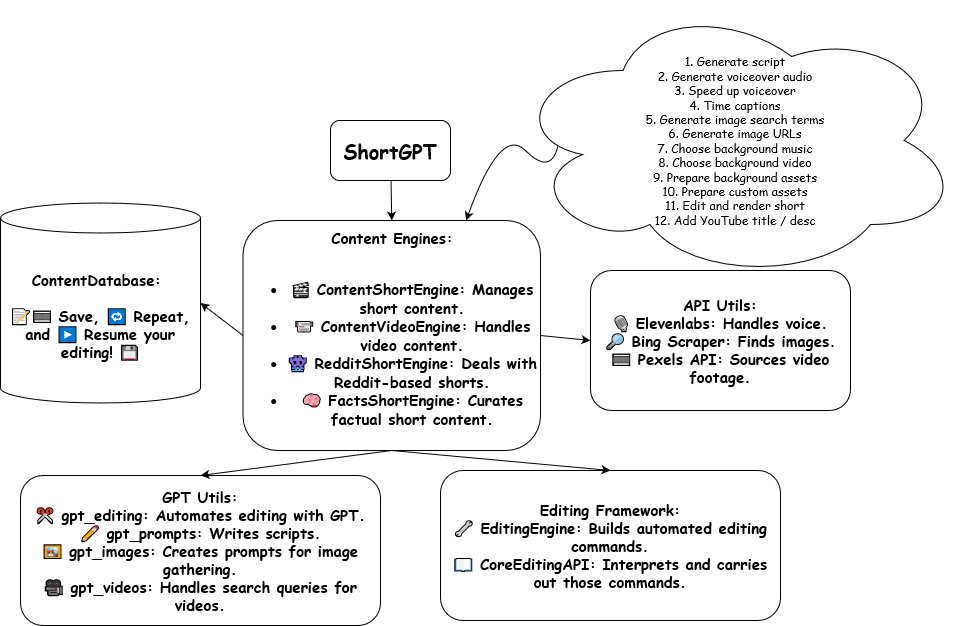
ShortGPT loop and features. Source: github.com/RayVentura/ShortGPT
Visit the repo page to learn more: https://github.com/RayVentura/ShortGPT
LangChain
LangChain is an open-source framework designed for building applications powered by large language models (LLMs). It allows developers to create complex autonomous agents that can process tasks, interact with APIs, and manage workflows through chain-based architectures.
By focusing on prompt management, memory integration, and tool interaction, LangChain helps with building dynamic, multi-step AI agents. Its modular design supports both sequential and parallel chains, making it versatile for a wide range of use cases, from text generation to decision-making tools.
Key Features:
Component-Based Architecture: Offers a modular approach, supporting prompt management, chain development, and memory systems for better contextual handling.
Tool Integration: Enables interaction with external APIs, databases, and other tools, expanding agent reasoning and task execution capabilities.
Wide Model Compatibility: Works seamlessly with various LLMs, making it adaptable to diverse AI needs.
Active Community: Backed by a strong open-source community, providing extensive documentation, frequent updates, and collaborative resources.
Real-World Use Cases: Used in chatbots, virtual assistants, and task automation, LangChain excels in building robust agents for both simple and complex workflows.
LangChain’s chain-based design make it a preferred choice for developers looking to build scalable, task-oriented autonomous agents. Its comprehensive ecosystem supports memory management and external tool calls, which are crucial for advanced decision-making and complex interactions.
Visit the repo page to learn more: https://github.com/langchain-ai/langchain
ChatDev
Branded as “a virtual software company,” ChatDev (25,000+ GitHub stars) is one of the most compelling demonstrations of what multi-agent systems can actually produce. It assigns LLM-powered agents to roles in a simulated software organization — CEO, CTO, programmer, designer, tester — and runs them through a complete software development lifecycle.
Here’s how a typical run works:
- You type a single request (e.g., “build a gomoku game”)
- The AI CEO creates a project plan and breaks it into tasks
- The CTO proposes an architecture; programmers suggest alternatives — they negotiate and compromise
- Programmer agents write code — sometimes adding features you didn’t request, like a GUI or higher difficulty modes
- Tester agents debug and iterate with the dev team
- ~20 minutes later: a working, playable application is ready
The output is still buggy — ChatDev isn’t replacing engineering teams. But the underlying pattern is profound: agents that decompose requirements, negotiate design decisions, build, test, and iterate represent a working prototype of autonomous task management at organizational scale.
What makes ChatDev significant for the broader agent ecosystem is that improvements emerge from agent interaction, not from better individual prompts. The CTO and programmer agents produce better architecture together than either would alone — the same principle behind enterprise multi-agent workflows.
Visit the repo page to learn more: https://github.com/OpenBMB/ChatDev
AutoGen
After pumping $13 billion into OpenAI and making Bing a tad smarter, Microsoft is now a major player in the AI space. Its AutoGen is an open-source framework for developing and deploying multiple agents that can work together to achieve objectives autonomously.
AutoGen attempts to facilitate and simplify communication between agents, reduce errors, and maximize the performance of LLMs. It also features extensive customization and allows you to choose preferred models, improve output with human feedback, and tap into additional tools.
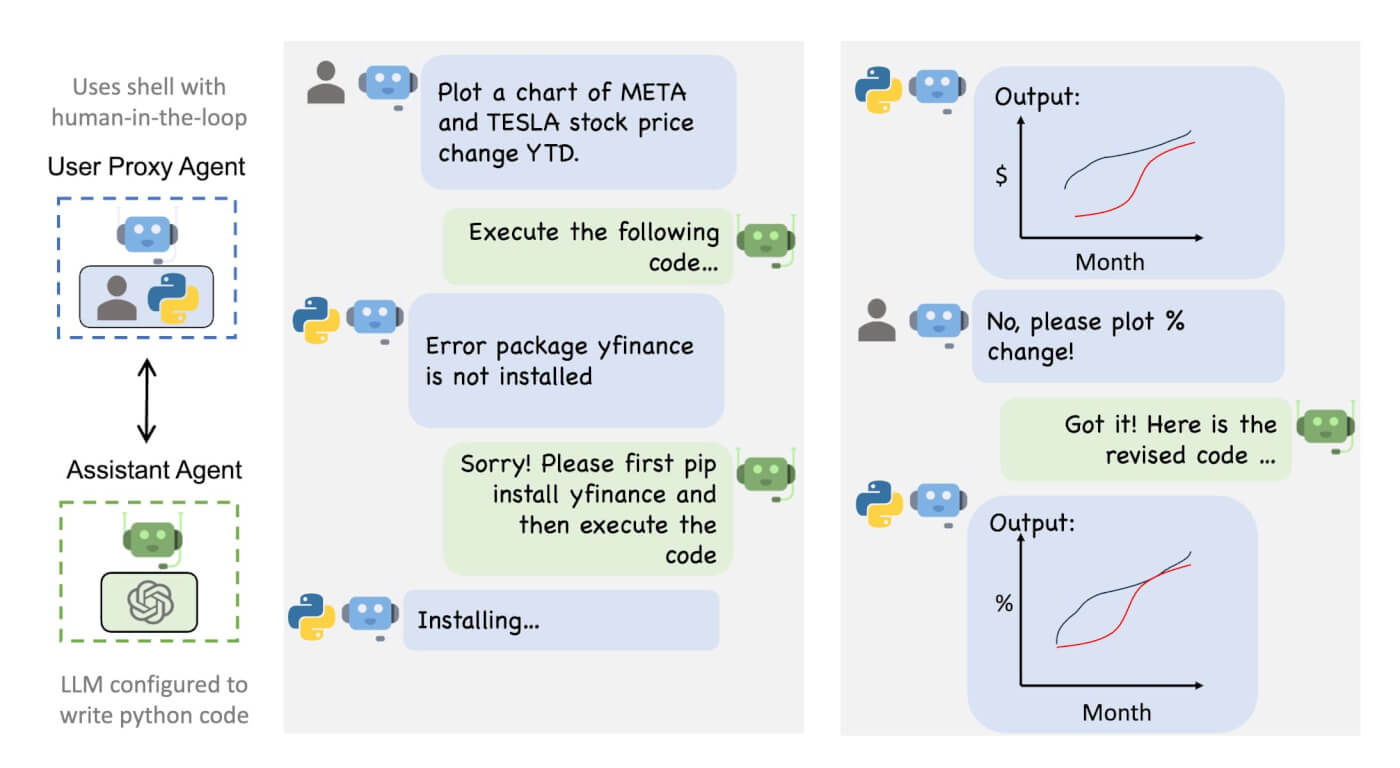
An example of a conversation flow in AutoGen. Source: github.com/microsoft/autogen
Visit the repo page to learn more: https://github.com/microsoft/autogen
MetaGPT
MetaGPT is another framework for open-source AI agents that attempts to imitate the structure of a traditional software company. Similar to ChatDev, agents are assigned roles of product managers, project managers, and engineers, and they collaborate on user-defined coding tasks.
So far, MetaGPT can only tackle moderately challenging tasks — think coding a game of snake or building simple utility apps — but it’s a promising tool that may rapidly evolve in the future. Generating a complete project will run you back around $2 in OpenAI API fees.
Visit the repo page to learn more: https://github.com/geekan/MetaGPT
Camel
We wrote about Camel in one of our previous articles, and the project has evolved since then. In a nutshell, Camel is one of the early multi-agent frameworks that uses a unique role-playing design to enable several agents to communicate and collaborate with each other.
It all starts with a human-defined task. The framework uses the power of an LLM to dynamically assign roles to agents, specify and develop complex tasks, and arrange role-playing scenarios to enable collaboration between agents. It’s like theater for artificial intelligence.
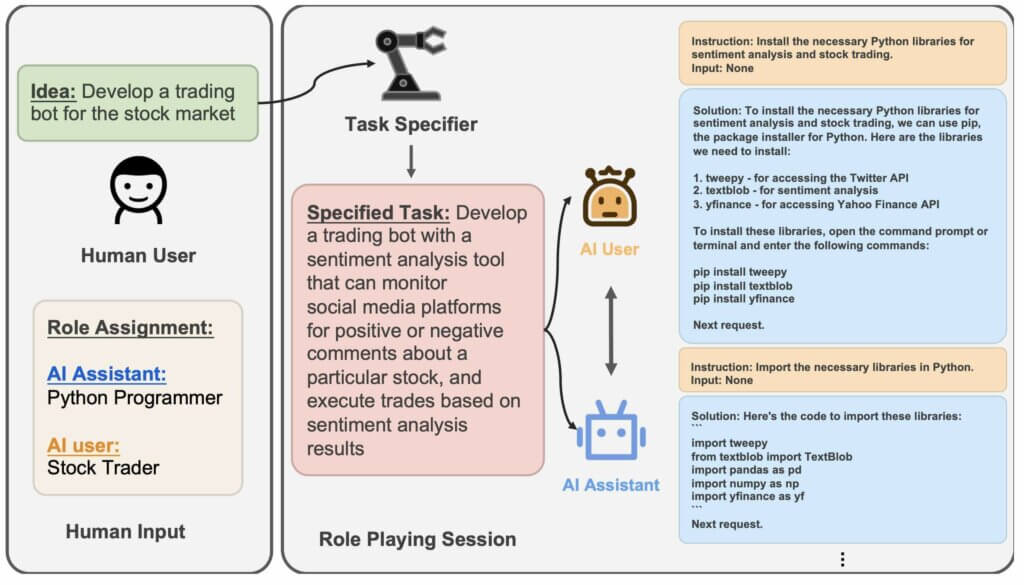
A conversation between two ChatGPT agents. Source: github.com/camel-ai/camel
Visit the repo page to learn more: https://github.com/camel-ai/camel
Loop GPT
LoopGPT is an iteration of Toran Bruce Richards’ AutoGPT. Apart from a proper Python implementation, the framework brings improved support for GPT-3.5, integrations, and custom agent capabilities. It also consumes fewer API tokens, so it’s much cheaper to run.
LoopGPT can run mostly autonomously or with a human in the loop to minimize model hallucinations. What’s interesting is that the framework doesn’t require access to vector databases or external storage to save data. It can write agent states to files or Python projects.
Visit the repo page to learn more: https://github.com/farizrahman4u/loopgpt/tree/main
JARVIS
JARVIS is nowhere near Tony Stark’s iconic AI assistant (with the equally iconic voice of Paul Bettany), but it has a few tricks up its sleeve. With ChatGPT as its “decision-making engine.” JARVIS handles task planning, model selection, task execution, and content generation.
With access to dozens of specialized models in the HuggingFace hub, JARVIS uses the reasoning ability of ChatGPT to apply the best models to a given task. This gives it a rather fascinating flexibility for all kinds of tasks, from simple summarization to object detection.
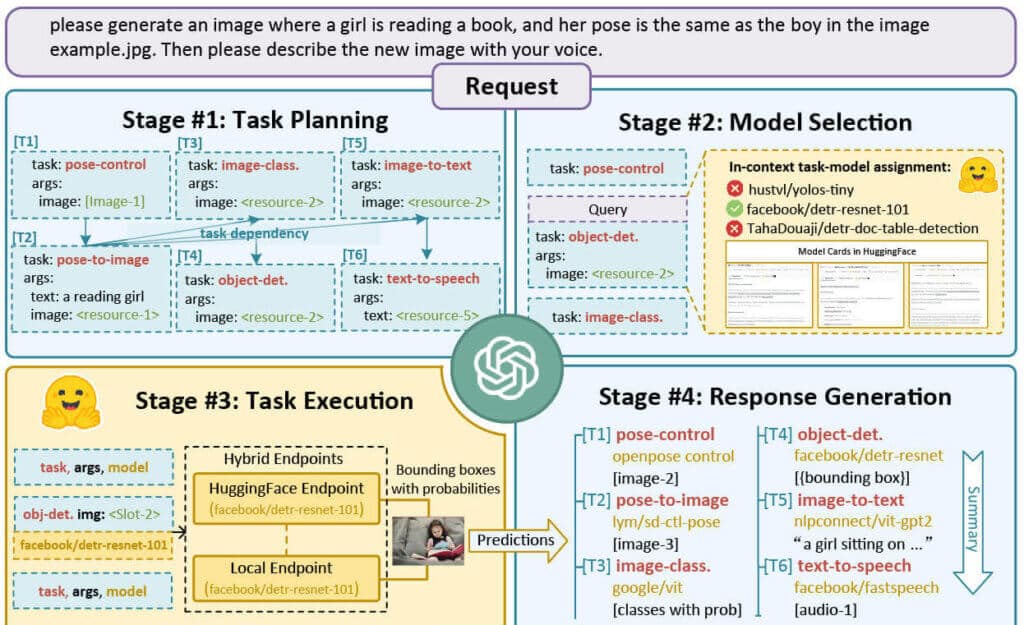
Planning, model selection, execution, and generation with JARVIS. Source: github.com/microsoft/JARVIS
Visit the repo page to learn more: https://github.com/microsoft/JARVIS
OpenAGI
OpenAGI is an open-source AGI (artificial general intelligence) research platform combining small, expert models — models tailored for tasks like sentiment analysis or image deblurring — and Reinforcement Learning from Task Feedback (RLTF) for improving their output.
Under the hood, OpenAGI isn’t much different from other autonomous open-source ai frameworks. It brings together popular platforms like ChatGPT, LLMs like LLaMa2, and other specialized models, and selects the right tools dynamically depending on the context of a task.
Visit the repo page to learn more: https://github.com/agiresearch/OpenAGI
🦾 The Role of Autonomous Agents in Task Management
“So, what can I use agents for?” That’s a great question and we’re itching to say “everything,” but that would be far from the truth given the current state of the technology. Still, even in their “pup chasing its tail” stage, agents can already make life and work easier by:
🔎 Streamlining research and data collection.
💻 Helping developers write and review code.
✏️ Generating content in many different styles and tones.
🌐 Crawling the web and extracting key insights.
💬 Powering smart, customizable chatbots architecture.
💭 Summarizing documents and spreadsheets.
🔀 Translating content between languages.
🤝 Serving as a virtual assistant for creative tasks.
⚡️ Automating administrative tasks like scheduling and tracking.
And here's the best part.
Agents shift the balance from prompt-based tools that require an adult human in the room, to semi or fully autonomous systems running in self-directed loops. After all, that’s what AI tools ought to be — hands-free, dependable, and reliable. No lengthy prompts or vetting each step.
Let’s say you want to analyze market trends for the past decade in the electric vehicle (EV) industry. Instead of manually collecting data, reading countless articles, and parsing through financial reports, you can delegate these tasks to an agent while you do other things.
Even using a tool like ChatGPT, you’d still need to keep your finger on the pulse.
An agent can help you find the right information, take notes, and organize everything. And if you already have some data on your hand, it will flesh out key insights in seconds.
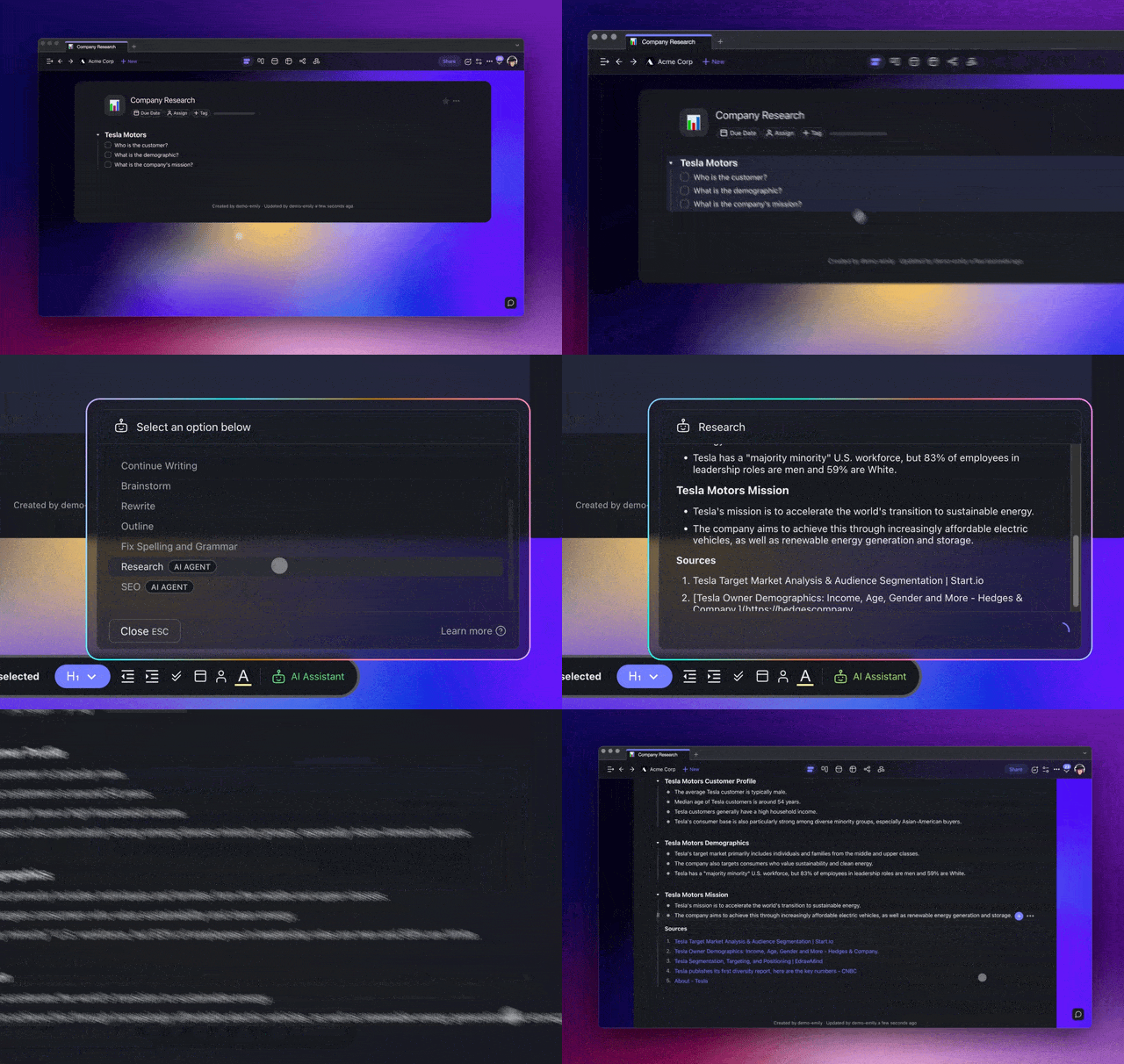
Taskade Research Agent can crawl the web and find what you're looking for in seconds
Finally, let’s talk about agent-agent collaboration.
Sometimes a project may be too complex for one agent to manage. And even with tools like ChatGPT, you need to wait for the output before you can start typing another prompt.
Combine agent frameworks are different.
A
With a multi-agent setup, you can deploy many agents, each tasked with a slice of the project to take care of. One agent can gather data while another creates an outline for a report. A third agent could then compile the information and generate the actual content. Magic. 🪄
🤔 Challenges and Considerations of Autonomous Agents
Open-source agents are still in the Wild West territory of AI tools. They are largely experimental and require a dash of technical know-how to set up, deploy, and maintain. That’s perfectly fine for DIY projects, but it's not exactly a plug-and-play experience if all you want is get stuff done.
You can technically combine open-source agents with existing workflows.
But that takes time, expertise, and resources.
If you’re short on both and don't want to spend hours setting things up, you can use no-code agents that seamlessly integrate with existing tools and understand the context of your work.
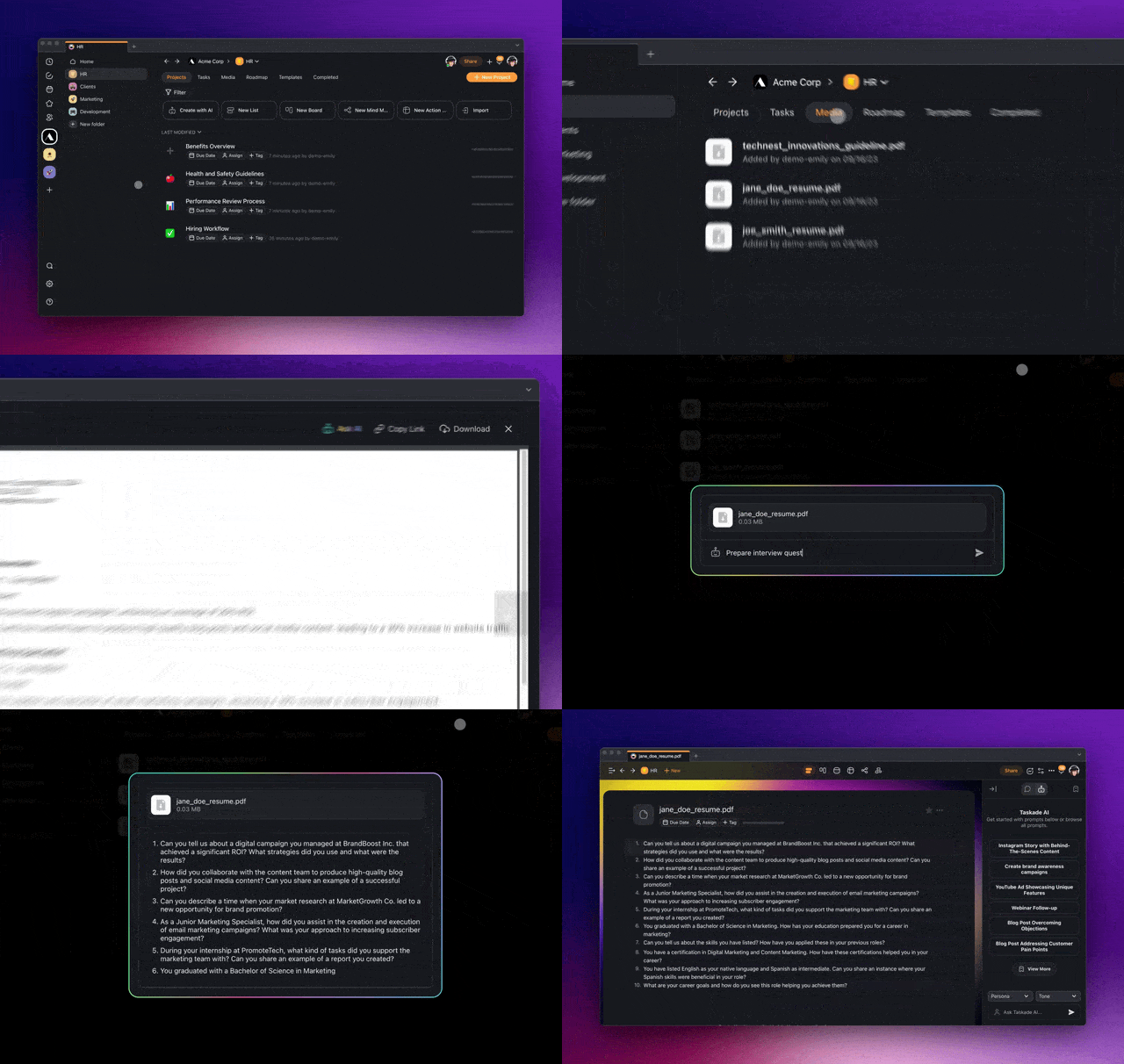
Taskade AI understands your projects and can answer questions based on uploaded files
Of course, there's also the problem of hallucinations. Since agents rely on LLMs to generate information, they suffer from the same tendency to slip into bizarre narratives not grounded in facts. The longer an agent runs, the more likely it is to confabulate and distort reality.
This creates a few dilemmas from the perspective of productivity. Limit the running time of your agents? Narrow down the scope of tasks? Keep a human in the loop to vet the output?
You can get much better results by deploying multiple intelligent agents — hence the popularity of multi-agent frameworks — with specialized knowledge and unique skills. Just like these agents trained on internal company documentation and running inside a Taskade project.
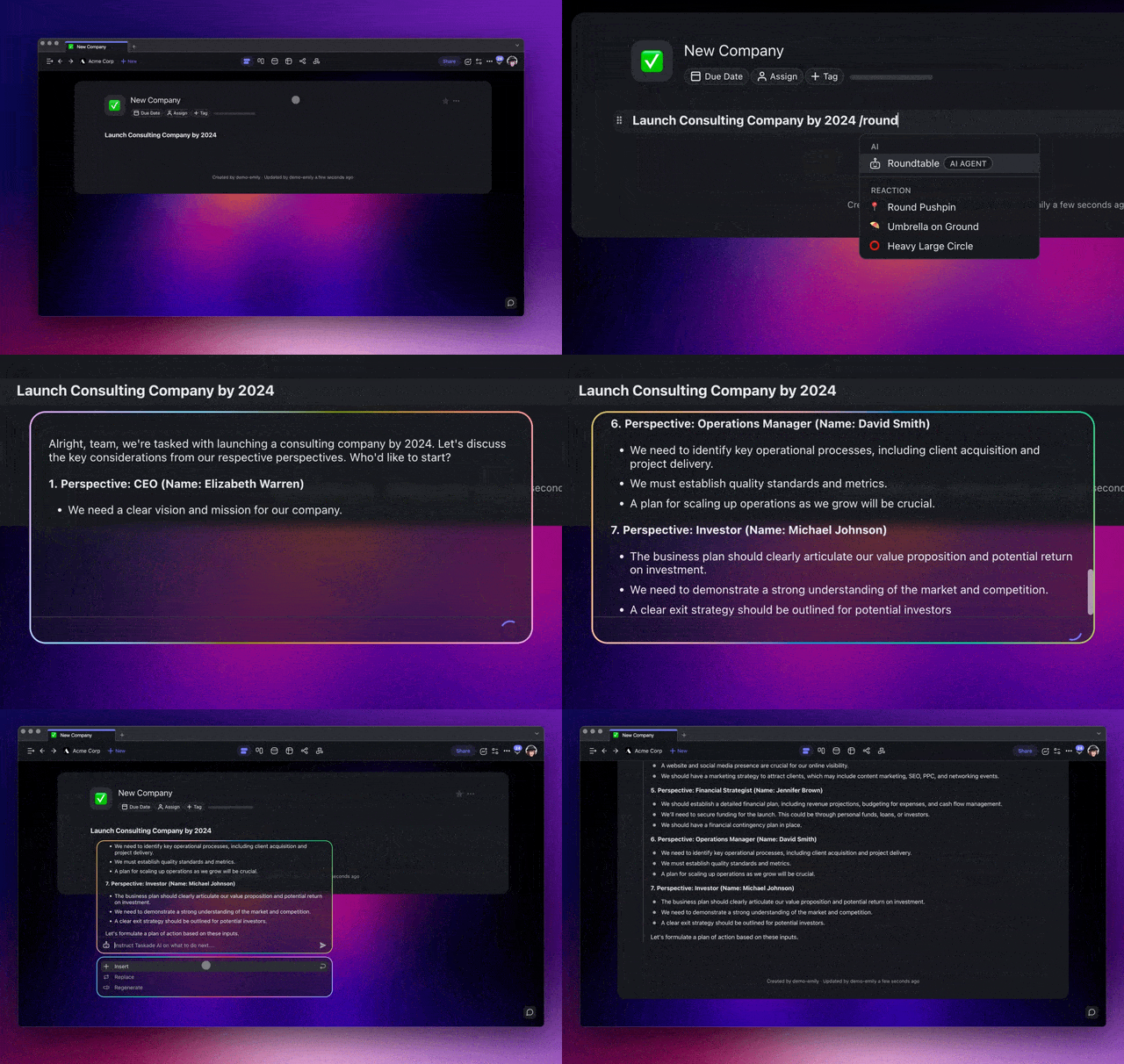
Taskade AI Roundtable Agent combines multiple personalities and AI experts
🔮 The Autonomous Future: What Lies Ahead
The world of autonomous agents and agent frameworks is fascinating, compelling, and rapidly evolving. With faster, more accurate, and larger iterations of AI models like GPT-4, Bard, and LlaMa2 on the horizon, we’re likely to see many more exciting breakthroughs in the coming months.

Who knows? Maybe agents are the next milestone in the AI revolution. One that will take us closer to the worlds created by Asimov, Lem, and Stephenson (even if we would rather give techno-dystopia a pass). A new era of productivity when humans and AIs work together.
Here are a few more takeaways from the article:
🍼 Agent architecture is an experimental concept that emerged in early 2023.
⏩ Autonomous agents streamline interactions with large language models (LLMs).
📈 They shift human-AI interactions from prompt-based to self-directed loops.
🧠 Like LLMs, agents rely on machine learning and natural language processing (NLP).
🛠️ Creating open-source autonomous software agents requires know-how.
🤝 AI entities can collaborate on tasks within multi-agent frameworks.
💻 Agents have the potential to revolutionize task management and productivity.
On a long enough timescale, agents will redefine how we think about work, planning, and collaboration. They will revolutionize productivity and supercharge traditional workflows.
So, are you ready to join that revolution?
Build and deploy AI agents with Taskade AI! 🤖
🤖 Custom AI Agents: Develop smart autonomous agents capable of handling complex tasks and decisions inside your workspaces.
🪄 AI Generator: Generate complex workflows, task lists, mind maps, flowcharts, and more, all based on natural-language descriptions.
✏️ AI Assistant: Engage with your autonomous agents using custom commands in the project editor. Plan, write, edit, and get work done faster.
🗂️ AI Prompt Templates Library: Access hundreds of AI prompts designed to harness the full potential of Taskade AI features.
💬 AI Chat: Engage with AI agents to brainstorm ideas, find solutions to problems, and optimize your workflows using a conversational interface.
📄 Media Q&A: Upload your documents, spreadsheets, and other textual resources, and ask Taskade AI questions about their contents.
And much more...
Frequently Asked Questions About Open-Source Autonomous Agents
What is an example of an autonomous agent?
In Taskade, you can create and deploy custom AI agents that automate a variety of tasks such as research, data analysis, and content creation. Each agent can have unique knowledge, skills, and personality, which allow them to fit your specific needs and streamline your workflow in a seamless way.
What are autonomous software agents?
Autonomous software agents are self-governing programs designed to perform tasks on behalf of users or other programs with minimal human intervention. These agents can make decisions, learn from their environment, and adapt to new situations. Examples include virtual assistants, automated trading systems, and intelligent customer service bots.
What is an open-source AI model?
An open-source AI model is a publicly available artificial intelligence framework that anyone can use, modify, and distribute. Open-source AI models are often shared through platforms like GitHub and come with documentation, pre-trained weights, and libraries to facilitate development.
🧬 Beyond Frameworks: Build Living Software
Open-source agents require technical expertise. Taskade Genesis lets anyone build autonomous AI applications — no code needed. It's vibe coding: describe your workflow, Taskade builds it as living software that evolves with you. Explore AI apps in our community.
