







Every generation of software reaches a point where the old shape stops holding.
Not because it is outdated.
Because the constraints disappear.
Large language models collapsed the distance between intent and execution. Interfaces, logic, workflows, even entire applications could now be composed directly from language. What once took weeks could happen in minutes.
Software entered a new phase.
Creation accelerated.
Continuity did not.
What followed was an imbalance. Apps looked finished but could not persist. Intelligence appeared and vanished. Automation existed but stalled the moment attention moved elsewhere. The leverage was real, but it had nowhere to live.
That gap is where Taskade Genesis comes from.
TL;DR: We rebuilt Taskade around three primitives -- memory (Projects), intelligence (Agents), and execution (Automations). This is Workspace DNA: the architecture that makes autonomous work possible. 150,000+ apps built. Not features. Infrastructure. Try it -->

Why AI Needed Infrastructure, Not More Features
The first wave of AI inside work tools followed a predictable instinct.
Surface intelligence as a feature.
A chat box.
Some context.
A promise of reasoning.
It felt powerful until the session ended.
Context vanished. State reset. The system forgot everything because intelligence never lived inside it. Even with training. Even with knowledge. Intelligence remained external, ephemeral, disconnected from the work itself.
I remember the exact moment this became obvious. We had built a customer onboarding agent that performed brilliantly during demos. It asked the right questions, generated the right project structure, even suggested automations. Then the customer closed the tab and came back the next day. The agent had no memory of the conversation. No memory of the project it had just created. It was starting from zero.
That was not a bug. It was architecture.
This was not a limitation of models.
It was a limitation of where intelligence lived.
If intelligence has no place to persist, it cannot compound.
If it cannot compound, it cannot run anything real.
Why Automation Alone Never Changed the Shape of Work
Automation was supposed to solve continuity.
Instead, it exposed another ceiling.
Most automation systems are still manual configuration layered on top of static tools. Triggers. Conditions. Branches. Recipes. They require constant setup, supervision, and repair. I have watched teams spend more time maintaining their Zapier workflows than doing the work the workflows were supposed to automate.
The problem is structural. Traditional automation moves tasks faster. It does not create systems. It cannot adapt when conditions change. It cannot reason about whether a workflow still makes sense.
AI did not fail to automate.
Automation failed to give AI leverage.
Once creation became instantaneous, infrastructure became the bottleneck. We could build apps in minutes. But those apps had no memory, no intelligence, and no ability to keep running without someone watching.
Projects Were Already Systems, But Only for Humans
Long before AI workspaces became a category, Taskade Projects were built differently.
They were not documents.
They were tree-structured, real-time databases.
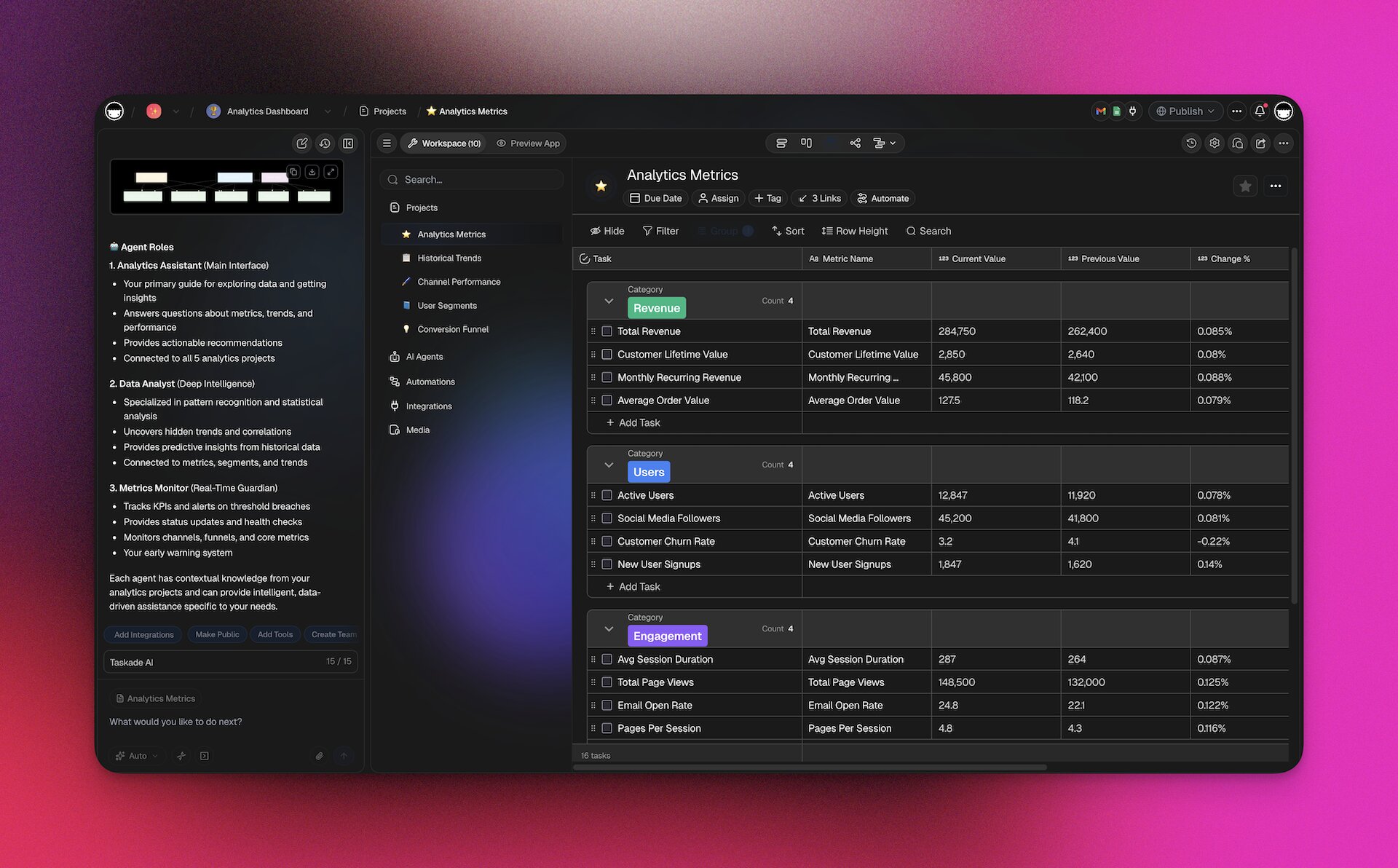
Hierarchy mattered. Relationships mattered. The same underlying structure could be rendered as a list, a board, a mind map, or a table with custom fields -- without duplicating data or breaking consistency. We built multiple project views (List, Board, Calendar, Table, Mind Map, Gantt, Org Chart) on top of a single data model.
This mattered more than it seemed at the time.
Most tools flatten work. Taskade preserved structure.
But there was still a gap.
Projects were manual systems. Humans defined structure. Humans updated state. Humans translated information between parts of the workspace. When LLMs arrived, Projects became a writing surface, not a control surface.
I saw this firsthand when we gave our first AI agents access to projects. They could generate beautiful outlines. But they treated the project as a text document, not as a structured data system. They could not read the hierarchy. They could not understand that a task nested under "Q2 Goals" had different weight than one under "Backlog." They could not see the fields, the dates, the assignments.
AI could generate content, but it could not understand the structure it was writing into.
Projects contained state.
AI treated them like text.
That mismatch limited everything.
If Projects could not be read by agents, they could not serve as memory.
If structure could not drive execution, nothing could move.
If the workspace stayed human-only, nothing could scale.
So we finished the job we started years ago.
Workspace DNA: The Architecture Beneath Taskade Genesis
Every durable system reduces to three primitives. Remove one, and the system degrades.
Memory.
Intelligence.
Execution.
This is not an arbitrary framework. It mirrors how the brain itself operates. Neuroscience has shown that memories are stored as engrams -- sparse neural ensembles that physically encode experiences. Neural circuits process those engrams to extract meaning. And action potentials -- the brain's execution layer -- fire to carry decisions forward. The brain's architecture is Memory + Intelligence + Execution, all the way down. So is ours.
We formalized this as Workspace DNA. Not as features. As infrastructure.
| Primitive | Taskade Layer | What It Enables |
|---|---|---|
| Memory | Projects and Databases | Persistent state that compounds over time |
| Intelligence | AI Agents | Reasoning over workspace context and structure |
| Execution | Automations | Continuous operation without supervision |
| Aspect | Before Genesis | After Genesis |
|---|---|---|
| Structure recognition | Flat documents, no hierarchy | Tree-structured data with fields and relations |
| State management | Session-bound, resets on close | Persistent state shared across views and agents |
| Continuity | Manual updates, human-driven | Automations run without supervision |
| Agent access | No workspace awareness | Agents read and reason over live structure |
| Scaling | One user, one document at a time | Multi-agent teams coordinating in real time |
Projects are memory.
Living structured state with hierarchy, fields, relations, and history.
Agents are intelligence.
Systems that reason over workspace data and understand structure.
Automations are execution.
Operation that continues without prompting or supervision.
This architecture was not built only for users.
It was built so AI agents could operate natively inside the workspace -- reading structure, reasoning over state, and acting without translation layers or brittle glue.
Once that happened, the workspace stopped being a container.
It became the system.
Technical Reality: What Makes Genesis Different
Taskade Genesis is not an overlay on top of legacy documents.
It is built on:
- A tree-structured, real-time data model
- Persistent state shared across multiple views and agents
- Agent-readable primitives: nodes, fields, and relations
- Event-driven automations wired directly into workspace state
- Continuous execution rather than session-bound actions
- Agent coordination rather than isolated prompts
Agents do not guess.
They reason over actual state.
Automations do not replay scripts.
They respond to changes in memory.
This is why Taskade Genesis systems do not reset.
They evolve.
What shipped to make this real (not roadmap, not vision, shipped):
- You can publish apps to your own custom domain. SSL is automatic.
- Users sign in with branded login flows. No plugins, no separate auth service.
- Version history lets you roll back any change instantly.
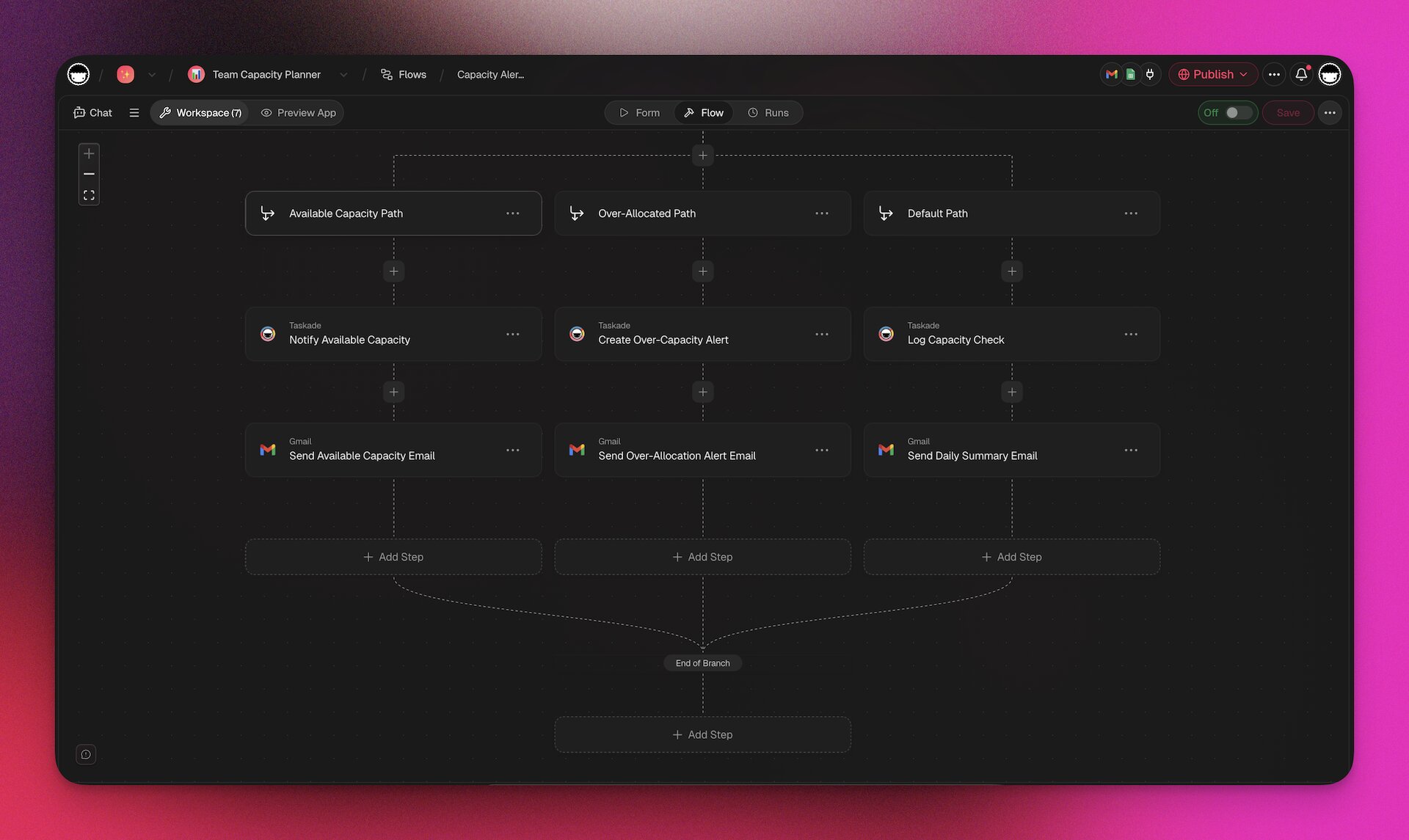
- Background agents run while you sleep. They carry full memory context and execute workflows around the clock.
- Agents and automations are one system. Any workflow becomes an agent tool. Automations trigger agents. The loop is bidirectional.
- You can clone or share an entire app (projects, agents, automations) into any workspace.
- 100+ integrations connect your apps to Shopify, Stripe, Slack, Gmail, HubSpot, Telegram, Airtable, Linear, Monday.com, and more.
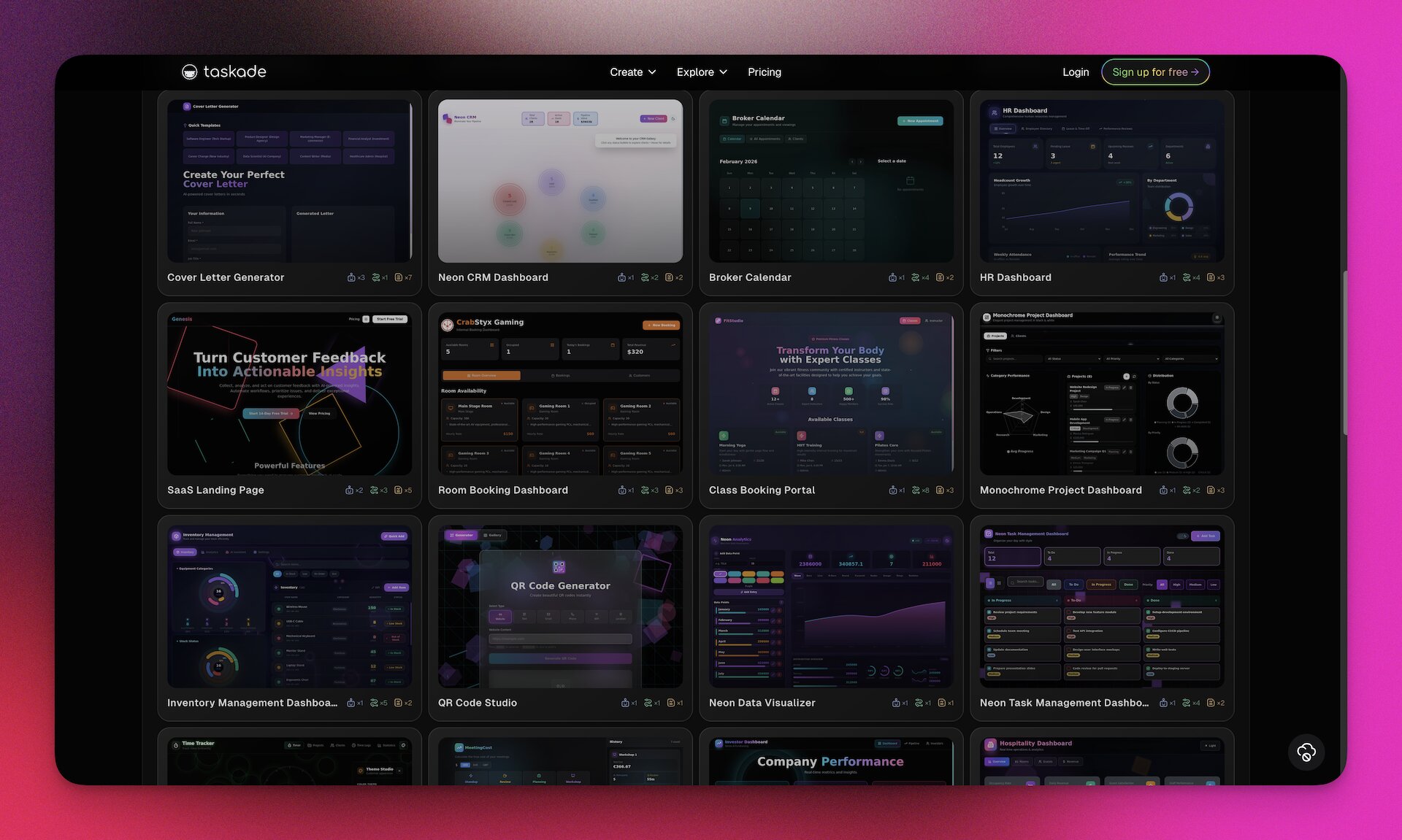
- 150,000+ community-built apps prove the architecture works.
Here is a concrete example. One of our users built a client onboarding portal for their consulting firm. The Genesis app collects intake forms, assigns an AI agent to analyze the client's industry, generates a customized project plan, and triggers a Slack notification to the account manager. The whole system runs without the founder touching it. When the agent encounters a question it cannot answer, it creates a task in the project backlog and tags the founder. That is not automation. That is infrastructure.
This is infrastructure. Not features.
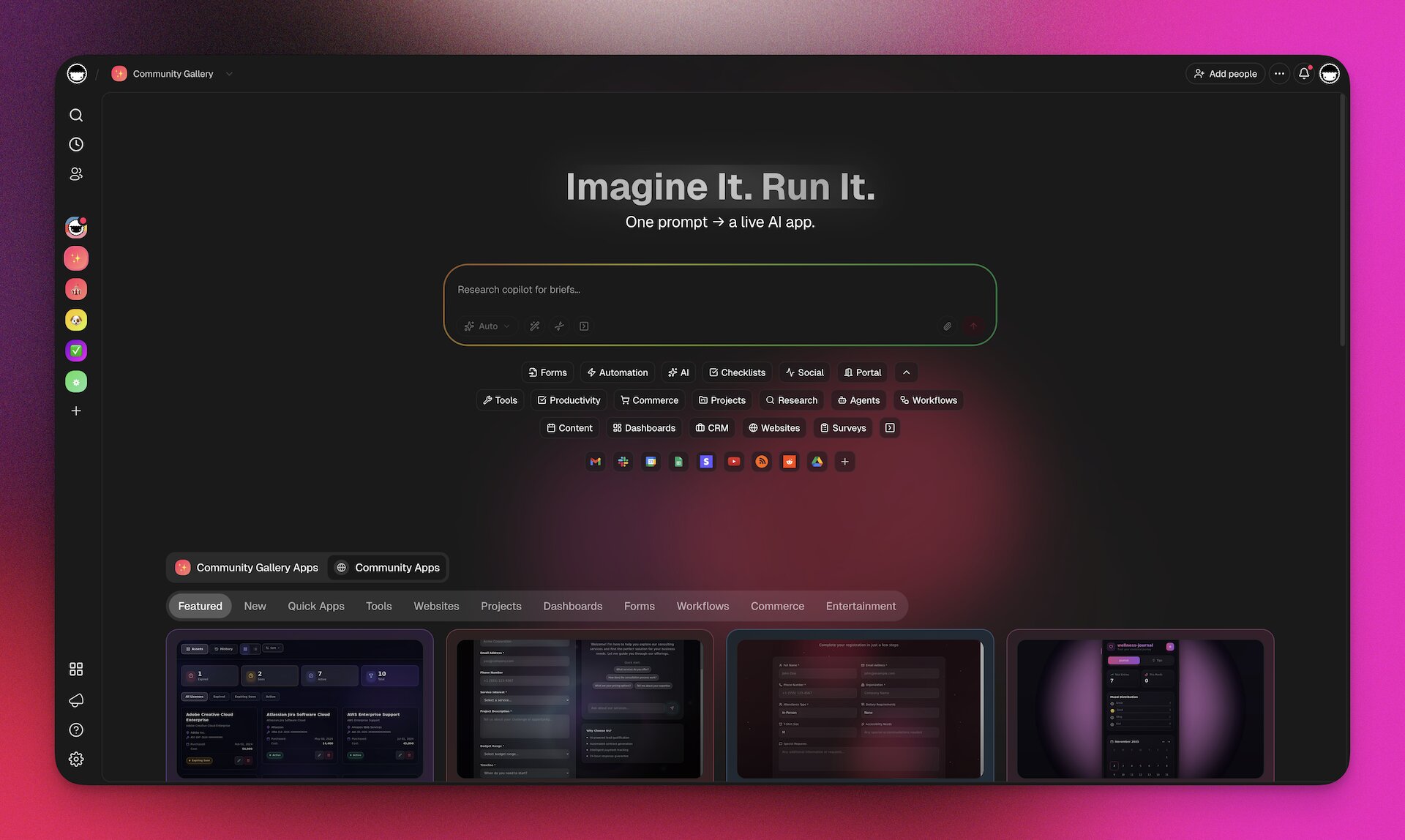
Taskade Genesis: From Prompt to Living System
Taskade Genesis is where Workspace DNA becomes usable.
Genesis is not a template gallery.
It is not a UI generator.
It is not a prompt toy.
It is an AI app builder powered by infrastructure.
One prompt becomes a workspace.
A workspace becomes an app.
An app becomes something you rely on.
Dashboards.
CRMs.
Client portals.
Internal tools.
Business-in-a-box systems that keep running.
The distinction matters.
The app is not the UI.
The app is the workspace underneath.
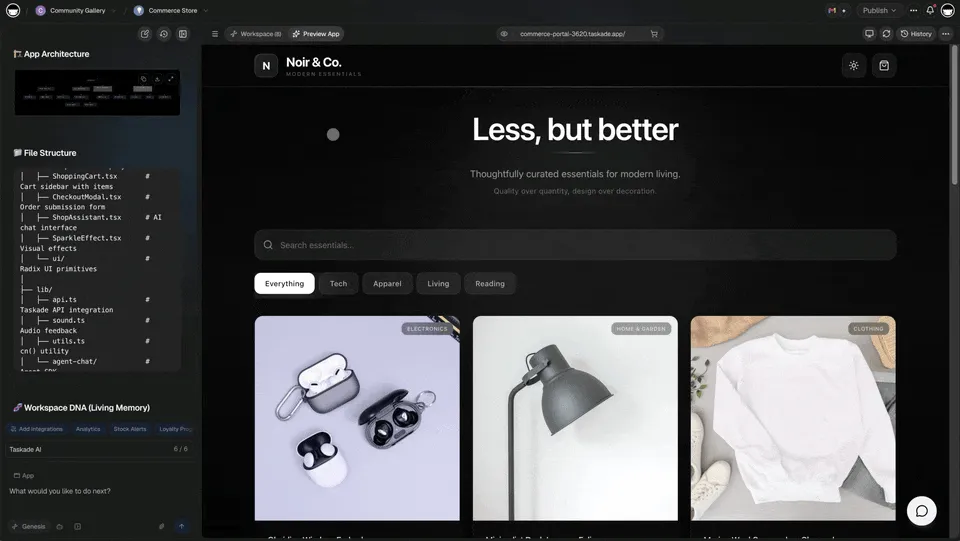
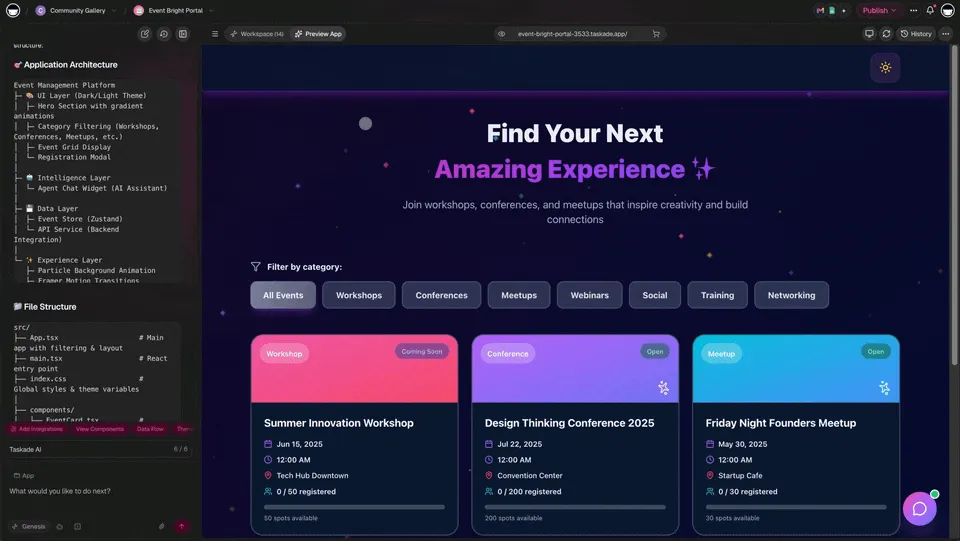
You can see this immediately when you create your first app.
Consider what happens when you type "Build me a CRM for my recruiting agency":
- Genesis creates the workspace structure -- candidate pipeline, interview stages, client accounts
- It deploys an AI agent trained on recruiting workflows to qualify candidates
- It wires automations to send follow-up emails via Gmail and update status in Slack
- The agent stores every interaction as memory in the project, compounding its understanding of each candidate and client
That last part is what other app builders cannot do. The system remembers. It acts. It keeps running.
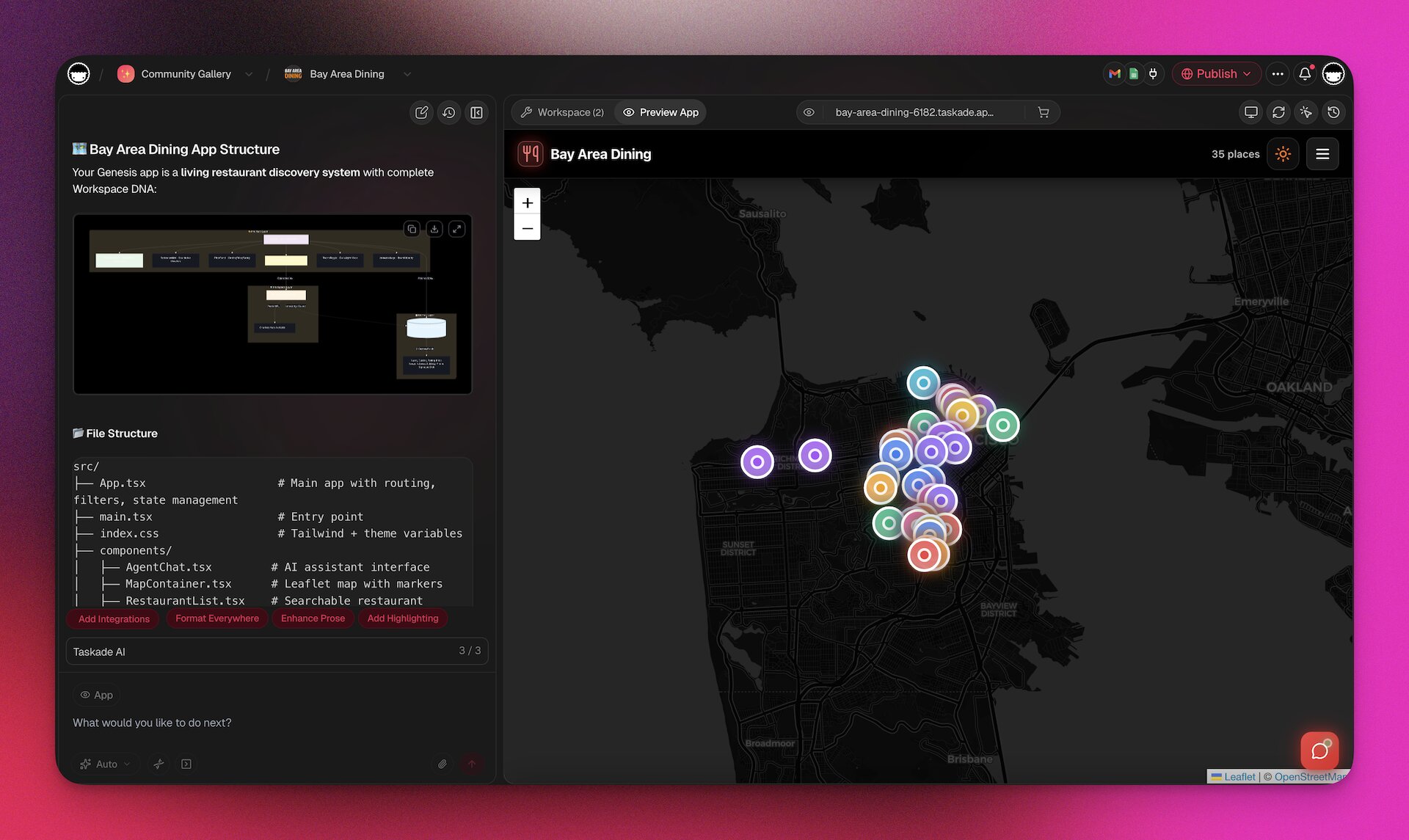
From Many AI Agents to One Coordinated System
Before Genesis, we already had many agents.
Agents that could generate projects -- mind maps and task lists.
Agents that could generate other agents -- commands, prompts, and knowledge.
Agents that could generate flows -- actions, triggers, and integrations.
Agents that could edit live projects through chat commands.
Agents that could work in parallel, even in groups.
Individually, each of these worked.
Collectively, they did not.
They were capable, but isolated. Each agent operated within a narrow slice of context. They could create artifacts, but they could not truly coordinate. They did not share a unified understanding of the workspace. They did not reason across memory, intelligence, and execution at once.
We had agents, but not a system.
I think of it like a hospital where every specialist is excellent but nobody reads each other's charts. The cardiologist does not know what the endocrinologist prescribed. The surgeon does not see the lab results from two days ago. Individually competent. Collectively dangerous.
What was missing was not another agent.
It was a coordinating layer that could see everything.
That is why we built EVE, the Entity of Vision and Execution.
EVE is not a chatbot.
It is not a personality.
It is not just another agent.
EVE is a meta-agent.
It has access to the full Workspace DNA.
Projects as memory.
Agents as intelligence.
Automations as execution.
EVE does not just generate outputs. It delegates. It invokes other agents. It edits live projects. It triggers automations. It reasons across structure, state, and execution as one continuous system. And it stores its own persistent memory as real Taskade Projects -- the platform eating its own dogfood.
This is where Taskade Genesis crosses a line.
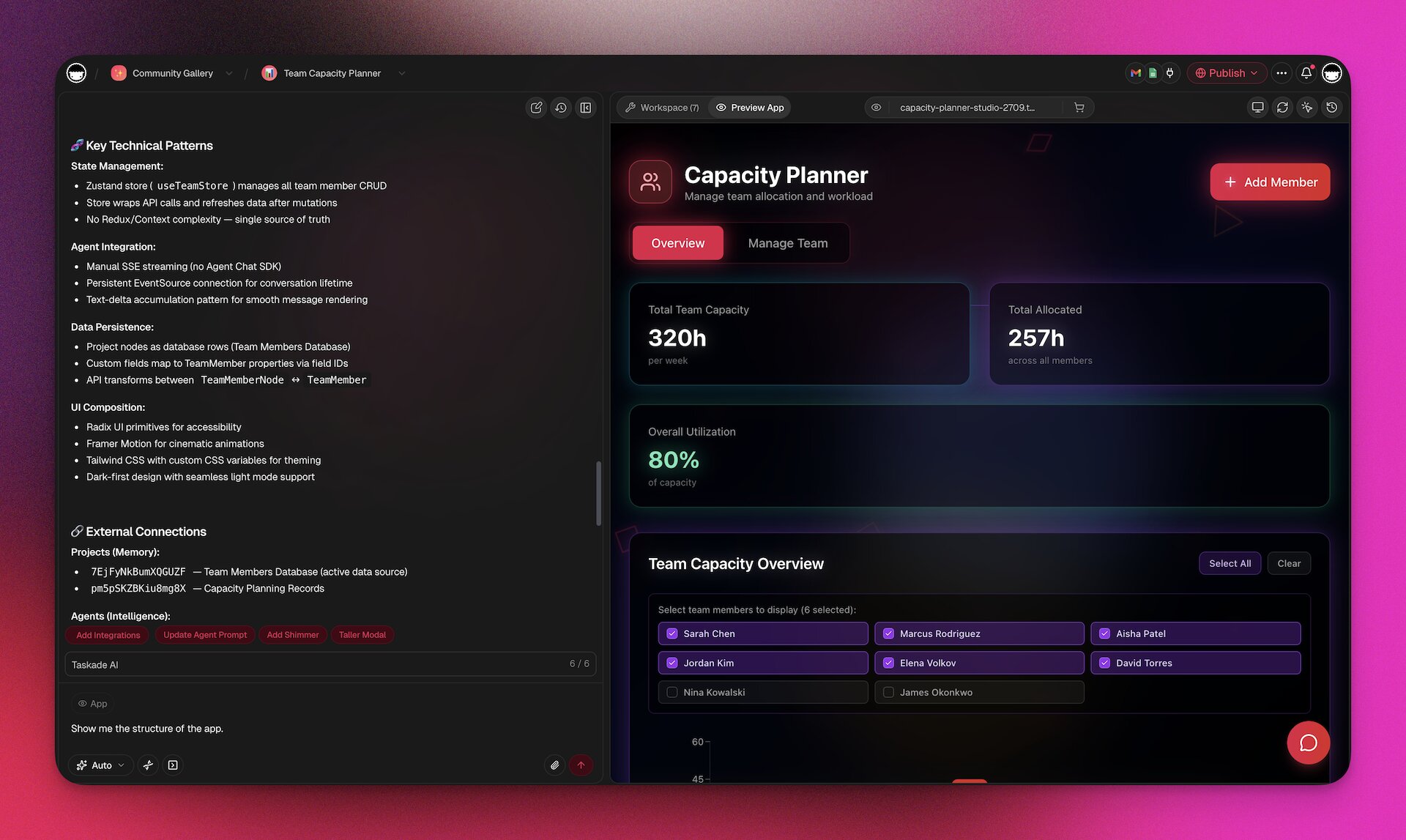
From many capable agents
to one coordinated system.
Builders, Operators, and Business in a Box
Taskade Genesis is built for a handoff.
Builders come first.
They start with intent, not implementation. They generate structure, logic, and workflows in minutes. They do not wait for engineering cycles. They assemble real systems directly from language.
A builder I spoke with last month described it this way: "I used to spend two weeks scoping a client project with my engineering team. Now I type what I need and Genesis gives me something I can actually show the client in the first meeting. The agent remembers the conversation. The automations are already wired."
But builders do not want to babysit what they build.
That is where operators come in.
Operators inherit systems that already make sense. State persists. Automations are live. Agents understand the workspace. The system does not collapse the moment someone stops typing.
This is why business in a box is literal.
A workspace becomes a product.
A product becomes an operation.
An operation keeps running.
Builders create leverage.
Operators rely on continuity.
Genesis connects both without rewriting, migrating, or rebuilding the system in between.
That handoff is the product.
| Role | What They Do | What Genesis Gives Them |
|---|---|---|
| Builder | Designs systems from intent | Prompt-to-app with AI agents, automations, and memory |
| Operator | Runs and maintains systems | Persistent state, autonomous agents, 100+ integrations |
| End User | Uses the finished product | Custom-domain app with branded auth and AI assistance |
Taskade as Infrastructure for Autonomous Work
Taskade Genesis is not just an AI app builder.
It is not just an agent hosting platform.
It is not just a no-code tool.
Those are entry points.
Taskade is infrastructure for autonomous work.
A workspace where memory persists.
Where intelligence compounds.
Where execution continues.
For users.
For AI agents.
Not as a feature company.
As infrastructure.
The question we ask ourselves every day: if you removed all the humans from this workspace for 48 hours, would useful work still happen? For Taskade Genesis apps with properly configured agents and automations, the answer is yes. The agents process incoming data. The automations route it. The projects store it. Intelligence compounds even when nobody is watching.
That is what infrastructure means.
A Rebuild. And an Unbuild.
We kept what was timeless. Structure. Collaboration. Real-time presence. The multiple project views that let you see the same data from any angle.
We unbuilt what no longer fit. Intelligence trapped in sessions. Automation that stalled. Systems that reset.
And we rebuilt the workspace itself as the layer where autonomous work can exist.
Projects are memory.
Agents are intelligence.
Automations are execution.
That is Workspace DNA.
That is Taskade Genesis.
| What We Kept | What We Unbuilt | What We Rebuilt |
|---|---|---|
| Tree-structured data model | Session-bound AI context | Persistent agent memory |
| Real-time collaboration | Static automation recipes | Event-driven execution |
| Multiple project views | Isolated agent capabilities | Coordinated multi-agent system (EVE) |
| Cross-platform sync | Manual state management | Workspace as shared control surface |
Further Reading
- Anatomy of a Genesis App -- how Workspace DNA powers living software
- What Is an Agent Hosting Platform? -- the infrastructure layer for AI agents
- EVE Capabilities Guide -- what the meta-agent can do
- Best AI App Builders in 2026 -- how Genesis compares to 17 alternatives
- Text to App: Complete Guide -- from plain text to working software
- The End of the App Store -- why apps are becoming living systems
- What Is Vibe Coding? -- the philosophy behind prompt-based building
- Best Practices for Multi-Agent AI Teams -- building agent teams that work together
- AI Task Management for Small Business -- practical workspace guide
- Advanced Automation Workflows -- deep dive into Taskade automations
John Xie is the CEO and co-founder of Taskade.
Frequently Asked Questions
What is Taskade Genesis?
Taskade Genesis is an AI app builder powered by Workspace DNA, the architecture that unifies memory (Projects), intelligence (AI Agents), and execution (Automations) into a single continuous system. It turns a text prompt into a living workspace with persistent state, autonomous reasoning, and ongoing execution. Over 150,000 apps have been built on the platform.
What is Workspace DNA?
Workspace DNA is the architectural foundation of Taskade Genesis. It consists of three primitives: Projects as memory (persistent structured state), Agents as intelligence (reasoning over workspace context), and Automations as execution (continuous operation without supervision). Remove any one and the system degrades. It mirrors how the brain operates with engrams, neural circuits, and action potentials.
What makes Taskade Genesis different from other AI app builders?
Most AI app builders generate static code or prototypes that you deploy and maintain yourself. Taskade Genesis creates living software where apps run inside a workspace with persistent memory, AI agents that reason over your data, and automations that continue executing without manual intervention. The app is the workspace underneath, not just the UI.
What is EVE in Taskade?
EVE (Entity of Vision and Execution) is Taskade's meta-agent. Unlike individual AI agents that operate within narrow contexts, EVE has access to the full Workspace DNA: Projects, Agents, and Automations. It builds specialized agents, orchestrates multi-agent teams, edits live projects, and triggers automations as one coordinated system.
What does autonomous work infrastructure mean?
Autonomous work infrastructure is a workspace where memory persists across sessions, intelligence compounds over time, and execution continues without human supervision. It is built for both users and AI agents, creating a shared environment where work happens continuously, not just when someone is actively typing.
How does Taskade Genesis handle custom domains and authentication?
Taskade Genesis apps can be published to custom domains with automatic SSL. Users sign in with branded login flows using built-in OIDC/SSO authentication. No plugins or separate auth services are required. Version history lets you roll back any change instantly.
What integrations does Taskade Genesis support?
Taskade Genesis supports 100+ integrations across 10 categories including Shopify, Stripe, Slack, Gmail, HubSpot, Telegram, Airtable, Linear, Monday.com, and more. Agents and automations are bidirectional: any workflow becomes an agent tool and automations can trigger agents.
What types of apps can you build with Taskade Genesis?
Taskade Genesis creates dashboards, CRMs, client portals, internal tools, forms, websites, and business-in-a-box systems from text prompts. These are not prototypes. They are living applications with persistent state, AI agents that reason over your data, and automations that keep running. Over 150,000 community-built apps demonstrate the range of possibilities.
What is the difference between builders and operators in Taskade Genesis?
Builders start with intent, not implementation. They generate structure, logic, and workflows from language in minutes. Operators inherit systems that already work: state persists, automations run, agents understand the workspace. Genesis connects both without requiring a rewrite or migration between the build phase and the operational phase.
How does Taskade store agent memory?
EVE and Taskade AI agents store persistent memory as real Taskade Projects in a projects/memories folder. This means the platform uses its own infrastructure for agent state. Memory compounds over sessions rather than resetting. Agents can access workspace structure, fields, relations, and history to reason over actual state, not cached snapshots.