

Quick answer
A PDF to notes converter reads a lecture slide deck, textbook chapter, or research paper and rebuilds it as structured, editable study notes. Upload the PDF, keep the headings and key terms, then review the outline before you share it. Taskade Genesis turns that same upload into notes you can edit and quiz from in one workspace.
The Library of Congress PDF format record describes PDF as a digital file that preserves text and layout across devices. That is why a lecture PDF is a good source for notes: the headings and body are already there to extract. Inspect a live docs and notes app, or start a PDF-notes build.
What Is a PDF to Study Notes Tool?
A PDF to study notes tool reads a document and rebuilds it as organized, learnable material instead of a wall of text. Taskade Genesis goes further: from a single upload it generates connected study tools at once, notes, a reviewer, flashcards, an outline, a quiz, and a summary, each one editable, searchable, and ready to share.
What You Get vs a Plain PDF Converter
Most "PDF to notes" sites generate one static file you download and forget. Taskade builds a connected study hub you can edit, quiz yourself from, and share with classmates.
| What you get | Typical PDF converter | Taskade |
|---|---|---|
| Notes | One static text file | Structured notes you can edit |
| Reviewer | Not offered | One-click reviewer from the same upload |
| Flashcards | Not offered | Auto-generated flashcards you can edit |
| Outline + quiz | Not offered | Outline + quiz generated together |
| Sharing | Re-upload per person | Real-time link, role-based access from Owner to Viewer, embed |
The difference is simple: a converter gives you a dead artifact. Taskade Genesis gives you a live, cloneable study workspace powered by 15+ frontier models from OpenAI, Anthropic, and open-weight providers.
How to Turn a PDF Into Study Notes
Step 1: Upload the PDF
Upload lecture slides, a textbook chapter, or a research paper with the converter on this page. A native-text PDF is cleaner than a photo scan, but scanned pages still go through OCR.
Step 2: Review headings, key terms, and the outline
Check that chapter titles, definitions, and the outline match the source. Rewrite a heading, add a term the model missed, or expand a dense section before you drill.
Step 3: Edit the notes, then quiz and share
Ask for a reviewer, flashcards, or a quiz from the same upload. Open project views to sort topics, then share one link with your class.
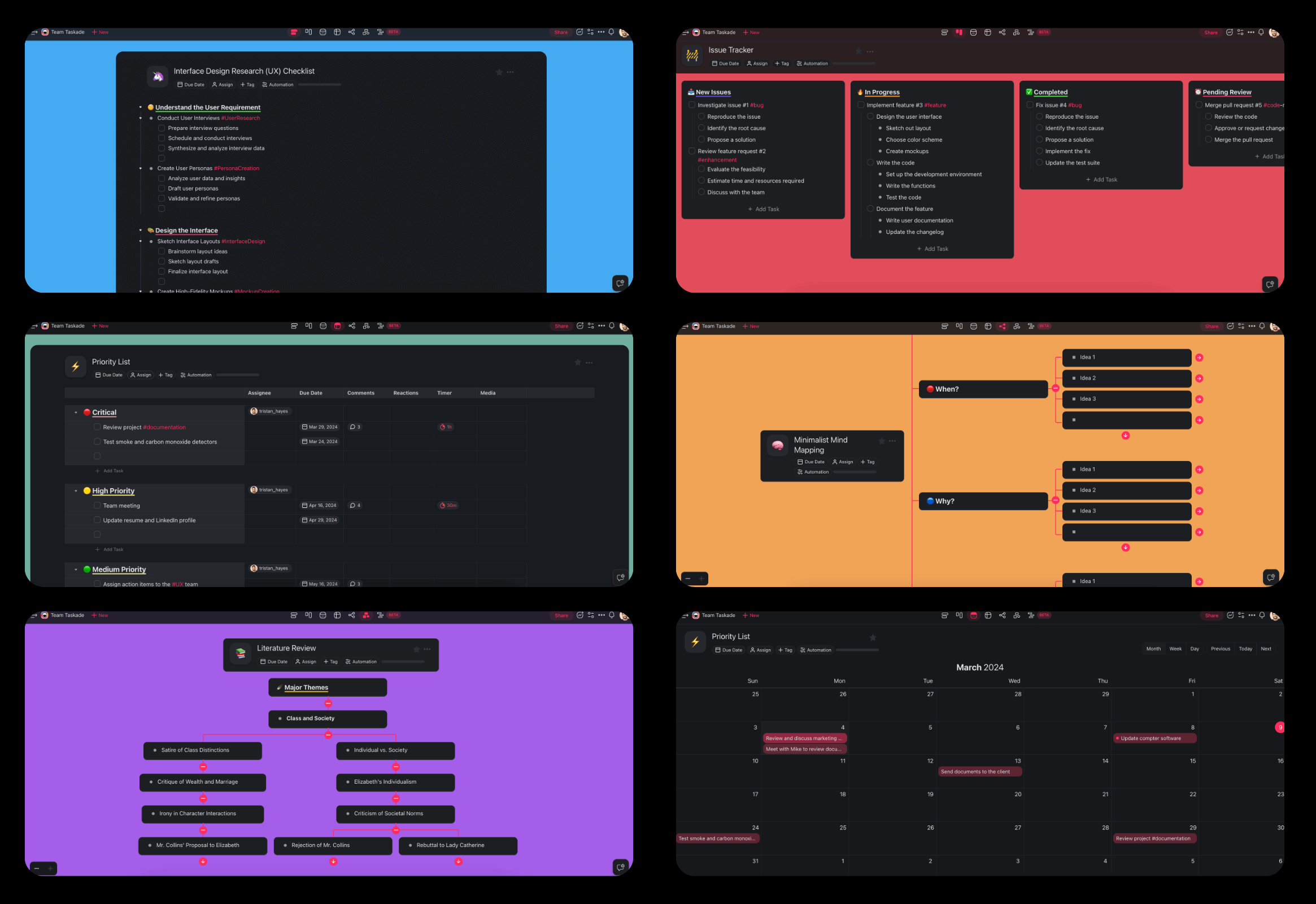
Build Your Whole Study Stack From One Upload
Each study tool below starts from the same PDF. Mix and match the ones you need:
PDF to Outline collapses a long document into a skimmable hierarchy before exams.
PDF to Quiz generates practice questions so you test recall instead of re-reading.
PDF to Flashcards turns key terms and definitions into a deck you can drill.
PDF to Reviewer builds a condensed reviewer that hits only the testable points.
Education to Exam converts course material into a full exam-prep package.
AI Agents and automations can summarize new readings as they land.
Frequently Asked Questions
Is the PDF to notes converter free?
Yes. Taskade includes AI-powered PDF to notes conversion on its free plan — upload a PDF, get structured notes, and clone the app with no credit card, no watermark, and no file-count limit. The same upload also generates a reviewer, flashcards, an outline, and a quiz. Paid plans start at $10/month total, billed annually, covering up to 10 members on one flat price, not per seat.
How do I turn a PDF into study notes?
Upload your PDF using the converter above and the AI rebuilds it as organized, editable notes. From there, ask it to generate a reviewer, flashcards, an outline, a quiz, or a summary from the same document. You can edit every output, switch between multiple project views, and share the whole set with your class through a single link.
How do I make a reviewer from a PDF?
Upload the document, then open the PDF to Reviewer tool to condense it into a focused reviewer that highlights only the testable points. Because it runs in your Taskade workspace, you can trim sections, add your own notes, and reuse the same upload to also build flashcards or a practice quiz — no re-uploading required.
Can I make flashcards from a PDF?
Yes. The PDF to Flashcards tool extracts key terms and definitions from your upload and turns them into an editable deck. You can rewrite cards, add your own, and group them by topic. Everything stays in your workspace, so the same PDF can also feed your notes, quiz, and reviewer at the same time.
Does it work on scanned or image-based PDFs?
Yes. Taskade runs OCR (Optical Character Recognition) during processing, so scanned lecture handouts and image-based PDFs get read and rebuilt into structured notes. For the cleanest results, use scans at 300 DPI or higher. Once the text is extracted, every study tool — reviewer, flashcards, outline, and quiz — works the same as it does on native PDFs.
Can I share my notes with my class?
Yes. Share a single link and your whole class can open, edit, comment, and quiz themselves on the same notes in real time. Granular permissions (Owner to Viewer) let you decide who can edit versus view, and you can embed the notes as a public study page. Multiple people stay in sync automatically — ideal for group study sessions.
Which AI models power the conversion?
Taskade routes your upload through 15+ frontier models from OpenAI, Anthropic, and open-weight providers, and you can pick the model that fits the task. The AI recognizes academic structure (chapters, abstracts, citations) and preserves it, which is why students use it to turn long textbooks into concise, chapter-organized study notes.
Can I automate study material from new PDFs?
Yes. With workflow automations and AI Agents, you can have a new PDF dropped into a workspace folder automatically converted into notes, flashcards, and a quiz, then shared with your group. Agents come with built-in tools, so you can also auto-generate a study schedule or summarize fresh readings as they arrive — no manual steps.