

Introducing TSK-1Introducing TSK-1·Taskade's intelligence layer.
taskade
PricingHelpDashboard →Dashboard →
PricingLoginSign up for free →Sign up for free →
Dashboard →Dashboard →
Sign up →Sign up →
Loved by 1M+ users·Hosting 150,000+ apps·Deploying 500K+ AI agents·Running 1M+ automations·Backed by Y Combinator·Powered by TSK-1
TaskadeAppsTSK-1BuilderPricingFeaturesContact usIntegrationsMCP ServerPressAbout
ConnectProductivityVideosReviewsFAQ
LearnGenesisProjectsAI Agents
AutomationConnectorsAccount & BillingImport & ExportVideo TutorialsSearch Articles
DocsGetting StartedREST APIAction API
MCP ServersGuides & SDKModels
Community
FeaturedQuick AppsToolsDashboardsWebsites
WorkflowsProjectsFormsCreators
DownloadsAndroidiOSMacWindows
ChromeFirefoxEdge
Compare
vs Cursorvs Boltvs Lovablevs V0vs Windsurf
vs Replitvs Emergentvs Devinvs Claude Codevs ChatGPTvs Claudevs Perplexityvs GitHub Copilotvs Figma AIvs Notionvs ClickUpvs Asanavs Mondayvs Trellovs Jiravs Linearvs Todoistvs Evernotevs Obsidianvs Airtablevs Basecampvs Mirovs Slackvs Bubblevs Retoolvs Webflowvs Framervs Softrvs Glidevs FlutterFlowvs Base44vs Adalovs Durablevs Gammavs Squarespacevs WordPressvs UI Bakeryvs Zapiervs Makevs n8nvs Jaspervs Copy.aivs Writervs Rytrvs Manusvs Crewvs Lindyvs Relevance AIvs Wrikevs Smartsheetvs Monday Magicvs Codavs TickTickvs Any.dovs Thingsvs OmniFocusvs MeisterTaskvs Teamworkvs Workfrontvs Bitrix24vs Process Streetvs Toggl Planvs Motionvs Momentumvs Habiticavs Zenkitvs Google Docsvs Google Keepvs Google Tasksvs Microsoft Teamsvs Dropbox Papervs Quipvs Roam Researchvs Logseqvs Memvs WorkFlowyvs Dynalistvs XMindvs Whimsicalvs Zoomvs Remember The Milkvs Wunderlist
Taskade AIVideo GuideAI App BuilderVibe CodingAgent BuilderDashboard Builder
CRM BuilderWebsite BuilderForm BuilderWorkflow AutomationWorkflow BuilderBusiness-in-a-BoxAI for MarketingAI for Developers
AI Agents
FeaturedProject ManagementOperations IntelligenceProductivityMarketing
TranslatorContentWorkflowResearchPersonalSalesSocial MediaTo-Do ListCRMTask AutomationCoachingCreativityTask ManagementBrandingFinanceLearning and DevelopmentBusinessCommunity ManagementMeetingsAnalyticsDigital AdvertisingContent CurationKnowledge ManagementProduct DevelopmentPublic RelationsProgrammingHuman ResourcesE-CommerceEducationLegalEmailSEODeveloperVideo ProductionDesignFlowchartDataPromptNonprofitAssistantsTeamsCustomer ServiceTrainingTravel PlanningUML DiagramER DiagramMath TutorLanguage LearningCode ReviewerLogo DesignerUI WireframeFitness CoachLead EnrichmentFounder OSSales DevelopmentBookkeepingRecruitingWebsite MonitoringField ServiceLicensingAll Categories
Automations
FeaturedAI Agent AutomationAI WorkflowsLogic AutomationsTrigger Automations
Agentic Process AutomationAction AutomationsAI Models in WorkflowsAgentic AutomationMulti-Agent AutomationBusiness-in-a-BoxOperations IntelligenceInvestor OperationsEducation & LearningHealthcare & ClinicsReal EstateStripeSalesHR & People OpsField Service & DispatchRenewals & LicensesE-commerceContentMarketingEmailCustomer SupportHubSpotProject ManagementAgentic WorkflowsAppointment SchedulingCalendarReportsSlackWebsiteFormTaskWeb ScrapingWeb SearchChatGPTText to ActionYoutubeLinkedInTwitterGitHubDiscordMicrosoft TeamsWebflowIndustry News & RSS FeedsGoogle WorkspaceManufacturing & OperationsAI Agent TeamsNotion AutomationsProposalBookkeeping & ExpensesClient OnboardingGoogle SheetsGoogle DriveGoogle CalendarGoogle FormsShopifyAsanaAirtableTrelloTodoistMailchimpClickUpGoogle DocsGmailGoogle TasksJiraLinearMicrosoft OutlookTelegramCalendlyTypeformSalesforceMonday.comTwilioWhatsApp BusinessWordPressZoomHTTP and WebhooksMCP AutomationFacebook PagesRedditApolloAll Categories
Wiki
Taskade GenesisAI AgentsAutomation
ProjectsLiving DNAAutonomous Workspaces, Agents & AppsQuantum AI & Taskade Genesis QuantumFoundations: The Theory Under Modern AIPlatformAI InfrastructureIntegrationsProductivityMethodsProject ManagementAgileScrumAI ConceptsCommunityTerminologyFeatures
Templates
FeaturedChatGPTOperations IntelligenceTablePersonal
Project ManagementSalesFlowchartTask ManagementEngineeringEducationDesignTo-Do ListMarketingMind MapGantt ChartOrganizationalPlanningMeetingsTeam ManagementStrategyGamingProductionProduct ManagementStartupRemote WorkY CombinatorRoadmapCustomer ServiceLegalEmailBudgetsContentConsultingE-CommerceStandard Operating Procedure (SOP)Human ResourcesProgrammingMaintenanceCoachingSocial MediaHow-TosResearchMusicTrip PlanningCRMClient OnboardingEmployee OnboardingSOPBug TrackerRecruitment TrackerFormSales PipelineContent CalendarMarketing PlanProduct RoadmapBusiness PlanSWOT Analysis30-60-90 Day PlanInterviewNotion AlternativeKPIStrategic PlanMeeting AgendaInvoiceRisk RegisterIT Asset ManagementKanban BoardChange ManagementCommunication PlanRFPScope of WorkStatement of WorkHelpdeskKnowledge BaseCreative BriefGoal SettingExecutive SummaryGap AnalysisBooking SystemEvent ManagementPortfolio TrackerCustomer Onboarding PortalsClient PortalAgency OperationsFinance TrackingAll Categories
Generators
AI SoftwareNo-Code AI AppAI AppAI WebsiteAI Dashboard
AI FinanceAI Operations IntelligenceAI FormAI AgentAI Client Portal BuilderAI WorkspaceAI ProductivityAI To-Do ListAI WorkflowsAI EducationAI Mind MapsAI FlowchartAI Scrum Project ManagementAI Agile Project ManagementAI MarketingAI Project ManagementAI Social Media ManagementAI BloggingAI Agency WorkflowsAI ContentAI Software DevelopmentAI MeetingAI PersonasAI OutlineAI SalesAI ProgrammingAI DesignAI FreelancingAI ResumeAI Human ResourceAI SOPAI E-CommerceAI EmailAI Public RelationsAI InfluencersAI Content CreatorsAI Customer ServiceAI BusinessAI PromptsAI Tool BuilderAI SEOAI Gantt ChartAI CalendarsAI BoardAI TableAI ResearchAI LegalAI ProposalAI Video ProductionAI Health and WellnessAI WritingAI PublishingAI NonprofitAI DataAI Event PlanningAI Game DevelopmentAI Project Management AgentAI Productivity AgentAI Marketing AgentAI Personal AgentAI Business and Work AgentAI Education and Learning AgentAI Task Management AgentAI Customer Relations AgentAI Programming AgentAI SchemaAI Business PlanAI Pitch DeckAI InvoiceAI Lesson PlanAI Social Media CalendarAI API DocumentationAI Database SchemaAI Marketing PlanAI Sales Pipeline GeneratorAI Course BuilderInternal ToolsBooking SystemReal Estate CRMInventory ManagementAI CRM BuilderAI TimesheetAI DispatchAI NewsletterAI Clinic OperationsAI Directory BuilderAll Categories
Converters
AI Featured ConvertersAI PDF ConvertersAI CSV ConvertersAI Markdown ConvertersAI Prompt to App Converters
AI Data to Dashboard ConvertersAI Workflow to App ConvertersAI Idea to App ConvertersAI Flowcharts ConvertersAI Mind Map ConvertersAI Text ConvertersAI Youtube ConvertersAI Knowledge ConvertersAI Spreadsheet ConvertersAI Email ConvertersAI Web Page ConvertersAI Video ConvertersAI Coding ConvertersAI Task ConvertersAI Kanban Board ConvertersAI Notes ConvertersAI Education ConvertersAI Language TranslatorsAI Business → Backend App ConvertersAI File → App ConvertersAI SOP → Workflow App ConvertersAI Portal → App ConvertersAI Form → App ConvertersAI Schedule → Booking App ConvertersAI Metrics → Dashboard ConvertersAI Game → Playable App ConvertersAI Catalog → Directory App ConvertersAI Creative → Studio App ConvertersAI Agent → Agent App ConvertersAI Audio ConvertersAI DOCX ConvertersAI EPUB ConvertersAI Image ConvertersAI Resume & Career ConvertersAI Presentation ConvertersAI PDF to Spreadsheet ConvertersAI PDF to Database ConvertersAI PDF to Quiz ConvertersAI Image to Notes ConvertersAI Audio to Notes ConvertersAI Email to Tasks ConvertersAI CSV to Dashboard ConvertersAI YouTube to Flashcards ConvertersURL to NotesVideo → SummaryAI Receipts to Expense Tracker ConvertersAI Docs to Knowledge Base ConvertersAI Form to Client Portal ConvertersSpreadsheet to CRMAll Categories
Prompts
Client PortalsDocument IntakeField Service
Operations IntelligenceCRMAdvertisingDesignInvoicing and PaymentsSocial MediaQuotes and EstimatesCalculatorsCodingBooking and SchedulingConsultingCustomer SupportComplianceTime TrackingRetail OperationsSaaS and SubscriptionsInsuranceGovernance and OversightNonprofitPatient IntakeBlog WritingBrandingPersonal FinanceHuman ResourcesPublic RelationsTeam CollaborationProduct ManagementSupportAgencyReal EstateMarketingResearchSalesCopywritingContentProject ManagementWebsite CreationStrategyE-commerceEngineeringSEOEducationEmail MarketingUX/UIProductivityInfluencer MarketingAnalyticsEntrepreneurshipLegalVibe CodingRecruitingAll Categories
Blog
Introducing Taskade TSK-1: The System Kernel Behind Every App (2026)The TSK-1 Methodology: How We Benchmark AI Models by Building Real Apps (2026)Paste Your Website, Clone an App Kit, Launch It Live (September 2026)
Open Source Temporal Parser: Parse ISO 8601, RFC 3339, and IXDTF in TypeScript (2026)Best AI Model for Building Apps in 2026: One Prompt, Nine Models, Real Apps Side by SideChat-Native App Builders in 2026: What You Actually Own When the Chat EndsGenerate the Art. Preview the Agent. Put It on Your Domain (2026)Agentic Automation Explained: Agent vs AI Step (2026)The Scaffolding Tax: Why Less Prompt Beats More (2026)History of Mind Mapping: From Porphyry to Buzan to AI (2026)The Bitter Lesson Explained: Richard Sutton's 26 Words (2026)Self-Replicating Code: Quines, von Neumann, and the Programs That Copy Themselves (2026)Markov Chains Explained: The Memoryless Math Behind Google, Monte Carlo, and ChatGPT (2026)Add Client Logins. Connect Your Domain. Ship a Real Product in 2026Track Customer Health. Catch Churn Early. Keep the Accounts You Won (2026)Compression Is Intelligence: What Cross-Entropy Really Measures (2026)Automate License Renewals. Track Every Key. Own Your Software Spend (2026)Track Hours. Bill Clients. Get Paid. (Clone a Working Time Tracker in 2026)Claude Shannon: The History of Information Theory and the Man Who Invented the Bit (2026)Run Your Whole Business in One App with Taskade Genesis (June 2026)
AIAutomationProductivityProject ManagementRemote WorkStartupsKnowledge ManagementCollaborative WorkUpdates
Changelog
Numbered Agent Citations & Shareable Chat Links (Sep 15, 2026)Sturdier Builds & Clearer Automation Runs (Sep 14, 2026)App Users Stay Signed In & App Kit Sharing (Sep 11, 2026)
Faster App Thumbnails & Sturdier App Builds (Sep 11, 2026)Trusted App Restores & Remembered AI Models (Sep 10, 2026)Embedded Agent Controls & Safer Project Edits (Sep 9, 2026)Email Abuse Blocking Hotfix (Sep 8, 2026)
Wiki
Taskade GenesisAI AgentsAutomation
ProjectsLiving DNAAutonomous Workspaces, Agents & AppsQuantum AI & Taskade Genesis QuantumFoundations: The Theory Under Modern AIPlatformAI InfrastructureIntegrationsProductivityMethodsProject ManagementAgileScrumAI ConceptsCommunityTerminologyFeatures
Prompts
Client PortalsDocument IntakeField Service
Operations IntelligenceCRMAdvertisingDesignInvoicing and PaymentsSocial MediaQuotes and EstimatesCalculatorsCodingBooking and SchedulingConsultingCustomer SupportComplianceTime TrackingRetail OperationsSaaS and SubscriptionsInsuranceGovernance and OversightNonprofitPatient IntakeBlog WritingBrandingPersonal FinanceHuman ResourcesPublic RelationsTeam CollaborationProduct ManagementSupportAgencyReal EstateMarketingResearchSalesCopywritingContentProject ManagementWebsite CreationStrategyE-commerceEngineeringSEOEducationEmail MarketingUX/UIProductivityInfluencer MarketingAnalyticsEntrepreneurshipLegalVibe CodingRecruitingAll Categories
© 2026 Taskade
PrivacyTermsSecurity
Made withTaskade AIforBuilders
BlogProductivityOrigami Method for Project…

Origami Method for Project Management: Collaborate, Organize, and Visualize Projects and Tasks

Collaborative task management is powerful when you think about it like origami, with each task (fold) building on other to create a complete model. Work together remotely, in real-time, and effectively.

Origami Method for Project Management: Collaborate, Organize, and Visualize Projects and Tasks
March 15, 2020Updated July 6, 20259 min readJohn XieProductivity·#project-management-methods#remote-work#task-management
On this page (6)
🧱 What Are LEGO-Style Collaboration Tools?🦢 Collaborative Task Management Is More Like Origami Than LEGOs✂️ Origami’s Boundaries = Better Collaborative Task Management🐑 Using Taskade for the Origami Method👩🏻‍🏫 Teach Your Team the Origami MethodFrequently Asked Questions

Figuring out collaborative task management is an important step toward building better products. When your team has a long history of working together, chances are they can communicate and get work done with minimal friction.

But sometimes, each member of your team may come from a different background. They bring unique sets of skills and experiences, all of which make successful collaboration a tad more challenging. 🤔

In this Taskade article, we'll show you how you can master collaborative task management with the Origami method. You'll also learn why origami is better than LEGOs and...some other interesting things!

So, without further ado, let's dive in. ↘️

🧱 What Are LEGO-Style Collaboration Tools?

Collaborative task management is the idea that each team member should be involved with product and project planning from the very beginning. 🤝

Traditionally, team collaboration tools try to manage this process by providing users with “building blocks" that let everybody "assemble" their own productivity systems from scratch. We call these LEGO-style tools.

With LEGO-style task management, you first look at each block (or task) individually, then figure out how they fit together to create the completed model. Each task is independent of one another, which you can see in their instructions:
collaborative task management vs. legos

Instructions for the Bookshop model via LEGO.

Each instruction is broken down to show only the blocks required for that one step. Doing this leaves room for confusion and over-complication—your team isn’t thinking about how each individual task works toward the completion of the entire project. Someone on step 5 won’t know what blocks are required for step 42.

While these building blocks are effective at providing your team with options, the amount of customization invites unnecessary complexity. The lack of constraints also makes it easy to create clunky workflows that decrease team efficiency. 💥

Which takes us to another problem.

When your team builds a LEGO-style workflow and uses it long enough, it becomes hardwired. It's very difficult to painlessly change a limping task-management routine without tearing everything down and rebuilding. 🧨

That’s why we prefer to think about building task management systems as Origami. It’s a holistic approach that helps you think critically about your project plans, tracking the individual steps that brought you to a completed model.

🦢 Collaborative Task Management Is More Like Origami Than LEGOs

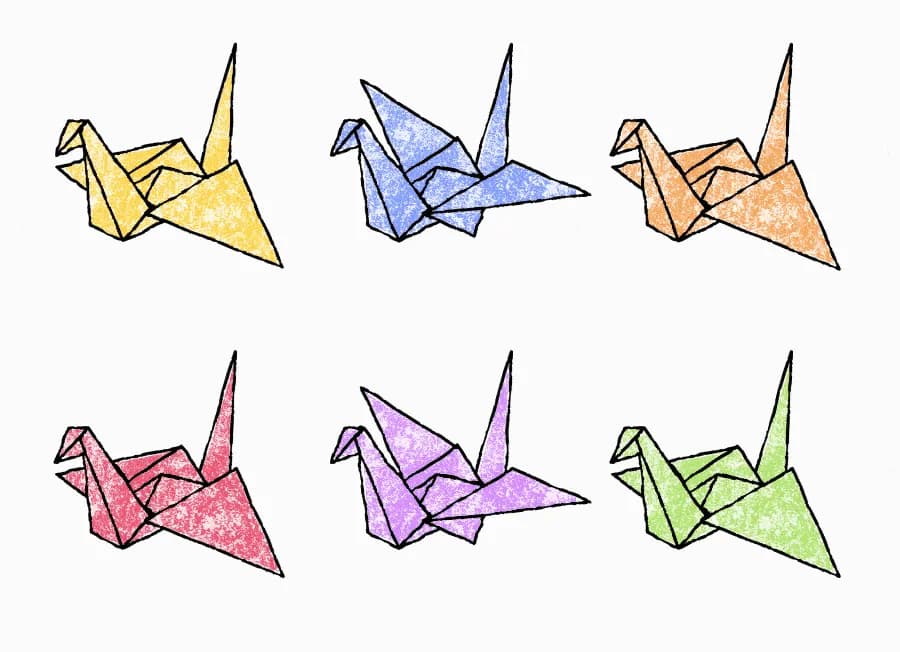
Traditional origami (Japanese ori "folding" + kami "paper") is the process of folding a single sheet of paper to create intricate models, animals or buildings. Origami teaches you to look at a square sheet of paper critically and plan out the necessary folds to create a completed model.

In origami, the brainwork happens during the planning stage. When you’re working with a single sheet of paper, each fold has to be executed at exactly the right time to complete the model. Just look at the intricate models of physicist and origami master Dr. Robert J. Lang:
chrysina beetle

Chrysina Beetle, Opus 717 via Robert J. Lang.

To construct such a complex model, Dr. Lang creates a crease pattern that showcases each individual fold that goes into the completed model. If you think about the model as a project, every fold is a task.
chrysina Beetle crease pattern

Crease pattern for Chrysina Beetle, Opus 717 via Robert J. Lang.

Each line in the crease pattern represents a different type of fold, its relationship to other folds, and how it fits into the model as a whole. This “map” creates a holistic picture of every individual task an origami folder needs to perform. It’s also an apt metaphor for project planning and task management.

💡 For collaborative task management to work, each member of your team needs to adopt the origami method’s holistic thinking. This thought process creates a framework for understanding how each team member’s contributions (folds) combine to complete the model. In other words, it means that everybody has a direct connection to goals and intended outcomes of a project.

Staying directly connected with outcomes increases accountability and helps everyone move projects forward together. 🏃🏾🏃🏻‍♀️

✂️ Origami’s Boundaries = Better Collaborative Task Management

Another important difference between origami and LEGO-style task management is the presence of boundaries.

Everybody loves LEGOs. There's no doubt about that. But because they provide limitless opportunities for customization, they can be overwhelming. With thousands of assorted pieces, it's difficult to hone in on one, unified project. ❌

💡If your team thinks about a project in terms of LEGO building blocks, each task is an individual brick—it’s disconnected from every other brick on the table. In other words, LEGO-style tools encourage a dispersed model that feels more like connecting the dots than following an organized sequence.

The origami method, on the other hand, encourages your team to consider how each task relates to another and how they compound ✅➕ ✅ to make subsequent tasks easier. It's built on an inherent structure that makes it easy to organize important company information and get things done.

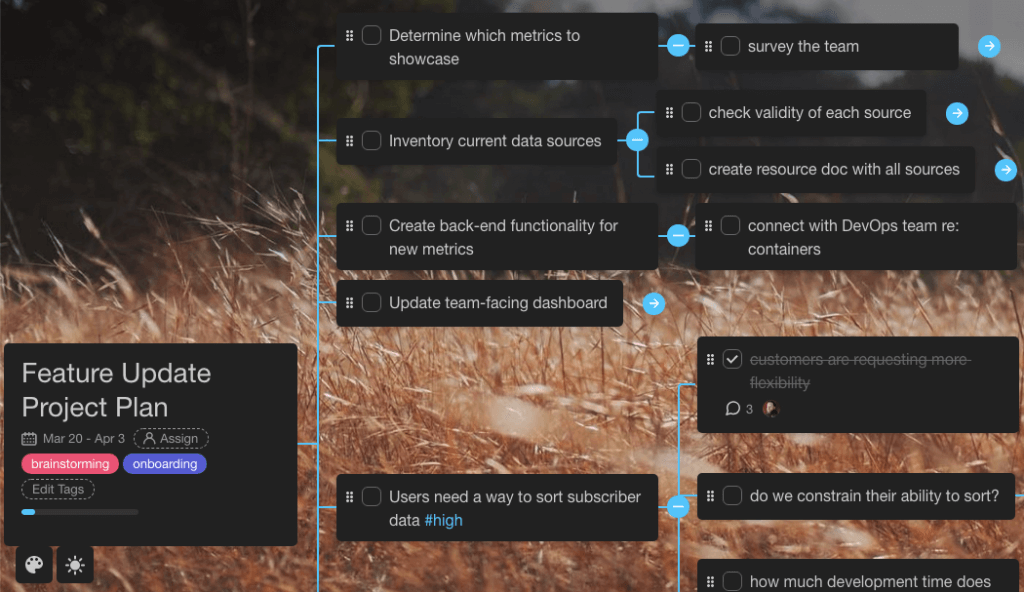
Let’s say you’re working with your development team to update the user interface (UI) for an internal analytics tool. Here’s what that project plan might look like at the start:

The goal of this project is to update the UI for an internal analytics tool to make gaining insight into high-value metrics more efficient. 🎯

How do you ensure that every member of the team understands this direction? By providing them with the tools they need to visualize individual tasks and how each task relates to the project as a whole.

In Taskade, we think of each custom template and project as a single sheet of paper, which can be visualized in a number of different ways.

Each view is “foldable” into different shapes or models, making the project information easily available as a Kanban board or an action plan, depending on who’s viewing it.
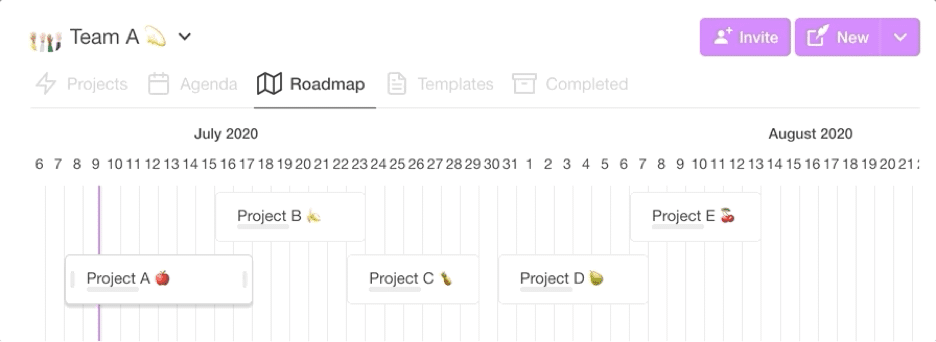
taskade project plan

Example project plan in Taskade.

This ensures that everyone is working from the same playbook and cuts down on the need for the back-and-forth context-setting that can kill productivity for a remote team. Basically, each view provides a holistic overview of a project, like the origami crease pattern we showed you earlier.

With a LEGO-style tool, you wouldn’t be able to have a singular reference point. Each member of your team would only see the individual bricks (tasks) they’re working on at any given time. This would lead to decreased visibility into how their individual work impacts the rest of the team.

Just think how difficult it would be to move our example UI project forward if your team started working on the dashboard before making an inventory of data sources. You get the picture. 🤯

💡 Being able to view the same information in a number of different ways helps you create a single source of truth your team can actually use.

Origami’s inherent structure means you can fold and unfold the information to find which patterns work best without breaking the constraints of a single sheet of paper.

🐑 Using Taskade for the Origami Method

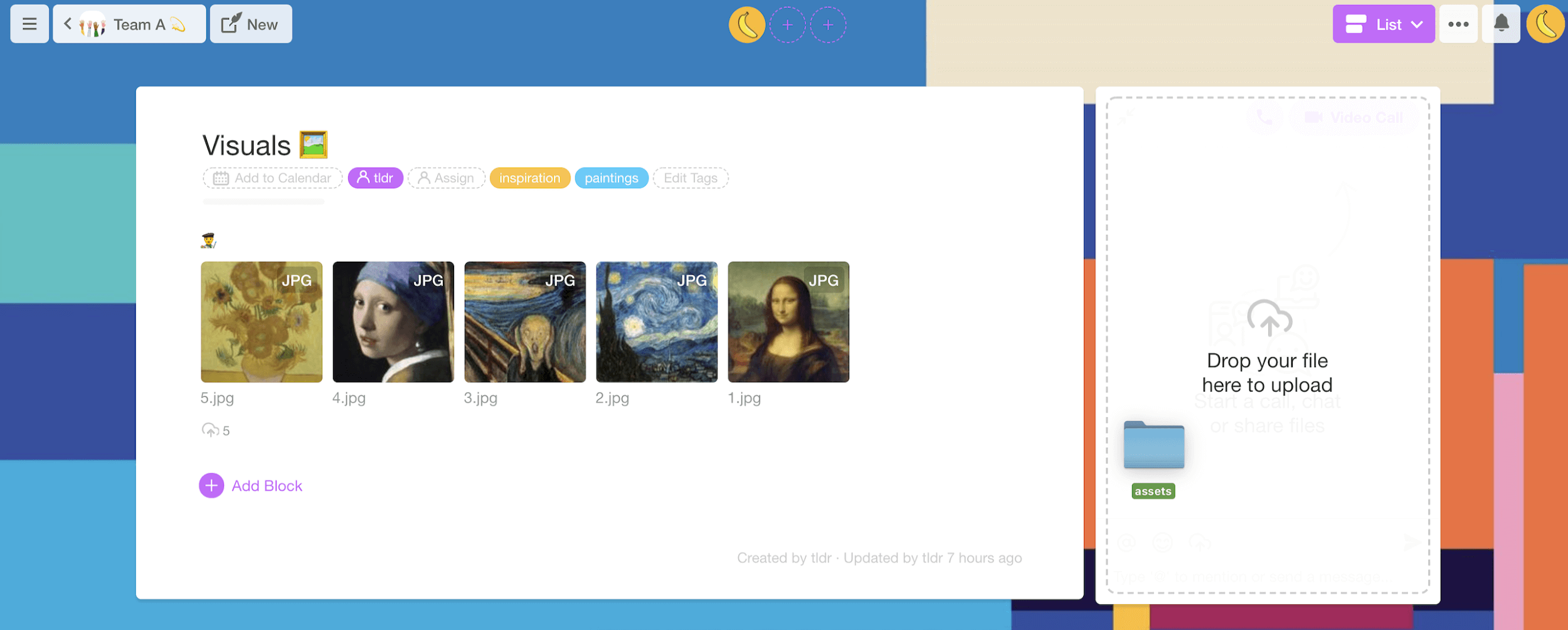
We designed Taskade with the origami method in mind. In each workspace, you can cycle through a number of views based on the individual needs of your team.

This provides your team with the flexibility they need to parse information quickly without changing the physical structure of the information itself. This is built into the data level of our product, with each space or subspace consisting of a single database.
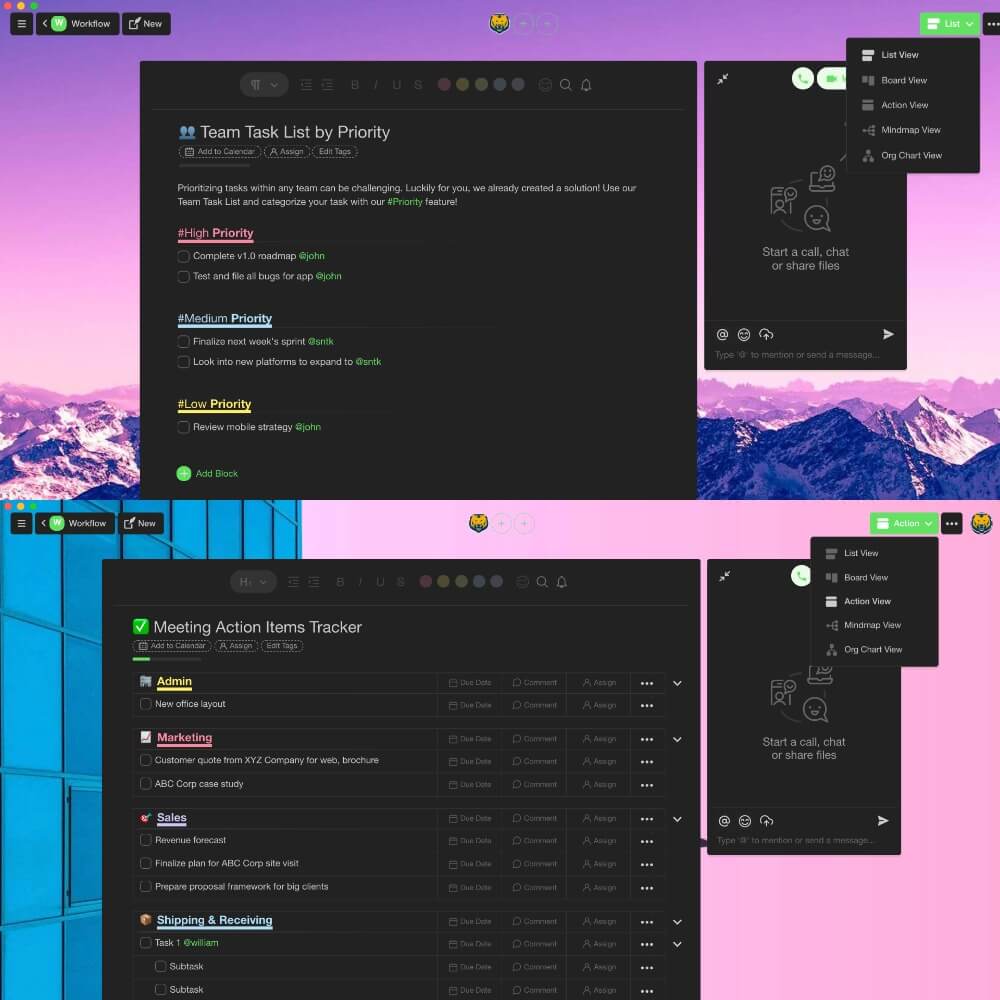
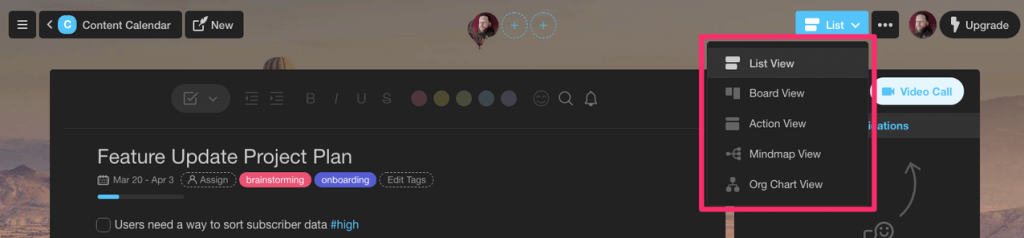
taskade views support collaborative task management

Taskade List and Action views.

Giving individual team members the ability to visualize data in different ways helps them organize and absorb key information. You’re able to look at everything involved in a project from both a top-down and bottom-up perspective.

💡 A holistic viewpoint makes it easy to track how everyone’s individual contributions move projects forward to a single goal. Showcasing data as a single sheet of paper ensures project managers are able to easily keep track of overarching goals as well.

Flexible views in Taskade also help you find novel insights by looking at the same project, roadmap, or task list from a different angle. Simply changing the view from a Kanban board to a mind map can help you see the connection points between tasks easier.

taskade kanban board view

Kanban board view in Taskade.

taskade mind map view

Mind map view in Taskade.

Another benefit of this origami structure is the ability to change between views in real time. Why force your team to work through a mind map when all they need is a simple checklist? Each person can visualize the information locally in the way that’s best for them. 👓

The origami method fosters a culture of visibility and accountability where each contribution gets proper exposure. That helps your team work better together, especially in distributed workforces. Active participation is also a key part of the digital IKEA effect, so your team is building better habits as they collaborate in Taskade.

👩🏻‍🏫 Teach Your Team the Origami Method

1️⃣ When your team thinks about collaborative task management as origami instead of LEGOs, they can see the underlying structure of any project. And by putting in much of the brainwork upfront, executing tasks becomes much simpler as they move through the project.

2️⃣ For more complex tasks, the origami method helps your team create efficient workflows. Understanding that dependencies are a part of the process makes it much easier to find the best path forward.

3️⃣ Unfolding—stepping back to regain context—the model at key points along the roadmap also makes it easier to build a comprehensive understanding of how each individual person’s work impacts the model as a whole. It brings the team together and ensures they’re always headed in the same direction.

If you're tired of mismatched LEGOs and clunky workflows, we have a solution. With Taskade, your team can embrace all the benefits of the Origami method and get more work done together! 🐑🐑


Supercharge team productivity with Taskade AI 🤖

🤖 Custom AI Agents: Deploy AI agents to automate routine tasks. Agents free up team members to focus on more creative tasks.

🪄 AI Generator: Speed up the creation process with natural-language prompts. Use AI to generate reports, presentations, and documents.

✏️ AI Assistant: Use OpenAI GPT (frontier models) to improve scheduling, write emails, and edit documents with handy /ai commands available in the editor.

🗂️ AI Prompt Templates Library: Find the right AI prompt in seconds. The catalog includes prompts for personal and work projects.

💬 AI Chat: Bring structure into the chaos of everyday tasks with AI-powered insights. Plan, brainstorm, and problem-solve the easy way.

📄 Media Q&A: Unlock powerful AI insights by uploading documents and files directly into your projects. Chat as you would with a teammate.

And much more...

Taskade AI banner.

Frequently Asked Questions

What is the origami method for project management?

The origami method draws an analogy between paper folding and collaborative task management — each task (fold) builds on others to create a complete project. It emphasizes that complex outcomes emerge from simple, sequential steps executed collaboratively, and that the structure of work matters as much as the individual tasks.

How does the origami method improve team collaboration?

By treating each task as a fold that depends on previous ones, teams develop a shared understanding of project structure and dependencies. This visual, iterative approach helps distributed teams see how their individual contributions connect to the final deliverable.

Can the origami method be applied to remote teams?

Yes. The origami method works well for remote teams when combined with visual project tools. Platforms like Taskade let teams see the full project structure through mind maps and org charts while executing tasks in list or board views — making the 'folds' visible to everyone regardless of location.

How does the origami method compare to other project management approaches?

Unlike linear methods like waterfall or iterative approaches like agile, the origami method emphasizes the structural integrity of the whole project — how each piece connects. It complements other frameworks by adding a visual, collaborative dimension to project planning.

0%

On this page

🧱 What Are LEGO-Style Collaboration Tools?🦢 Collaborative Task Management Is More Like Origami Than LEGOs✂️ Origami’s Boundaries = Better Collaborative Task Management🐑 Using Taskade for the Origami Method👩🏻‍🏫 Teach Your Team the Origami MethodFrequently Asked Questions

Related Articles

What is ClickUp? Complete History of Project Management & Work OS Platform
February 4, 2026Productivity

What is ClickUp? History of the 'One App to Replace Them All' Project Management Platform

The complete history of ClickUp from Zeb Evans' 2017 founding to $6B valuation. Learn how ClickUp grew from internal too...

Time tracking app built in Taskade Genesis showing logged hours tagged to a client and a rate, with billable totals rolling up toward an invoice
August 25, 2026Productivity

Track Hours. Bill Clients. Get Paid. (Clone a Working Time Tracker in 2026)

Turn logged hours into a paid invoice in one workspace. Log time against a client and a rate, watch billable totals roll...

Automate grading and lesson prep with AI — build a teaching app from one prompt in Taskade Genesis
August 7, 2026Productivity

How to Automate 99% of Grading and Lesson Prep with AI (2026)

Teachers reclaim about 5.9 hours a week with AI. Automate grading, lesson prep, and admin with AI agents — and build a l...

Run your whole day on AI autopilot with Taskade — morning briefing, inbox triage, and end-of-day report
July 21, 2026Productivity

How to Run Your Whole Day on AI Autopilot with Taskade (Full Guide, 2026)

A plain-English full guide to running your day on AI autopilot with Taskade. Set up Projects, AI agents, and scheduled a...

Automate reporting and dashboards with AI in 2026 — a living reporting system built from one prompt in Taskade Genesis
July 20, 2026Productivity

How to Automate 99% of Reporting and Dashboards with AI (2026)

Stop assembling status reports by hand. AI agents pull data, build weekly and monthly reports, and keep live dashboards ...

AI for professional teams in 2026 — no-code apps with AI agents for HR, legal, education, and property
July 3, 2026Productivity

AI for Professional Teams: Build No-Code Apps in 2026

Build real software for HR, legal, education, and property teams in 2026 — no engineers required. Taskade Genesis turns ...

View All Articles