






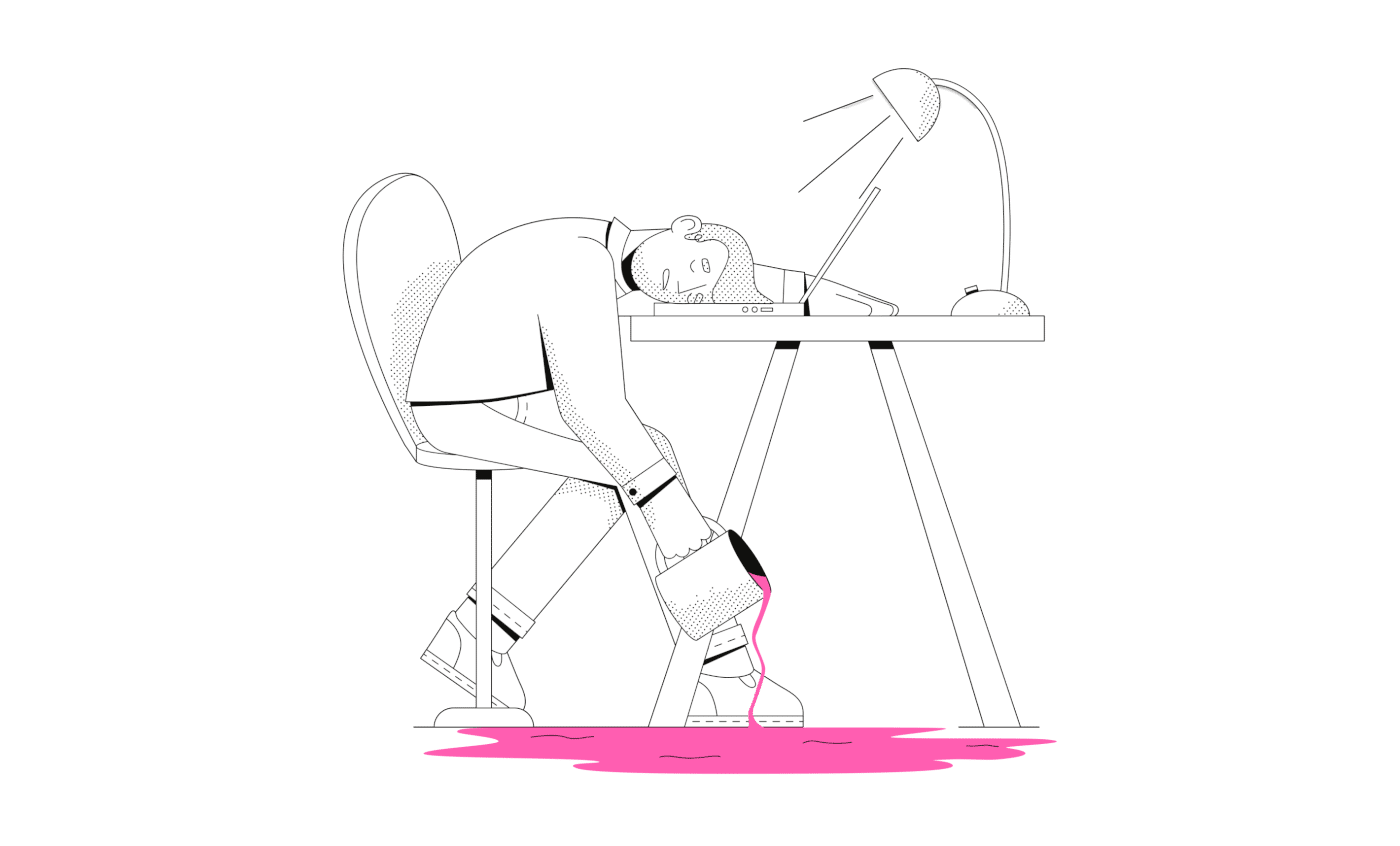
The 4-day workweek has moved from experimental curiosity to mainstream adoption in 2026. With over 200 companies completing formal trials across the UK, Iceland, Japan, Germany, Spain, and South Africa, the evidence is clear: teams can deliver the same output in four days when they eliminate waste and adopt AI-powered productivity tools.
TL;DR: Research from 200+ companies confirms the 4-day workweek maintains or improves productivity while reducing burnout by 71%. AI tools like Taskade, with AI agents that automate 5-10 hours of weekly administrative work, make the transition feasible for teams of any size. Plans are free to start, then $10/month billed annually. Try Taskade free -->
When Henry Ford doubled his employees' pay to $5 and trimmed work time, he raised eyebrows. The 1938 Fair Labor Standards Act sealed the 40-hour standard. But a Model T is no Tesla, and the Industrial Revolution's approach to work is starting to feel outdated -- especially when AI can handle the busywork that fills most of those 40 hours.
What Is the 4-Day Workweek?
The 4-day workweek is a work arrangement where employees work four days per week instead of five, typically without a reduction in pay. The dominant model is the 100-80-100 framework: 100% pay for 80% of the time, with 100% productivity maintained.
This is not about cramming 40 hours into four 10-hour days. The 100-80-100 model recognizes that most knowledge workers are productively focused for only 3-5 hours per day, and that AI tools can eliminate the administrative overhead that fills the remaining hours.
| Model | Hours/Week | Pay | Productivity Target |
|---|---|---|---|
| 100-80-100 | 32 hours (4x8) | 100% | 100% (eliminate waste) |
| Compressed | 40 hours (4x10) | 100% | Same (longer days) |
| Flexible | 32-36 hours | 100% | 100% (choose your 4 days) |
| Hybrid | 32 hours + AI | 100% | 100%+ (AI handles admin) |
The hybrid model -- where AI tools handle administrative tasks, meeting summaries, and routine project management -- is emerging as the most effective approach in 2026.
Benefits of the 4-Day Workweek: What the Research Shows
Reduced Burnout and Improved Mental Health
A two-year study by the University of Iceland conducted in 2015 found that employees who switched to a 35-hour workweek experienced lower stress levels and reduced burnout.
The UK's landmark 2022 pilot study with 61 organizations confirmed these findings at scale. 71% of employees reported lower levels of burnout, and 39% said the extra downtime helped reduce stress. By the end of the trial, 92% of companies continued with the four-day week.
Since 2022, additional trials have expanded the evidence base:
| Country/Region | Year | Companies | Key Finding |
|---|---|---|---|
| Iceland | 2015-2019 | 66 | Lower stress, no productivity loss |
| UK | 2022 | 61 | 92% continued, revenue stable or up |
| Spain | 2023-2024 | 200+ | Government-backed, reduced sick days |
| Germany | 2024-2025 | 45 | Improved employee satisfaction |
| South Africa | 2024-2025 | 28 | 33% reduction in burnout |
| Global (4DWG) | 2022-2026 | 200+ | 91% adopted permanently |
Increased Productivity and Efficiency
Most knowledge workers spend far fewer hours on productive work than they claim. According to the 2019 State of Work Life Balance study by RescueTime, the typical knowledge worker spends an average of 2 hours and 48 minutes on productive activities per day. The remaining 5 hours go to neutral activities (1 hour 6 minutes), distracting activities (1 hour 12 minutes), and context switching.
"The rest of the day is spent on neutral activities (1 hour and 6 minutes) and distracting activities (1 hour and 12 minutes). In fact, on average, 21% of the workday was spent on entertainment, news, and social media." -- The State of Work Life Balance, RescueTime
Studies confirm that an average worker can sustain focused productivity for 3-5 hours per day. The 4-day workweek works because it compresses the actual productive work into four days while eliminating the low-value time that fills the typical five-day week.
Improved Work-Life Balance
In a study by the Society for Human Resource Management, 62% of employees who worked a 4-day workweek reported improved work-life balance. The 4 Day Week Global study found 73% greater employee satisfaction and a 21% reduction in childcare costs for participants.
An extra day off draws the line between work and personal life -- especially important in a hyperconnected world where remote work has pushed the office into living rooms and bedrooms.
Better Talent Retention and Recruitment
The 4-day workweek has become a competitive advantage in hiring. Companies offering four-day weeks report:
| Metric | Impact |
|---|---|
| Job applications | 3-5x more applicants |
| Employee turnover | 25-40% reduction |
| Employee satisfaction | 73% improvement (4DWG study) |
| Sick days | 65% reduction (UK trial) |
| Revenue impact | Stable or increased (92% of UK companies) |
Environmental Impact
The environmental benefits are measurable. Microsoft Japan's trial showed a 20% reduction in electricity consumption. Fewer commuting days reduce carbon emissions, and lower office utilization cuts energy costs. The 4 Day Week Global study found significant reductions in participants' carbon footprints from eliminated commutes.
How AI Makes the 4-Day Workweek Possible in 2026
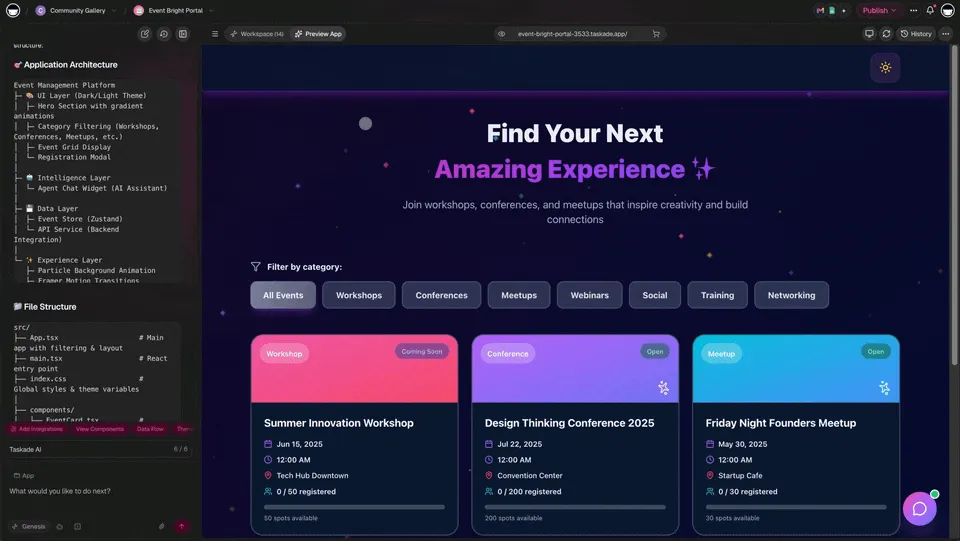
The 4-day workweek trials before 2024 relied on process optimization alone -- cutting meetings, reducing distractions, and streamlining workflows. In 2026, AI tools add a force multiplier that makes the transition far more achievable.
The AI Productivity Stack for a 4-Day Week
| Time Sink | Hours/Week Wasted | AI Solution | Hours Saved |
|---|---|---|---|
| Status updates and standups | 3-5 hours | AI agents generate automated summaries | 2-4 hours |
| Meeting prep and notes | 2-3 hours | AI meeting summaries and action items | 1.5-2 hours |
| Task management overhead | 2-4 hours | AI auto-assigns, prioritizes, and tracks | 1.5-3 hours |
| Email triage and responses | 3-5 hours | AI drafts, categorizes, and routes | 2-3 hours |
| Report generation | 2-3 hours | AI generates from project data | 1.5-2 hours |
| Total | 12-20 hours | 8-14 hours |
That 8-14 hours saved is exactly the gap between a 5-day and 4-day week.
How Taskade AI Agents Replace the Fifth Day
Taskade AI agents with 34 built-in tools and persistent memory can handle the administrative overhead that typically fills the fifth workday:
- Projects (Memory) -- Store all tasks, documents, and meeting notes across 7 views (List, Board, Calendar, Table, Mind Map, Gantt, Org Chart). No information gets lost between the compressed workdays. Learn about project views.
- Agents (Intelligence) -- AI agents with persistent memory generate standup summaries, identify blocked tasks, and propose schedule adjustments. They run in the background even on the day off. See the custom agents guide.
- Automations (Execution) -- 100+ integrations trigger workflows automatically. When a task is completed, automations notify stakeholders, update dashboards, and assign the next milestone. Explore automation triggers.
The result: Workspace DNA (Memory + Intelligence + Execution) creates a self-reinforcing loop where AI handles the coordination overhead that traditionally required a fifth workday. Learn more about how Workspace DNA works.
Challenges of the 4-Day Workweek
Scheduling and Staffing in 24/7 Industries
Implementing a 4-day workweek is a significant management challenge in industries where shift work dominates. According to the Bureau of Labor Statistics, 7.2 million people work night shifts and 22.9 million employees work weekends.
Healthcare, customer support, transportation, and hospitality require continuous staffing. These industries cannot simply shut down on Fridays. Solutions include:
| Industry | Approach | How AI Helps |
|---|---|---|
| Healthcare | Staggered 4-day rotations | AI scheduling optimizes shift coverage |
| Customer Support | Rotating days off | AI chatbots handle routine queries on off days |
| Retail | Compressed hours + overlap | AI inventory and staffing predictions |
| Manufacturing | Shift-based 4-day weeks | AI quality monitoring during transitions |
Resistance from Leadership
A 2022 survey by Qualtrics found that 46% of managers and 53% of senior leaders anticipated a dip in sales with shorter weeks. This resistance is decreasing as more trial data accumulates, but it remains a barrier.
The most effective counter: pilot programs with clear metrics. Companies that run a 3-6 month trial with measurable KPIs consistently find that the fears are unfounded.
Client Coverage Gaps
Some businesses worry about being unavailable on the fifth day. Solutions include:
- Staggered schedules: Half the team takes Monday off, half takes Friday off
- AI-first coverage: Taskade AI agents handle routine client requests automatically
- Asynchronous communication: Clear documentation and automated status updates keep clients informed
- Timezone optimization: Distribute team coverage across time zones
Successful Implementation Stories (2026 Update)
Microsoft Japan (2019)
Microsoft Japan's four-day workweek experiment gave employees every Friday off for one month. The results: 40% increase in productivity, 20% reduction in electricity consumption, and improved employee satisfaction. The experiment proved that even large enterprises could benefit from shorter weeks.
Buffer (2020-Present)
Buffer, a fully remote social media company with employees across 15 countries and 11 time zones, permanently adopted the four-day week in 2020. Two years after the move, 91% of Buffer employees reported being happier and more productive. While 27% still work Fridays, the company schedules no meetings or mandatory conversations on that day.
4 Day Week Global Trials (2022-2026)
4 Day Week Global has coordinated trials across Canada, Ireland, the UK, the US, Germany, Spain, Portugal, and South Africa. The cumulative results from 200+ companies:
| Metric | Result |
|---|---|
| Companies adopting permanently | 91% |
| Revenue change | 35% average increase |
| Employee satisfaction | 73% improvement |
| Childcare cost reduction | 21% |
| Sick day reduction | 65% |
| Burnout reduction | 71% |
As 4 Day Week Global CEO Charlotte Lockhart noted: "The health and well-being of employees also improved, with significant increases observed in physical and mental health, time spent exercising, and overall life and job satisfaction."
Germany National Trial (2024-2025)
Germany launched its largest four-day workweek trial in 2024 with 45 companies. Preliminary results showed improved employee satisfaction and maintained output, with several companies citing AI adoption as a key enabler for compressing work into fewer days.
How to Implement the 4-Day Workweek: Step-by-Step
Phase 1: Audit and Plan (Weeks 1-4)
| Step | Action | Tool |
|---|---|---|
| 1 | Audit current time allocation (meetings, admin, deep work) | Time tracking analysis |
| 2 | Identify tasks that AI can automate | Taskade AI agents |
| 3 | Set baseline productivity metrics (revenue, output, quality) | Project dashboards |
| 4 | Choose your model (100-80-100, staggered, compressed) | Team survey |
| 5 | Select pilot team or department | Leadership alignment |
Phase 2: AI Setup and Process Optimization (Weeks 5-8)
| Step | Action | Tool |
|---|---|---|
| 6 | Deploy AI agents for status updates and task management | Custom agents |
| 7 | Set up automations for routine workflows | Automation triggers |
| 8 | Cut meeting time by 50% (30-minute max, AI summaries) | AI chat |
| 9 | Create async communication norms | Taskade projects |
| 10 | Train team on AI tools and new workflows | Learn Taskade |
Phase 3: Pilot (Weeks 9-20)
| Step | Action | Metric |
|---|---|---|
| 11 | Launch 4-day week for pilot team | Start date |
| 12 | Weekly check-ins on output and wellbeing | Productivity metrics |
| 13 | Adjust AI automations based on gaps | Workflow optimization |
| 14 | Survey employees monthly | Satisfaction scores |
| 15 | Compare metrics to baseline at 3 months | Revenue, output, retention |
Phase 4: Scale (Weeks 21+)
If the pilot succeeds (and research suggests it will for 91% of companies), expand to the full organization. Use the pilot team's AI configurations and automation templates as a starting point for other departments.
The AI-Powered 4-Day Workweek Toolkit
To make the 4-day workweek work, teams need tools that replace the coordination overhead of the fifth day. Here is what the optimal stack looks like in 2026:
| Need | Solution | Taskade Feature |
|---|---|---|
| Task management | AI generates and assigns tasks | AI agents with 34 tools |
| Meeting reduction | AI summaries replace 50% of meetings | AI chat |
| Status updates | Automated progress reports | Automations |
| Project visualization | 7 views for different perspectives | Project views |
| Communication | Built-in video calls and chat | Video calls |
| Workflow automation | 100+ integrations | Integrations |
| Knowledge management | Persistent memory across projects | Workspace DNA |
Taskade is free to start, with Pro at $10/month (billed annually) for up to 10 seats. The free plan includes up to 6,000 AI credits to test whether AI-powered project management can compress your team's work into four days.
Start free --> | See pricing --> | Explore templates -->
The Future of the 4-Day Workweek
The 4-day workweek is no longer an experiment. With 200+ companies having completed formal trials, government-backed programs in Spain, Germany, and South Africa, and AI tools eliminating the administrative overhead that justified the fifth day, the question has shifted from "Does it work?" to "When will my company adopt it?"
The convergence of three trends makes 2026 the tipping point:
- AI maturity: Tools like Taskade, with AI agents capable of autonomous project management, now handle the coordination work that filled most of the fifth day.
- Talent competition: Companies offering four-day weeks receive 3-5x more applications. In a tight labor market, the four-day week is a recruiting weapon.
- Accumulated evidence: 200+ companies across 10+ countries have proven the model works across industries and team sizes.
The companies that adopt the 4-day workweek now -- with AI tools that make the transition seamless -- will attract better talent, retain more employees, and operate more efficiently than those clinging to the 1938 standard.
Frequently Asked Questions
What is the 4-day workweek and how does it work?
The 4-day workweek is a work schedule where employees work four days per week instead of five, typically without a reduction in pay. The most common model is the 100-80-100 framework: 100% pay for 80% of the time, with 100% productivity maintained. Companies achieve this by eliminating unnecessary meetings, reducing distractions, and using AI productivity tools to compress work into fewer days.
What are the proven benefits of a 4-day workweek?
Research from 200+ companies across the UK, Iceland, Japan, and global trials shows the 4-day workweek reduces burnout by 71%, improves work-life balance for 62% of employees, maintains or increases revenue, cuts operational costs by 20%, and improves talent retention. The 4 Day Week Global study found 91% of participating companies adopted the shorter week permanently.
Does the 4-day workweek actually increase productivity?
Yes. Multiple large-scale trials demonstrate that productivity is maintained or improved. The UK 2022 trial with 61 companies found 92% continued after the trial with stable or increased revenue. Microsoft Japan saw a 40% productivity increase. Compressed schedules force teams to eliminate waste -- unnecessary meetings, excessive email, and unfocused work time.
How does AI help companies implement a 4-day workweek?
AI tools like Taskade compress productive output by automating repetitive tasks, generating meeting summaries, managing project workflows with AI agents, and handling routine communication. Teams using AI agents with 34 built-in tools report saving 5-10 hours per week on administrative work, making the transition to four days feasible without output loss.
How can a company implement a 4-day workweek in 2026?
Start with a pilot program for one team. Audit existing workflows to identify wasted time. Deploy AI productivity tools with agents for task management and automation. Set clear performance metrics. Choose your model (universal day off or staggered schedules). Review results after 3-6 months before scaling. See our step-by-step implementation guide above.
What are the challenges of implementing a 4-day workweek?
Key challenges include scheduling in 24/7 industries like healthcare and hospitality, resistance from management concerned about output, client coverage gaps, and the initial effort of implementing AI tools and process changes. Industries requiring round-the-clock staffing need staggered schedules rather than a universal day off.
Which companies have successfully adopted a 4-day workweek?
Microsoft Japan saw 40% higher productivity, Buffer reported 91% of employees happier and more productive after two years, and 91% of companies in the 4 Day Week Global trial adopted it permanently. By 2026, companies in Germany, Spain, Portugal, and South Africa have joined large-scale government-backed trials.
Is the 4-day workweek suitable for all industries?
Not all industries can adopt a universal four-day schedule. Healthcare, transportation, hospitality, and customer support often require continuous staffing. These industries can implement staggered four-day schedules, rotating days off, or compressed hours. Knowledge work, technology, marketing, and professional services are the most natural fits for the 100-80-100 model.
What is the 100-80-100 model?
The 100-80-100 model means 100% pay for 80% of the time while maintaining 100% productivity. Employees work four days instead of five with no pay reduction. It works because research shows most knowledge workers are only productively focused for 3-5 hours per day, and AI tools can automate the remaining administrative tasks.
How does the 4-day workweek affect employee retention?
The 4-day workweek significantly improves retention and recruitment. The 4 Day Week Global study found 73% greater employee satisfaction and improved retention rates. Companies offering four-day weeks report receiving 3-5x more job applications and reducing turnover by 25-40%.
Related Resources
Productivity:
- Best Project Management Tools - Free tools for teams
- AI Project Management Templates - Templates for 2026
- What Is Vibe Coding? - Build tools with natural language
- Task Management Guide - Fundamentals of task management
AI and Automation:
- What Are AI Agents? - Understanding autonomous AI
- Best Zapier Alternatives - Automation platforms compared
- How Workspace DNA Works - Memory, Intelligence, Execution
- Build Living Apps - From static tools to intelligent software
Remote Work:
- Work From Home: A Pocket-Sized Guide - Best practices for distributed teams
- Team Collaboration Tips - Working better together
- Burnout Prevention - Recognizing and preventing burnout
Help Center:
Sources:
- Iceland's Shorter Working Week Trials
- UK Four-Day Workweek Pilot
- State of Work Life Balance 2019 (RescueTime)
- Productive Hours Per Day (Wired)
- SHRM 4-Day Workweek Survey
- BLS Employment Data
- Qualtrics Four-Day Work Week Survey
- Microsoft Japan Results
- Buffer Four-Day Workweek
- 4 Day Week Global Results